
Chinese Court Expands Slayer Espresso Knockoff Ruling, Strengthening IP Protection
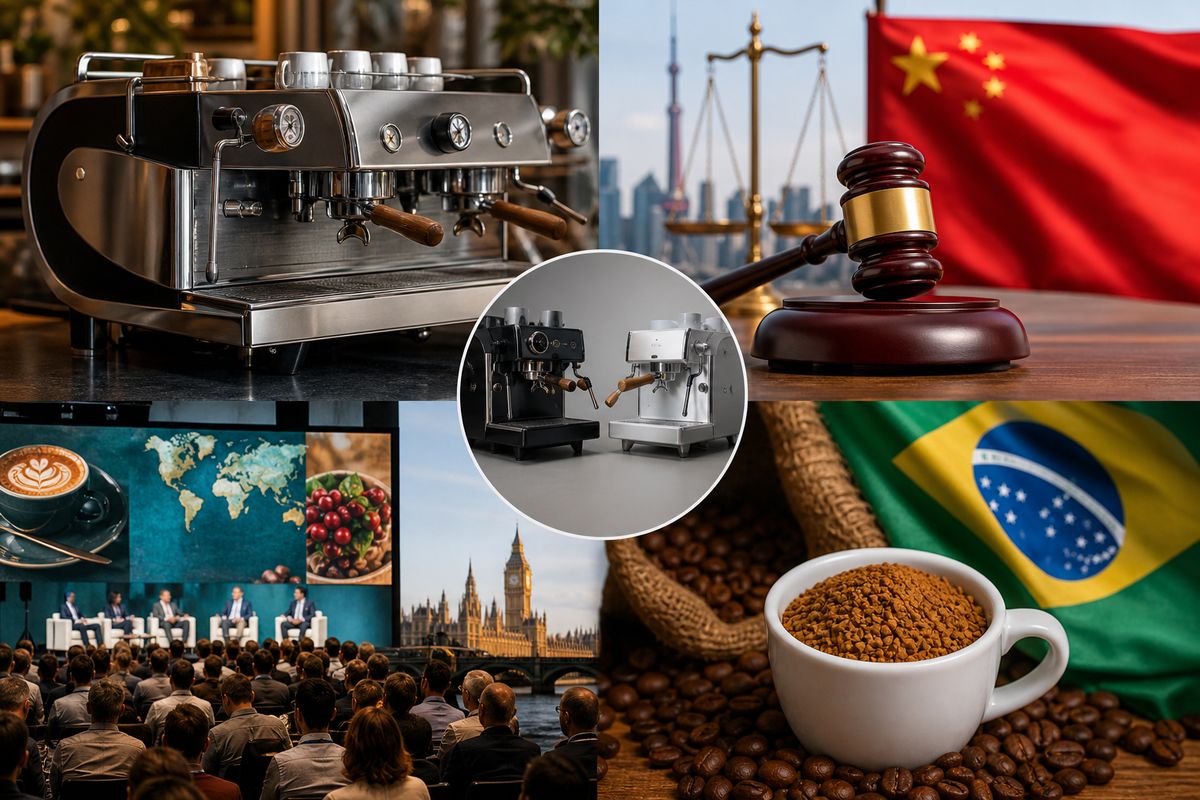
Chinese Appellate Court Strengthens IP Protection Against Slayer Espresso Knockoffs
On 10 July 2026, a Chinese appellate court upheld and expanded an earlier ruling that found a manufacturer of counterfeit Slayer Espresso machines guilty of unfair competition. The court also added a finding of trademark infringement, marking a significant escalation in legal protections for premium coffee equipment brands in China. The decision, reported by Daily Coffee News, signals a tougher stance on intellectual property violations in one of the world's fastest-growing coffee markets.
The original ruling had already declared the knockoffs an act of unfair competition, but the appeal brought a broader interpretation. The appellate court affirmed that the imitation machines not only misled consumers but also infringed on Slayer's registered trademarks. This dual finding gives Slayer a stronger legal basis to pursue damages and potentially block future counterfeits at the border. It is a clear message that Chinese courts are willing to enforce IP rights even for niche, high-value products like espresso machines.
The case originated from Slayer's discovery of a Chinese manufacturer producing machines that closely replicated the distinctive design and functionality of Slayer's models. Slayer, based in Seattle, is known for its handcrafted espresso machines that command prices upwards of $20,000. The knockoffs were sold at a fraction of the cost, undermining Slayer's brand equity and market position. The expanded ruling now provides Slayer with a stronger legal toolkit to combat such infringements.
Background: The Slayer Espresso Machine and Its Knockoffs
Slayer Espresso was founded in 2007 with a focus on precision engineering and aesthetic design. Its machines are revered in the specialty coffee community for their manual flow control and minimalist look. The brand has built a loyal following among top-tier cafes and coffee connoisseurs worldwide. Counterfeit versions, often sold through online platforms, have plagued the brand for years, particularly in markets where IP enforcement has historically been lax.
The knockoff machines in question were produced by an unnamed Chinese company. They copied Slayer's signature external group head design and overall silhouette. While the original lawsuit targeted unfair competition, the appellate court's addition of trademark infringement reflects growing legal recognition of design trademarks in China. This is important because espresso machine designs are often protected as trade dress, but proving distinctiveness and consumer confusion can be difficult. The court's ruling indicates that Slayer's design has achieved secondary meaning in the Chinese market, a key hurdle for trade dress protection.
The case also highlights the role of legal representation and local expertise. Slayer worked with Chinese IP law firms to build their case. The expanded ruling could embolden other Western coffee equipment makers — such as La San Marco, which just launched its new flagship La 125 machine on 8 July 2026, or Slayer itself — to pursue similar actions. The broader implication is that China's legal system is becoming a viable avenue for holding counterfeiters accountable.
Why This Ruling Matters for the Specialty Coffee Industry
The espresso machine market is a key segment of the specialty coffee industry. High-end machines are both a capital investment and a branding tool for cafes. Counterfeits erode trust, undermine innovation, and hurt legitimate businesses. The Slayer ruling sends a clear signal that Chinese courts will not tolerate outright copying of proprietary designs. This could reduce the supply of knockoffs, potentially benefiting both original manufacturers and consumers who rely on authentic products for performance and safety.
Furthermore, the ruling arrives at a time when coffee equipment innovation is accelerating. On the same day Slayer's expanded ruling was reported, industry news also featured a new mathematical model for dialing in espresso (published 8 July 2026), the launch of La San Marco's La 125, and the rise of single-dose coffee dispensers (6 July 2026). These developments rely on a market where IP protection encourages R&D investment. If knockoffs become less prevalent, manufacturers may be more willing to introduce novel technologies without fear of immediate imitation.
For coffee shop owners, the ruling reduces the risk of accidentally purchasing counterfeit machines, which often have inferior build quality and lack after-sales support. It also supports the broader push for transparency and authenticity that the specialty coffee movement champions. Independent cafes invest heavily in brand identity; counterfeit equipment clashes with that ethos.
Also in the News: A Busy Week for Global Coffee
World Coffee Innovation Summit Returns to London in October
On 9 July 2026, the World Coffee Alliance announced that the World Coffee Innovation Summit will take place in London on 21-22 October at the QEII Centre. The two-day event will gather industry leaders to discuss sustainability, technology, and market trends. The summit's return signals a post-pandemic recovery in large-scale coffee gatherings, and provides a platform for announcements like the Slayer ruling to be dissected by legal and business experts.
NCA Pushes for Instant Coffee Tariff Exemption Amid Brazil Talks
The National Coffee Association (NCA) on 9 July 2026 urged the U.S. Trade Representative to exempt unflavored instant coffee from proposed new tariffs. The tariffs are tied to separate trade disputes and forced labor policies. The NCA's push highlights the delicate balance between trade policy and coffee affordability. Brazil is a major supplier of green coffee to the U.S., and any tariff on instant coffee could disrupt supply chains and raise prices for consumers.
Coffee Generates €84.4 Billion in Direct Value Across the EU
A report released on 8 July 2026 by the European Coffee Federation estimated that coffee generates €84.4 billion in direct value across the European Union. This figure encompasses roasting, retail, and café sectors. The report underscores coffee's economic weight in Europe and provides context for why IP protection and trade policies matter — the industry is massive, and disruptions have financial ripple effects.
Mathematical Model Offers Insight for Dialing In Espresso
Also on 8 July, researchers published a mathematical model that helps baristas dial in espresso extraction more systematically. The model considers variables like grind size, dose, and pressure to predict extraction yield. This kind of innovation benefits from a market where genuine equipment and data are trusted — counterfeit machines with inconsistent performance could undermine the model's applicability.
La San Marco Launches La 125 Flagship Espresso Machine
Italian manufacturer La San Marco rolled out its new flagship espresso machine, the La 125, on 8 July 2026. The machine features advanced temperature stability and energy efficiency. La San Marco joins Slayer in a competitive high-end market; both brands rely on IP protection to sustain their premium positioning.
Brazil’s Coffee Climate Shift: Small Farmers Seek New Ways to Survive
A column on 7 July 2026 by Kevin Damasiano examined how climate change is forcing small coffee farmers in Brazil to adapt. Rising temperatures and erratic rainfall threaten arabica production. Farmers are experimenting with shade-grown coffee, altitudinal shifts, and new varieties. This trend intersects with IP issues: climate-adapted coffee varieties may themselves be subject to intellectual property rights, raising questions about farmer access.
Lekko Coffee Opens New Roastery in Cleveland
Lekko Coffee, a growing specialty roaster, moved into a larger roastery in Cleveland on 7 July 2026. The expansion reflects the ongoing growth of the U.S. specialty coffee roasting sector, which depends on reliable equipment and a stable legal environment for their investments.
Sucafina Group Acquires German Coffee Trader Rehm & Co.
On 7 July 2026, Sucafina Group announced the acquisition of German trader Rehm & Co. The consolidation of green coffee trading firms continues, concentrating market power. This big-picture context is relevant because legal frameworks like IP and trade policy affect every layer of the coffee supply chain.
Illycaffè Taps Westrock for North American Production Push
Illycaffè on 3 July 2026 announced a partnership with Westrock to boost its North American production capacity. The Italian roaster is investing in local manufacturing to reduce logistics costs and tariff exposure. Tariff exemption advocacy by the NCA ties directly to such business decisions.
Single-Dose Coffee Dispensers: A Rising Trend with Measured Drops
An article on 6 July 2026 explored the growing popularity of single-dose coffee dispensers in cafes and offices. These machines offer portion control and freshness. Like espresso machines, they rely on precise engineering, making IP protection relevant for this segment as well.
Inside the 2026 Coffee Barometer: Prices Swing, Structures Don’t
Part one of the 2026 Coffee Barometer, published 2 July 2026, revealed that while coffee prices have swung dramatically, the structural imbalances in the supply chain remain. This includes issues of farmer poverty, market concentration, and sustainability. The Slayer ruling, while about high-end equipment, is part of a larger system of rules and incentives that shape the coffee world.
The Bigger Picture: Intellectual Property, Innovation, and Coffee’s Global Economy
The Slayer case is not an isolated legal skirmish. It reflects a broader maturation of China's intellectual property regime, which is increasingly relevant for the global coffee industry. As China becomes a major consumer of specialty coffee — with a rapidly growing café culture — protecting brands there is essential. The ruling could encourage Chinese courts to be more consistent in handling coffee-related IP disputes, from machine designs to coffee bean trademarks (e.g., origin protection for Yunnan coffee).
Moreover, the intersection of trade policy, climate adaptation, and IP law creates a complex environment for coffee businesses. On one hand, stronger IP protection incentivises innovation in equipment and coffee varieties. On the other hand, excessive IP enforcement could restrict access to technology for small farmers and roasters in developing countries. The Coffee Barometer highlights structural inequities; IP regimes can either exacerbate or alleviate them. For instance, climate-adapted coffee plant varieties developed by research institutions may be patented, limiting farmer use. Similarly, the mathematical espresso model could be commercialised, potentially locking out independent cafes from cutting-edge extraction methods.
The Slayer ruling also ties into the broader narrative of authenticity in specialty coffee. Consumers are increasingly demanding transparency and provenance — from bean to cup. Counterfeit machines undermine this trust. As the industry's value grows (€84.4 billion in the EU alone) , the stakes of counterfeit goods mount. The European Commission is considering stricter regulations on imported goods to combat fakes, and the Slayer case may serve as a useful precedent for coffee equipment within those discussions.
What Comes Next: Implications for Coffee Businesses Worldwide
For coffee equipment manufacturers, the message is clear: invest in IP registration in key markets like China. The cost of litigation may be offset by market share recovered from counterfeiters. For coffee shop owners and baristas, the ruling provides reassurance that buying from authorised dealers offers legal recourse if a machine is found counterfeit. However, enforcement remains a challenge. The Chinese legal system, while improving, still struggles with backlog and inconsistent rulings. The expanded decision may be appealed further.
On the trade front, the NCA's tariff exemption push underscores how trade policy can directly affect coffee prices and availability. If instant coffee tariffs are imposed, instant coffee — which relies heavily on robusta from Vietnam and Brazil — could become more expensive, shifting consumer behaviour. The UK's departure from the EU also creates new trade friction points. Coffee businesses must stay abreast of these policy shifts.
Finally, the flurry of innovation — from single-dose dispensers to the La 125 — suggests that the coffee equipment market is dynamic and competitive. IP protection will play a pivotal role in determining which companies thrive. Slayer's legal victory may embolden others to sue knockoffs, potentially reducing the number of low-cost imitations in the market. That could raise average prices for premium machines but also preserve the incentive to develop the next generation of espresso technology. The coffee world, always blending tradition and progress, now adds a legal dimension to its recipe.