
Coffee and Cigarettes: Jim Jarmusch's Intimate Anthology of Human Connection
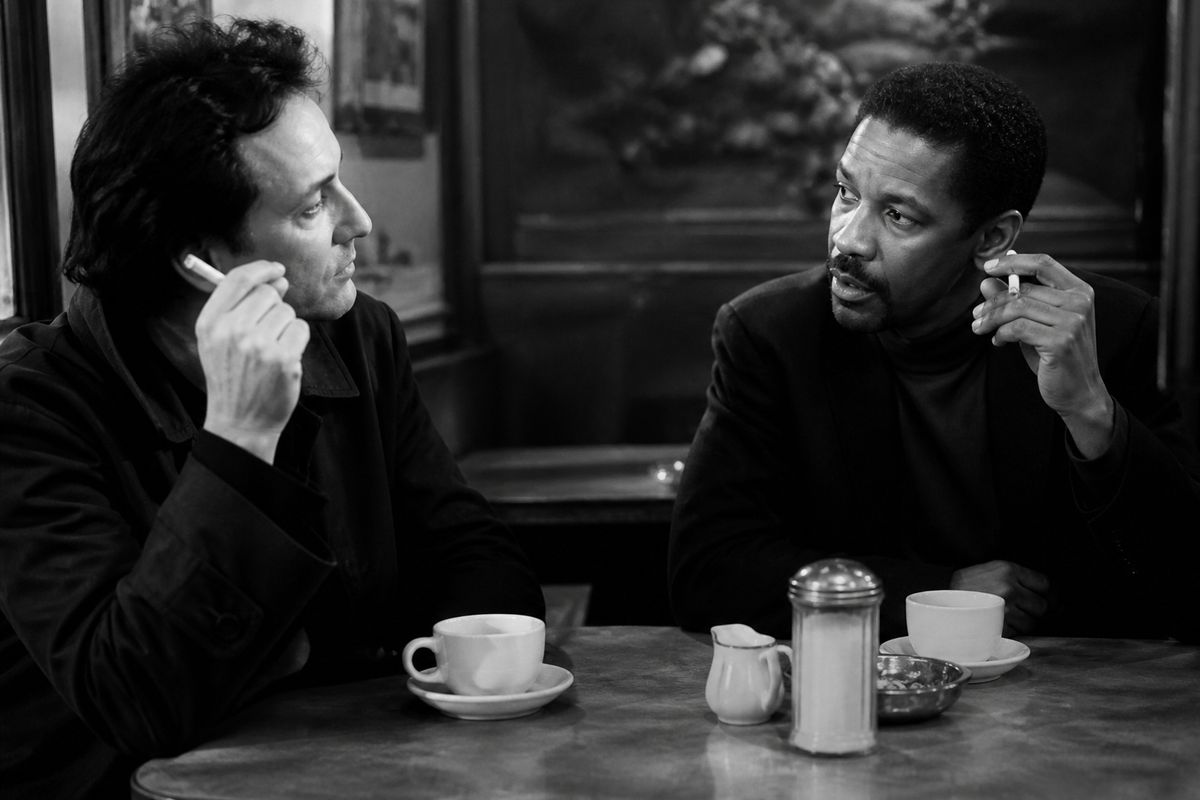
Coffee and Cigarettes: A Film That Sips Slowly
There is a certain kind of film that defies conventional narrative expectations, and Jim Jarmusch's Coffee and Cigarettes sits comfortably in that category. Released in 2004, this anthology piece stitches together eleven distinct vignettes, each one centred on the simple, almost mundane act of two people sharing coffee and cigarettes. It is not a movie about plot twists or dramatic climaxes. It is a movie about conversation, about the spaces between words, and about the quiet hostilities and affections that surface when people sit across a table from one another.
The film's premise is deceptively simple. Over the course of 96 minutes, Jarmusch presents a series of interactions, some scripted and some improvised, involving actors, musicians, and comedians playing themselves, or versions of themselves. Bill Murray waits on the Wu-Tang Clan. Iggy Pop and Tom Waits bicker over caffeine and nicotine. Jack and Meg White of the White Stripes discuss the genius of Nikola Tesla. These are not high-stakes scenarios, yet they resonate precisely because of their ordinariness. The film captures the texture of everyday conversation, with all its tangents, awkward pauses, and unspoken tensions.
What makes Coffee and Cigarettes particularly fascinating is its long gestation. Jarmusch began the project in 1986 with a six-minute short starring Steven Wright and Roberto Benigni. That initial sketch, in which two strangers meet in a coffee bar to sip, smoke, and chat, became the seed for a project that would take 17 years to reach the screen. The film's episodic structure, therefore, is not just a stylistic choice; it is a reflection of its own history, a collection of moments captured across decades, each one preserving a particular mood and a particular set of performers.
The Structure of Connection: Eleven Vignettes, One Vision
The anthology format allows Jarmusch to explore a wide range of tones and dynamics. Roberto Benigni, in the opening segment, delivers a manic monologue about the supposed health benefits of coffee, claiming it causes insomnia but prevents sleep-related diseases. It is a classic Benigni performance: energetic, absurd, and oddly charming. In contrast, the segment featuring Iggy Pop and Tom Waits is a study in passive-aggressive one-upmanship. Waits, seated at a table with a cup of coffee, is visibly irritated when Pop arrives with a cup of tea and a plate of cake. The conversation circles around health, touring, and the absurdity of their mutual fame, all delivered with the deadpan timing of two men who have spent decades in the entertainment industry.
One of the film's most memorable segments features Cate Blanchett, who plays both herself and her fictional, conniving cousin Shelly. The dual role is a technical showcase, demonstrating Blanchett's range as she switches between an elegant, poised actress and a scruffy, chain-smoking relative who is clearly angling for something. The scene is shot with clever framing and editing, creating the illusion that the two characters are sharing a table while subtly highlighting the contrasts between them. It is one of the few segments where the production design and visual trickery take centre stage, a departure from the more stripped-back conversations elsewhere in the film.
Another standout is the interaction between Bill Murray and the Wu-Tang Clan's RZA and GZA. Murray, playing a fictionalised version of himself, stumbles into a diner where the two hip-hop artists are seated. He claims to be on his way to a film set, but the conversation soon drifts into a discussion of coffee's health effects, with Murray offering dubious medical advice while the Wu-Tang members exchange knowing glances. The dynamic is playful and absurd, with Murray's deadpan delivery clashing delightfully with the Wu-Tang Clan's calm, measured responses. It is a segment that encapsulates the film's overall sensibility: a meeting of worlds that should not logically coexist, yet somehow works beautifully on screen.
From 1986 to 2004: A Decade-and-a-Half in the Making
Jim Jarmusch's approach to Coffee and Cigarettes was never about efficiency. The original short with Steven Wright and Roberto Benigni was filmed in 1986, a time when Jarmusch was already establishing himself as a distinctive voice in American independent cinema with films like Stranger Than Paradise and Down by Law. He returned to the concept periodically over the following years, shooting new segments whenever the mood struck and whenever he could assemble the right combination of performers. The result is a film that feels both cohesive and fragmentary, as if Jarmusch was collecting snapshots of a recurring dream.
The production history explains a great deal about the film's tonal inconsistencies. Some segments are sharp and funny, while others feel languid and uncertain. Critics have noted this unevenness, with the Rotten Tomatoes consensus describing the episodes as varying in quality while acknowledging the film as "quirkily engaging." The film currently holds a 63% Tomatometer score based on 122 reviews, a figure that reflects its polarising nature. Audience reception has been warmer, with a 75% Popcornmeter score from over 25,000 ratings, suggesting that general viewers have embraced the film's idiosyncrasies more readily than professional critics.
The critical response was mixed upon release. Peter Rainer of New York Magazine praised Jarmusch's "playful, hang-dog absurdism," while Marjorie Baumgarten of the Austin Chronicle was less impressed, arguing that the film "serves up a weak brew" compared to Jarmusch's earlier work such as Stranger Than Paradise and Dead Man. Stanley Kauffmann of The New Republic noted that the film consists of scenes showing two or three people smoking, sipping, and conversing, "usually in grungy places and usually improvising, at least that's the intended impression." Mark Steyn of The Spectator was blunter, comparing the experience to "an overlong round of Whose Line Is It Anyway? where all the participants are stoned."
The Cast: Playing Themselves, or Something Like It
The decision to have actors and musicians play themselves, or versions of themselves, is central to the film's appeal. This approach creates a blurring of boundaries between performance and reality, inviting the audience to wonder how much of what they are watching is scripted and how much is genuine conversation. Steven Wright, whose deadpan delivery and surreal non-sequiturs are instantly recognisable, appears in the opening segment with Benigni. The two comedians have very different styles: Benigni is physical and excitable, while Wright is almost motionless, delivering his lines with a flat, bemused tone. The contrast is electric, and it sets the tone for the rest of the film.
The White Stripes segment, featuring Jack and Meg White discussing Nikola Tesla, is another highlight. Jack White is visibly animated, passionately explaining Tesla's contributions to electrical engineering and his rivalry with Thomas Edison. Meg White, in contrast, is mostly silent, nodding along and occasionally offering brief responses. The dynamic mirrors the band's own public persona: Jack as the articulate frontman, Meg as the enigmatic drummer. Cate Blanchett's dual role is perhaps the most technically impressive, while the segment featuring Alfred Molina and Steve Coogan in a London cafe is a study in social awkwardness, with Coogan playing a self-absorbed actor who is clearly uncomfortable when Molina approaches his table.
Other cast members include Isaach de Bankolé, who appears in a segment set in Paris, discussing the healing powers of coffee with a friend. Vinny Vella and Joseph Rigano play two old friends in a New Jersey diner, their conversation wandering through topics as varied as dental hygiene and family gossip. Tom Waits and Iggy Pop bring their own legendarily gruff personas to their segment, while Joie Lee and Cinqué Lee, frequent collaborators of Jarmusch, appear as a pair of twins debating the virtues of caffeine versus a health tonic. Each segment has its own flavour, yet they all share a common thread: the simple, universal act of sitting down with a hot beverage and a cigarette.
The Bigger Picture: Coffee, Cigarettes, and the Art of Listening
While Coffee and Cigarettes may seem like a minor entry in Jarmusch's filmography, it is, in fact, a distillation of his entire artistic philosophy. Jarmusch has always been a filmmaker of patience and observation, more interested in character and mood than in plot mechanics. His films, from Stranger Than Paradise to Paterson, celebrate the quiet rhythms of everyday life, finding poetry in the mundane. Coffee and Cigarettes takes this approach to its logical extreme, removing plot almost entirely and leaving only conversation. The result is a film that demands a particular kind of attention from its viewers. Those who go in expecting conventional storytelling will likely be frustrated; those who surrender to the film's rhythms will find it deeply rewarding.
The film also serves as a time capsule of a particular era in celebrity culture. The cast list reads like a who's who of alternative culture at the turn of the millennium: Iggy Pop, Tom Waits, the White Stripes, the Wu-Tang Clan, Cate Blanchett, Bill Murray. These are figures who have cultivated public personas that blur the line between their art and their lives. By asking them to play themselves, Jarmusch is not just creating a curiosity; he is exploring the very nature of celebrity, the way public figures perform versions of themselves in everyday interactions. The smoking and coffee drinking become props in these performances, rituals that lend an air of authenticity to the conversations.
Looking at the film from the vantage point of 2026, it is also impossible to ignore how much has changed in the two decades since its release. Coffee culture has evolved dramatically, with artisanal roasters and specialty cafes transforming the humble coffee shop into a site of cultural significance. And cigarettes, once ubiquitous in films and restaurants, have largely vanished from public spaces, the subject of ever-increasing regulation and social stigma. Coffee and Cigarettes captures a moment when smoking was still a common prop for existential musing, when the coffee shop was a genuine crossroads for chance encounters. It is, in many ways, a eulogy for a world that no longer exists, rendered with affection and wit by a filmmaker who has always had a keen eye for the details that define a time and place.
Why the Film Endures: Legacy and Relevance
It has been over two decades since Coffee and Cigarettes was released, and its reputation has only grown. The film has found a devoted audience on streaming platforms, where its episodic structure makes it easy to dip into and out of, and it has become a touchstone for discussions about the art of conversation in cinema. In an era of increasingly frenetic, effects-driven blockbusters, the film's quiet minimalism feels almost radical. It offers a counterpoint to the constant stimulation of modern media, reminding viewers of the power of a simple exchange between two people over a cup of coffee.
The film's legacy is also tied to the careers of its cast members. Several of the performers have spoken warmly about their experiences working with Jarmusch, describing the loose, collaborative atmosphere on set. For many, the film represents a rare opportunity to play themselves, to step outside the confines of their usual roles and simply exist on screen. This sense of freedom is palpable in the performances, lending the film an authenticity that is difficult to achieve in more structured productions.
For new viewers, the film requires a certain openness. It is not a movie that will appeal to everyone, and its meandering structure and deadpan tone may test patience. But for those who appreciate Jarmusch's particular brand of quiet absurdism, Coffee and Cigarettes is an essential piece of his filmography. It is a work that rewards repeated viewing, its nuances and subtle humour revealing themselves gradually, like the layers of flavour in a slowly brewed cup of coffee. In the end, that is perhaps the film's greatest achievement: it functions exactly like the ritual it depicts, a measured, contemplative pause in the chaos of everyday life, asking nothing more than for us to sit down, take a sip, and listen.