Black Friday 2026: Amazon vs Walmart vs Target vs Best Buy, what to expect and how to choose

Black Friday 2026 is a choice, not a day, and that changes everything
For anyone searching black friday 2026, the real question is not just “what date is it?” It is “where should the money go, and when should the buying actually happen?” Because in 2026, Black Friday behaves less like a single Friday and more like a month long tug of war between the biggest retailers, each trying to pull shoppers into their own ecosystem with early drops, app only deals, and bundles that look brilliant until the small print bites.
One widely circulated explainer from CNN’s deals coverage frames it as a practical planning exercise: know the date, expect early promotions, and prepare for the usual mix of genuine discounts and marketing noise. The key concrete detail in the supplementary material is the calendar: Black Friday 2026 falls on 27 November 2026. That matters because it is late in the month, which compresses the runway to Christmas and tends to push retailers to start earlier (and shoppers to panic earlier too).
This guide treats Black Friday 2026 as a comparison: Amazon vs Walmart vs Target vs Best Buy. Not because everyone shops at all four, but because each one “wins” in different categories. And if a household is trying to stretch a budget, avoid returns drama, and still land the big ticket items, picking the right retailer is half the battle.

One important caveat up front: the source material here does not include verified discount percentages, official ad scans, or confirmed doorbusters for specific products. Community chatter exists, but it is not the same thing as a retailer announcement. So this article focuses on what is confirmed, what is strongly implied by the way Black Friday now works, and how to make decisions without relying on rumour.
Black Friday 2026 key dates and the “early deals” reality
The headline development in the available coverage is straightforward: major outlets are already publishing “everything you need to know” style guides for Black Friday 2026. That is not just content churn. It reflects how the event has expanded. The supplementary snippet explicitly states that Black Friday is on 27 November 2026, the final Friday of the month. When Black Friday lands that late, the pressure to start promotions earlier tends to increase, because retailers want enough time to ship, handle returns, and still keep customers spending into December.
And shoppers have changed too. People do not wait for a single day, partly because stock is tighter on popular items, and partly because price matching and dynamic pricing make “the best day” hard to pin down. The result is a long runway of “early Black Friday” messaging. The supplementary sources even include an “early Black Friday gift guides” style page, which is basically a signpost that retailers are treating the season as a rolling campaign rather than a one off.
There is also a second date that matters, even if it is not spelled out in the scraped article text: Thanksgiving sits immediately before Black Friday in the US, and that is the cultural anchor for the event. For UK readers, that matters because many UK retailers mirror the timing anyway, even without the holiday. In practice, Black Friday 2026 is a global retail moment, but the US calendar still sets the pace.
So the “event” in 2026 is not a single announcement. It is the continued normalisation of planning for Black Friday weeks in advance, with mainstream media coverage reinforcing that behaviour. Fair enough, it is a big deal for household budgets. But it also means shoppers need a framework to decide where to focus, rather than chasing every shiny “limited time” banner.
Black Friday 2026: Amazon vs Walmart vs Target vs Best Buy, what each is really optimised for
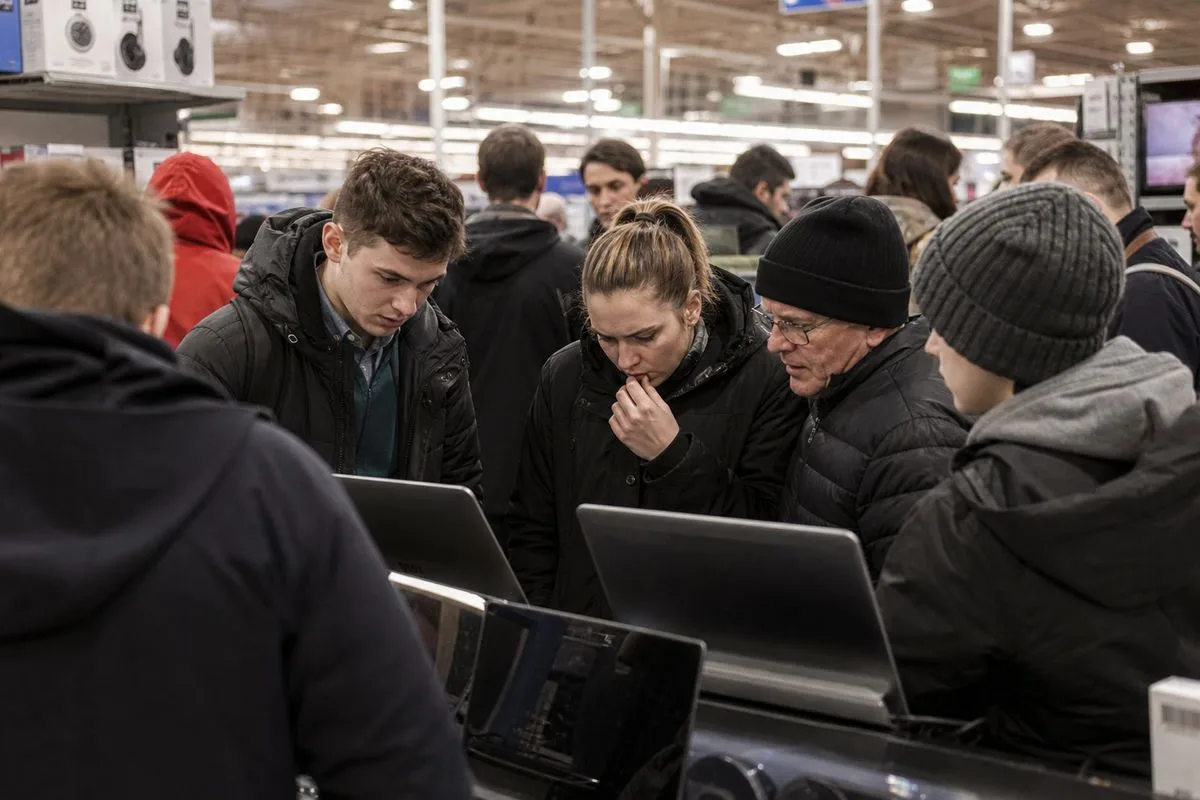
At a high level, these four retailers compete on different strengths. Amazon is built for speed, selection, and convenience, with a deal format that can change hour by hour. Walmart leans into broad household value, store pickup, and aggressive pricing on mainstream categories. Target often wins on curated bundles, own brand value, and a smoother in store experience. Best Buy is the specialist play, particularly for consumer electronics, where advice, installation add ons, and clearer model differentiation can matter.
The supplementary material includes an Amazon “Black Friday Sale and Deals 2026” landing page title, and a BlackFriday.com style “latest store ads for 2026” title. Those do not confirm deal specifics, but they do confirm the ecosystem: Amazon positions Black Friday as a dedicated sale event, while ad aggregators position it as a race to publish circulars and previews. That is the environment shoppers are navigating.
There is also a useful signal in community discussion. For example, a Reddit thread about Lovesac mentions historical discounts of “40% off” under a previous setup, with uncertainty about what happens “under the new” arrangement. That is not a verified retailer statement, but it highlights a real 2026 dynamic: brands and retailers tweak discount structures, sometimes reducing the headline percentage while adding bundles, financing, or gift cards to keep the offer looking attractive.
Another community post about a mobile provider suggests a “kick off” earlier in November with staged reveals. Again, not official proof for the big four retailers, but it reinforces the same pattern: Black Friday is increasingly a sequence of drops. Anyone waiting for 27 November 2026 may still get deals, but they may miss the best stock availability.
Black Friday 2026 comparison table: deals style, delivery, returns, and shopping experience
Shoppers often compare prices first, but the more expensive mistake is choosing the wrong process. A bargain is only a bargain if it arrives on time, can be returned without a fight, and is the right model in the first place. The table below compares the four retailers on the dimensions that typically decide whether Black Friday feels like a win or a headache.
Because the source material does not provide verified 2026 policy changes or specific shipping cut offs, this comparison focuses on the practical differences shoppers should evaluate during Black Friday 2026, using each retailer’s widely understood positioning rather than inventing policy details.
| Dimension | Amazon | Walmart | Target | Best Buy |
|---|---|---|---|---|
| Deal format | Fast moving, lots of short windows, huge catalogue | Big headline discounts on mainstream items, often multi category | Curated promos, bundles, giftable categories | Electronics led, clearer model focus, fewer but sharper promos |
| Convenience | Home delivery centric, easy to browse and compare quickly | Strong store network, pickup and delivery mix | Pickup friendly, generally smooth in store experience | Store pickup for electronics, staff help can be valuable |
| Risk of confusion | High, many similar listings and third party sellers | Medium, broad range but fewer near identical listings | Medium, curated range reduces choice overload | Lower for electronics, but model numbers still matter |
| Best for | Households that want speed, selection, and quick price checks | Families doing a big weekly shop style basket plus gifts | Gift buying, home, beauty, and “nice but affordable” items | TVs, laptops, gaming, and higher value electronics decisions |
The point is not that one retailer is “best”. It is that each one is optimised for a different kind of shopper. Black Friday 2026 rewards people who match the retailer to the mission. Buying a laptop is not the same as buying stocking fillers, and treating them as the same is how people end up with the wrong spec, the wrong seller, or a return that drags on into January.
And yes, the date still matters. With Black Friday on 27 November 2026, the shipping window to Christmas is shorter than in years when the date falls earlier. That tends to make pickup and local stock more attractive, especially for last minute buyers.
Black Friday 2026: pricing signals, discount credibility, and how not to get played
Here is the uncomfortable truth about Black Friday: the loudest discount is not always the best deal. The source material available does not provide verified 2026 discount rates across categories, so it would be wrong to claim, say, “TVs will be 40% off” or “laptops will hit record lows”. But it is still possible to talk about discount credibility, because the mechanics are visible every year.
First, watch for the difference between a real price cut and a reshuffled bundle. Retailers and brands often use bundles to protect margins while still offering value. That can be great if the extras are things the buyer would purchase anyway. It is less great if the bundle is padded with low value accessories. Community discussion around brands like Lovesac hints at this kind of shift, where historical headline discounts become uncertain under new terms. That is a warning sign for shoppers: do not assume last year’s structure repeats in 2026.
Second, be wary of model number tricks in electronics. Best Buy’s advantage is often clarity, but even specialists can carry retailer specific variants. Amazon’s huge marketplace can make this worse, because near identical listings can differ in warranty, seller, or included accessories. Walmart and Target sit somewhere in the middle. The practical move for Black Friday 2026 is simple: compare exact model numbers, storage sizes, and included items, not just the product name.
Third, consider timing as a pricing signal. If a retailer starts “early Black Friday” promotions weeks ahead, it can mean one of two things: either they are genuinely competing for attention early, or they are spreading demand to avoid stock shocks. In both cases, the shopper’s best defence is to decide a target price in advance and act when it appears, rather than waiting for a mythical “final drop” on 27 November 2026.
Pros and cons: choosing where to shop for Black Friday 2026
Different retailers create different kinds of stress. Some people hate crowds and want delivery. Others hate delivery uncertainty and want pickup. And some just want the simplest return process possible. The lists below lay out the trade offs in plain English, because Black Friday 2026 is not just about saving money, it is about saving time and avoiding hassle.
Amazon
Pros
- Huge selection, easy to compare many options quickly.
- Convenient for households that want delivery and fast checkout.
- Deal cadence can surface good prices without waiting for the day itself.
Cons
- High risk of confusion from near identical listings and third party sellers.
- Impulse buying is easier, which can blow a budget fast.
- Some “deals” are just price fluctuations unless the buyer tracks history.
Walmart
Pros
- Strong for broad household baskets, gifts plus essentials in one place.
- Store network supports pickup, which matters when Black Friday is late in November.
- Often competitive on mainstream, high volume products.
Cons
- Popular items can sell through quickly, especially in store.
- Range can be broad but not always deep in specialist categories.
- Deal presentation can be noisy across many categories at once.
Target
Pros
- Curated promotions can be easier to shop, less choice paralysis.
- Strong for giftable categories and own brand value.
- Pickup friendly for late season shopping.
Cons
- May not match Amazon’s sheer breadth of selection.
- Some categories are less aggressive than specialist retailers.
- Bundles can be great, but only if the buyer actually wants the extras.
Best Buy
Pros
- Electronics focus helps shoppers avoid buying the wrong spec.
- Good for big ticket purchases where advice and add ons matter.
- Clearer comparison across TVs, laptops, and gaming gear.
Cons
- Less useful for general gifting outside tech.
- Deals may be fewer in number, even if strong in value.
- Stock on hot electronics can vanish quickly during peak periods.
Notice what is missing: promises of exact percentages. That is deliberate. The available source material does not provide those figures, and shoppers are better served by a decision framework than by made up numbers that sound confident but are not verifiable.
Still, the shape of the season is clear. Black Friday 2026 is late, the deal cycle starts early, and the best outcomes go to shoppers who decide what they are optimising for: lowest price, fastest delivery, easiest returns, or the least risk of buying the wrong thing.
Black Friday 2026 in context: how it compares with earlier years and why 2026 feels different
Black Friday used to be a doorbuster story. People queued, stores opened at silly hours, and the whole thing was a single dramatic day. That era is fading. The rise of online shopping, app based promotions, and rolling “early Black Friday” campaigns has stretched the event into a season. The fact that major media outlets publish “everything you need to know” guides days or weeks ahead is part of that shift, and it nudges consumers to treat Black Friday as a planned purchase window rather than an impulsive sprint.
In 2026, the late date of 27 November 2026 adds extra intensity. There is less time between Black Friday and Christmas, which tends to push two behaviours. Retailers start earlier to capture demand and manage logistics. Shoppers either buy earlier to avoid shipping anxiety, or they lean harder on pickup to keep control. Either way, the “one day only” mindset is not just outdated, it is actively unhelpful.
There is also a cultural shift in how people talk about deals. Community discussions show shoppers comparing historical discounts and questioning whether they will hold under new arrangements. That scepticism is healthy. It reflects a more experienced consumer base, one that knows discounts can be restructured, and that a headline percentage is not the whole story.
And then there is the simple reality that budgets are under pressure for many households. When money is tight, Black Friday becomes less about splurging and more about timing necessary purchases. That is why the comparison approach matters. Choosing the right retailer is a way to reduce risk, not just chase savings.
Black Friday 2026: the verdict, who should shop where, and when to pull the trigger
The Verdict: For Black Friday 2026, the smartest play is to pick the retailer that matches the category and the risk level, then start watching prices well before 27 November 2026. Waiting for the day itself can still work, but it is no longer the default best strategy, especially when Black Friday lands late in the month and the shipping clock to Christmas is ticking loudly in the background.
If the shopper wants maximum selection and fast moving online deals, Amazon is usually the natural first stop. But it comes with a responsibility: check the seller, check the model, and do not assume the first “limited time” badge is meaningful. If the household is doing a mixed basket, toys, small appliances, essentials, and a few gifts, Walmart is often the most practical, especially for people who prefer pickup. Target is the calmer option for gift buying and curated value, particularly when the buyer wants fewer choices and less chaos. And for electronics that need careful comparison, Best Buy remains the specialist choice, because getting the right model is often worth more than squeezing out an extra few pounds or dollars.
The final bit of advice is boring, but it works. Decide the must buys, decide the nice to haves, and set a ceiling price for each. Then shop the early promotions with a clear head. Black Friday 2026 rewards planning, not adrenaline. And honestly, that is probably for the best.
Closing thoughts: how to make Black Friday 2026 feel like a win
Black Friday 2026 is not just a retail event, it is a test of decision making under pressure. The noise is the point. Retailers want shoppers to feel urgency, because urgency short circuits comparison. The best defence is to slow down, even when the countdown timer is screaming.
And if there is one takeaway from the way Black Friday is covered now, it is this: the season starts early, the date still matters, and the “best” retailer depends on what the shopper is buying and how they want to receive it. Treat it as a comparison, not a stampede. That is how people actually save money, and keep their sanity too.