Coffee emoji explained: meaning, history, and why it keeps changing
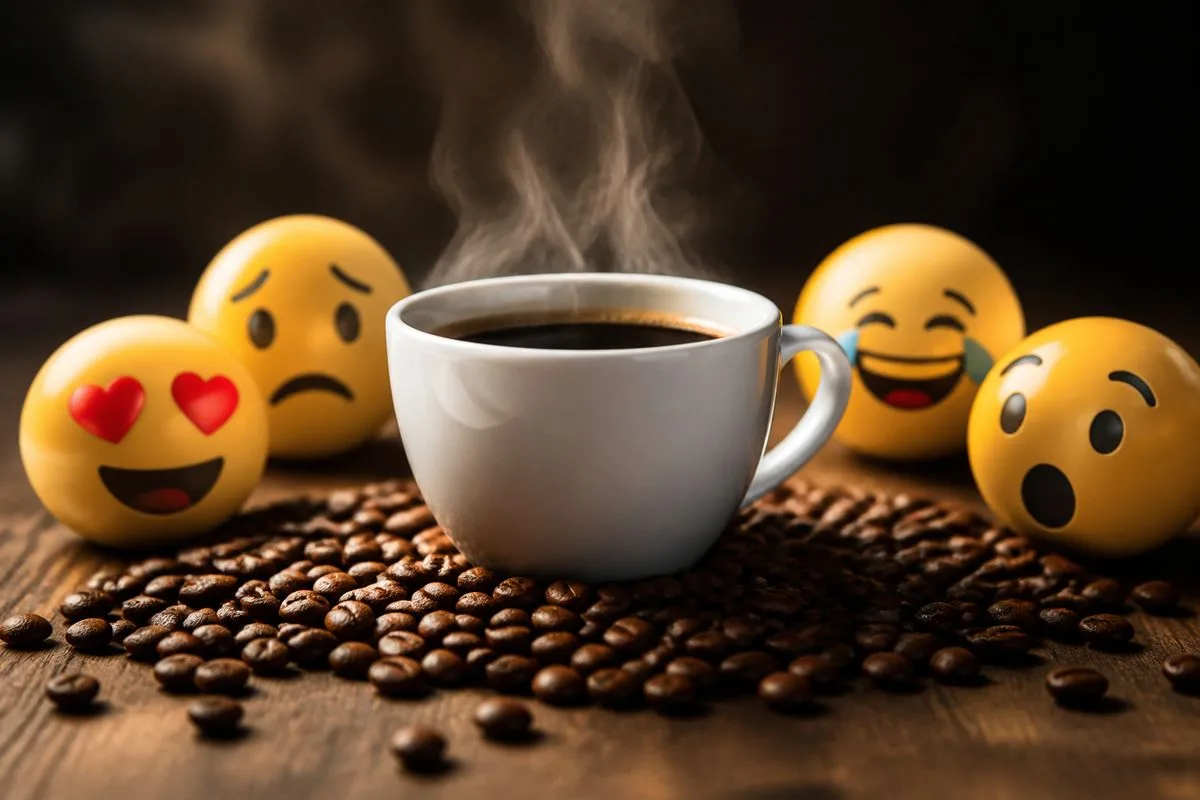
The coffee emoji is having a quiet moment, and it matters
The coffee emoji looks simple, almost boring. A cup. A bit of steam. Job done. But in October 2026, it is sitting at the centre of a surprisingly important conversation about how digital language evolves, how platforms shape meaning, and why tiny design tweaks can change the tone of a message. People are not just searching for how to copy and paste it, they are trying to work out what it really says in different contexts.
The immediate trigger is not a single corporate announcement or a dramatic product launch. It is a cluster of renewed attention around the hot beverage symbol itself, driven by explainers and template tools that frame it as everything from “morning productivity” to “spill the tea” gossip. And that is the point. The coffee emoji is no longer only about coffee. It is a flexible social signal, and its meaning depends on who is sending it, where, and alongside which other emojis.

Under the hood, the story is also about standardisation. The hot beverage emoji is an old one by emoji standards. It appears on early Japanese emoji keyboards from Softbank in 1997, is later approved as part of Unicode 4.0 in 2003, and then formally included in Emoji 1.0 in 2015. That timeline matters because it explains why the symbol is so widely supported, and why it has accumulated so many cultural layers over time.
Coffee emoji meaning in 2026: coffee, tea, and a lot more besides
At face value, the hot beverage emoji depicts “a cup of a steaming hot dark beverage, usually interpreted as coffee or tea”. Most platforms render it as a white ceramic mug on a saucer with waves of steam rising. But not all designs include steam, and some omit the saucer entirely. That sounds like a minor art direction choice. In practice, it changes the vibe. Steam reads as fresh, warm, inviting. No steam can read as static, decorative, or even a little flat.
In everyday messaging, the coffee emoji is heavily associated with breakfast, morning greetings, and productivity. It is shorthand for “I am up”, “I am working”, “I need caffeine”, or “let’s talk”. That range is why it shows up in everything from team chats to family group threads. It is polite, low risk, and widely understood, which is exactly why it has become a default.
But the more interesting shift is semantic. The same symbol is also used to mean “tea” in the slang sense of gossip, tied to the phrase “spill the tea”. In more recent slang usage, “tea” can also be a compliment about someone’s physical attractiveness, as in “your body is tea”. The coffee emoji can therefore carry a second layer that has nothing to do with beverages. And because it is visually a hot drink rather than explicitly coffee beans, it slips easily between coffee and tea meanings without most people noticing.
Then there is meme culture. The hot beverage emoji is often paired with the 🐸 Frog Face to reference the “But That’s None of My Business” meme. In that context, it signals judgement, detachment, or a pointed aside. Same cup, totally different tone. And yes, this is where misunderstandings happen. A manager sending ☕ to a team at 08:30 probably means “good morning”. A friend sending ☕ after a bit of drama might mean “tell me everything”. Context is doing the heavy lifting.
What changed: design differences, platform choices, and why people notice
One reason the coffee emoji keeps resurfacing in public discussion is that it is not rendered identically everywhere. The standard defines the concept, not the exact artwork. That leaves room for platform-specific interpretation, and historically some of those interpretations have been quite distinctive. Emojipedia notes that Samsung’s design previously featured a foamy white tulip latte art design, while Microsoft’s design previously depicted a blue mug. Those are not trivial variations. Latte art suggests speciality coffee culture, cafés, and a certain lifestyle aesthetic. A blue mug feels more like an office kitchen, a canteen, or a generic hot drink.
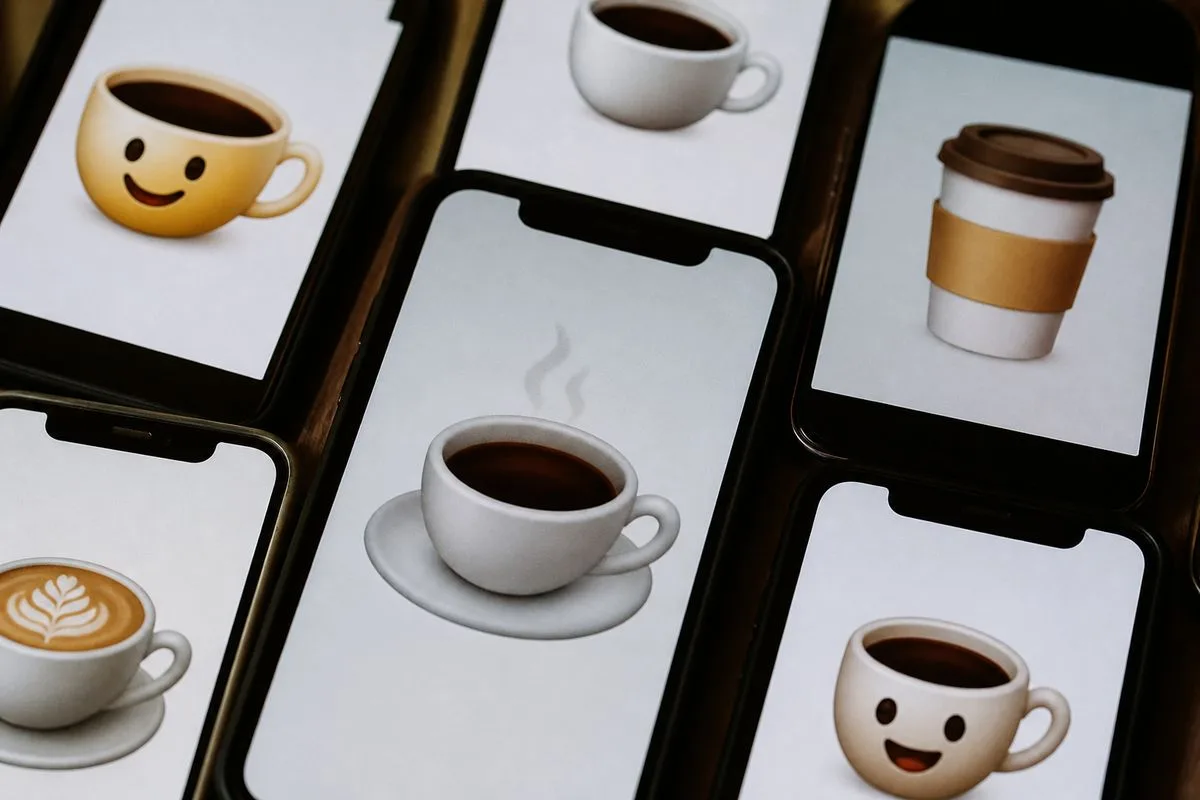
These differences affect how the emoji is perceived in marketing and personal communication. A café promoting a “flat white” deal benefits from a latte-art style cup because it visually reinforces the product category. A corporate team using the emoji to signal a break might prefer something neutral and familiar. When platforms update their emoji sets, users often experience it as a change in meaning even if the Unicode identity remains the same. It is the same code point, but it does not feel like the same message.
And there is a second, quieter change: the growing ecosystem around the coffee emoji. CapCut, for example, positions the “coffee cup emoji” as a creative asset for templates, stickers, and social content, describing it as a symbol of “warmth, relaxation, and social connection”. That framing is not a technical definition, but it influences how creators use it. If a toolset encourages the emoji as a “friendly vibes” marker, it becomes one. This is how meaning spreads now, not through dictionaries but through repeated patterns in content creation.
It is also worth noting what the available source material does not provide. There are no verified platform-wide usage statistics here, no official engagement numbers, and no single “most common meaning” backed by data. The story is qualitative, based on how reference guides describe usage and how creative tools encourage it. Fair enough. In language, perception often matters as much as measurement.
Where the coffee emoji comes from: Softbank, Unicode, and Emoji 1.0
The coffee emoji’s longevity is not an accident. It predates the modern, globally standardised emoji era. According to Emojipedia, it appears on early Japanese emoji keyboards by Softbank in 1997, and it also has representation in earlier pre-emoji Japanese character sets. That origin story matters because it explains why the symbol feels “native” to digital communication. It is not a novelty add-on. It is part of the original furniture.
The next milestone is formal standardisation. The hot beverage emoji is approved as part of Unicode 4.0 in 2003. Unicode’s role is to ensure that the same character can be represented consistently across systems, even if the visual design differs. This is the backbone of cross-platform messaging. Without it, the coffee emoji would be a proprietary icon that works in one ecosystem and breaks in another. With it, the symbol becomes a shared piece of digital language.
Finally, it is added to Emoji 1.0 in 2015, which is a key moment in emoji history. Emoji 1.0 is effectively the point at which emoji becomes a formalised set rather than a loosely connected collection of vendor icons. For the coffee emoji, inclusion in Emoji 1.0 cements its role as a baseline symbol that virtually every modern device supports. That ubiquity is why it is so useful, and why it is so frequently chosen over more niche alternatives.
There is a broader lesson here for anyone working in digital communication. The oldest emojis often become the most semantically flexible. They have had time to accumulate associations, memes, and secondary meanings. Newer emojis can be more precise, but they do not have the same cultural weight. The coffee emoji is a classic example: it starts as a literal cup and ends up as a social cue for everything from productivity to gossip.
Coffee emoji in marketing and content: why brands keep reaching for it
From a business perspective, the coffee emoji is a workhorse. CapCut’s description is blunt about it: businesses can leverage the coffee cup emoji to engage customers in café promotions or online campaigns. That is not exactly groundbreaking, but it is true. The symbol is instantly recognisable, visually compact, and emotionally warm. It signals comfort and routine, which are powerful levers in consumer messaging.
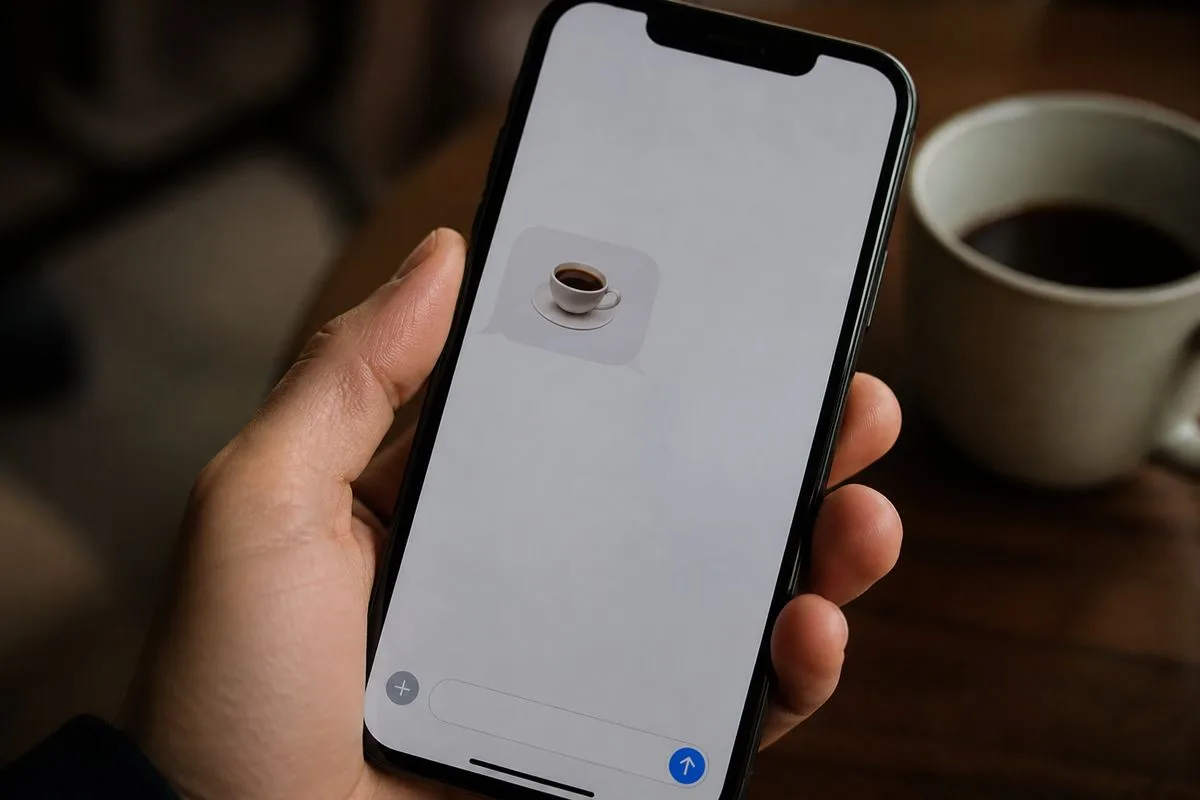
It also performs a practical function in social media and messaging: it sets a tone quickly. A post that says “Morning” can feel empty. “Morning ☕” feels like a scene. It implies a ritual, a pause, a moment of calm before the day gets messy. For brands, that is useful because it creates a lifestyle association without needing a full creative concept. And for creators, it is a shortcut to mood.
But there is a risk. Because the coffee emoji can also mean “tea” as gossip, it can unintentionally read as “I have something to say” rather than “I am having a drink”. In consumer marketing, that ambiguity can be playful. In corporate communications, it can be distracting. A customer service team replying with ☕ might come across as flippant, even if the intention is friendly. The symbol is casual by nature, and that casualness does not always fit.
Actionably, brands and comms teams should treat the coffee emoji like any other tone marker. It needs a style guide rule. When is it appropriate, and when is it not. If it is used, what does it mean in that channel. And if the brand operates across regions, it is worth remembering that “coffee” and “tea” carry different cultural weight. The emoji is the same, but the associations are not.
Coffee emoji versus coffee emojis: the wider set people actually use
Search behaviour around “coffee emoji” often includes a second intent: people want alternatives. Not just the hot beverage cup, but a whole palette of coffee-related symbols for different moods and messages. Emojipedia even lists a set of emojis that “go great with” the hot beverage, including breakfast and dining icons such as pancakes, cutlery, bread, and tea-related symbols. The point is not that there is one correct coffee emoji. It is that people build combinations to tell a story.
In practice, the hot beverage emoji is the anchor. It is the one that reads as “hot drink” instantly. Then users add context: food for breakfast, a building for office life, a sleepy face for “need caffeine”, or a newspaper for “morning read”. This is how emoji language works at scale. Single symbols are blunt. Sequences are expressive. And the coffee emoji is unusually good at anchoring those sequences because it is so widely understood.

There is also a subtle platform and community effect. Template libraries and sticker packs encourage certain combinations, which then become trends. CapCut’s template ecosystem, for example, explicitly frames the coffee cup emoji as a way to “boost engagement and personalise digital interactions”. That is not a neutral statement. It is a behavioural nudge. If creators repeatedly see coffee emoji templates associated with “morning routine” content, the emoji becomes part of that genre’s visual grammar.
For anyone trying to communicate clearly, the takeaway is simple: treat the coffee emoji as a flexible base, not a precise label. If the message needs to be unambiguous, add words. If the message is meant to be atmospheric, lean into combinations. And if the message is sensitive, avoid the meme-adjacent pairings that can introduce unintended sarcasm.
What’s Next
The coffee emoji is unlikely to change dramatically in meaning, but it is likely to keep expanding. That is what happens to ubiquitous symbols. As more communities use it to signal “tea” as gossip, and as more creators embed it into morning routine content formats, the emoji becomes less about the beverage and more about the social moment around it. In 2026, the cup is already doing double and triple duty. Over the next few years, it will probably do even more, especially as short-form video templates and sticker ecosystems keep pushing standardised visual tropes.
Design variation will remain a live issue too. Emojipedia’s notes about older Samsung and Microsoft designs are a reminder that platforms iterate. When a platform tweaks steam, saucer, colour, or cup shape, users will notice, and some will complain. Not because they are precious about mugs, but because they are precious about tone. A warmer-looking cup reads friendlier. A flatter design reads more neutral. And when billions of messages are sent every day, even small tonal shifts can feel like a big deal.
For organisations, the practical next step is governance. Emoji use is now part of brand voice, whether teams admit it or not. The coffee emoji in particular is so common that it often slips into external comms without review. A sensible approach is to define a few approved contexts, for example morning greetings, café promotions, event invitations, and internal “break” signals, and to explicitly discourage it in customer complaints handling or sensitive announcements. It is not about banning fun. It is about avoiding accidental sarcasm or mixed signals.
Closing thoughts: a small symbol that carries a lot of culture
The coffee emoji endures because it is simple, human, and adaptable. It starts life as a literal hot drink icon on Japanese mobile keyboards in 1997, becomes a standardised Unicode character in 2003, and then lands in Emoji 1.0 in 2015. Since then, it has picked up layers of meaning: morning routine, productivity, comfort, gossip, meme commentary. That is a lot for one cup to carry.
In 2026, the most useful way to think about the coffee emoji is as a tone-setting device. It can soften a message, create a sense of shared ritual, or invite conversation. But it can also hint at judgement or gossip depending on context, especially when paired with other symbols like the frog face. None of this is inherently good or bad. It is just language doing what language does, evolving in public.
And for anyone searching “coffee emoji” hoping for a definitive answer, here is the honest truth: there is no single meaning that fits every situation. The best interpretation comes from context, platform design, and the relationship between sender and receiver. That might feel messy. But it is also why emoji remains so effective. A tiny cup can say “good morning”, “let’s catch up”, or “tell me everything”. Sometimes all at once.