Black Sheep Coffee in 2026, what reviews and local cafés reveal about the brand
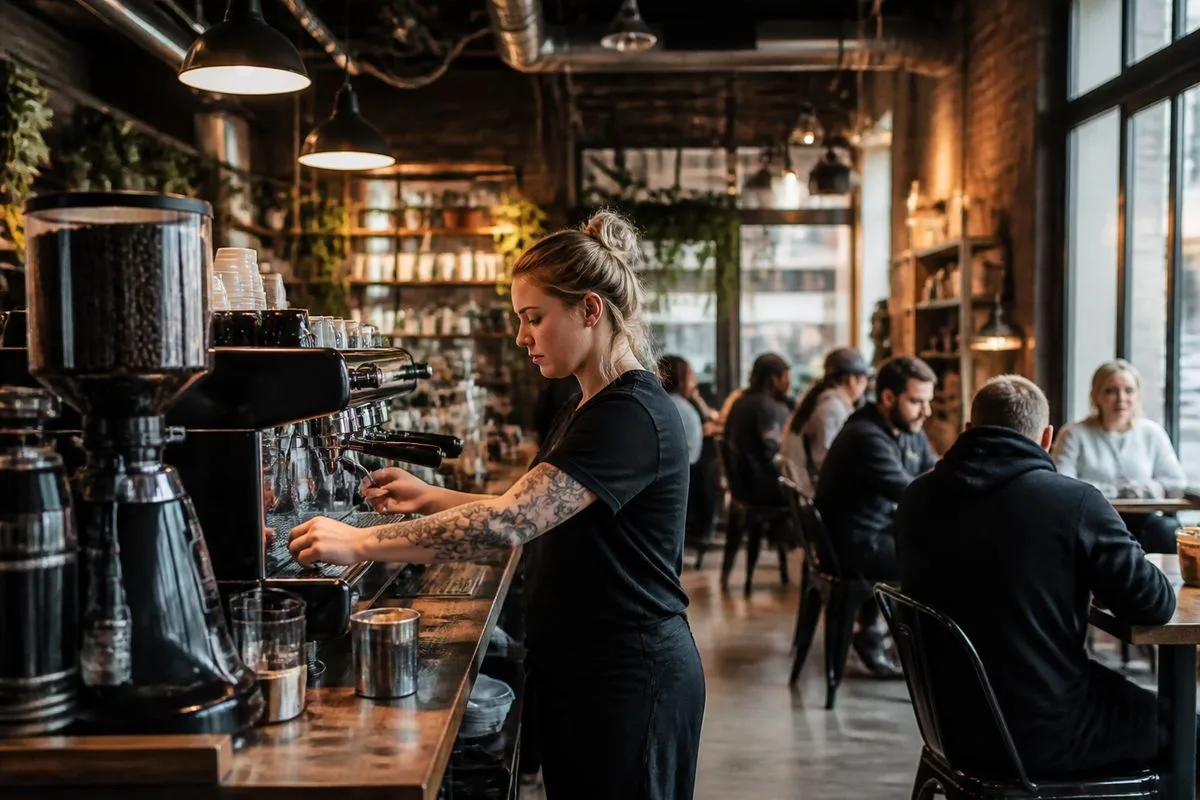
Black Sheep Coffee in 2026, a brand under the microscope of reviews and local expectations
Black Sheep Coffee is having a very 2026 kind of moment, not because of one dramatic corporate announcement, but because the public record is now a living thing. Ratings, review moderation notes, delivery complaints, praise for specific drinks, even the odd hoodie purchase, all sit side by side and shape the brand story in real time. And in a coffee market that is crowded, expensive to operate in, and increasingly unforgiving, that story matters.
The clearest snapshot comes from Trustpilot, where Black Sheep Coffee shows 1,729 reviews and a 3.9 TrustScore, with 321 reviews in the last 12 months (as displayed in September 2026). Trustpilot also states it uses automated screening to protect platform integrity and may label reviews as “Verified” when it can confirm a business interaction took place, but it does not fact check review claims. That combination, volume plus visibility plus imperfect verification, is basically the modern reputation engine for consumer brands.
At the same time, the wider coffee conversation is not just about chains. It is also about local operators that sell a sense of place and a set of values. A good example is The Black Sheep Coffee Shop in Glendale, Arizona, which positions itself around “authenticity through flavour”, preservative and dye free syrups, and a partnership with a local roaster for dark roast rich Honduran beans. The naming overlap is a reminder of how crowded the “Black Sheep” identity space is, and how easily consumers can conflate brands if messaging is not crystal clear.
What the September 2026 Trustpilot snapshot says about Black Sheep Coffee
The Trustpilot page does not read like a glossy brand campaign, and that is precisely why it is useful. It lists Black Sheep Coffee as a “Coffee Store” and shows a 3.9 rating based on 1,729 reviews. It also notes the profile is “Claimed” and references a January 2020 paid Trustpilot subscription. Those are not small details. A claimed profile signals the company is actively managing its presence, and a subscription suggests it treats review platforms as a formal channel, not an afterthought.
Trustpilot’s own framing is also part of the story. The platform says it uses “24/7 automated software” to screen reviews, and it encourages users to flag content that breaches guidelines or is not based on a genuine experience. But it also explicitly says it does not fact check reviews. In practice, that means the page is less a court record and more a public forum with guardrails. Fair enough. But brands that rely on it need to understand what it can and cannot prove.
Then there is the AI generated “Review summary”, which Trustpilot says is created with AI based on recent reviews, and in this case considers 321 reviews. The summary highlights frequent praise for “delicious coffee flavours”, “fresh bakery items”, “wonderful atmosphere”, “exceptionally fast service”, and “friendly staff”. It also flags recurring negatives: occasional order mistakes, fragile items arriving broken in transit, long wait times, and “unorganised fulfilment processes”. None of that is exactly groundbreaking for a fast growing coffee operator, but the point is repetition. When the same themes keep showing up, they become the brand’s unofficial product roadmap.

From specialty grade Robusta to global cafés, what Black Sheep Coffee is selling
Black Sheep Coffee’s own description on the Trustpilot page is blunt and ambitious. It says it is “Serving the first specialty grade Robusta beans on the market” and calls itself an innovator. It also describes a footprint that includes “cafes, kiosks and cocktail bars across the globe”. The language is designed to do two things at once: differentiate on coffee credentials and signal scale.
The Robusta angle is particularly interesting because it cuts against a long running speciality coffee orthodoxy that treats Arabica as the default “quality” bean. Black Sheep is not alone in trying to rehabilitate Robusta, but it is unusual to see a consumer facing chain lean into it so explicitly. That positioning can work, but only if the cup experience is consistent and the staff can explain it without sounding like they are reading a script. Otherwise, it risks becoming a niche talking point that does not translate at the till.
Operationally, the Trustpilot content hints at a hybrid model: physical venues plus online ordering and delivery of beans and merchandise. One “Verified” review excerpt mentions ordering decaf and robusta bags online, with dispatch described as quick, and delivery issues attributed to Royal Mail rather than the company. Another recent “Verified” entry on 7 September 2026 praises “Very quick delivery” and “great quality hoodie”. That is a small detail, but it shows the brand is not just selling drinks, it is selling identity. And once you sell identity, customers expect the logistics to match the vibe.
The Black Sheep Coffee Shop in Glendale, a local café playbook built on clean ingredients
The Black Sheep Coffee Shop in Glendale, Arizona is not presented as part of Black Sheep Coffee’s UK based chain. The source material describes it as “Nestled in historic downtown Glendale, AZ”, with a strong emphasis on local charm and artisan taste. It claims to serve preservative and dye free syrups, and to partner with a local roaster for “dark roast rich Honduran beans”. It also says “many call” it the best coffee in Glendale, but it does not provide independent evidence or a specific ranking, so that claim should be read as promotional rather than verified.
What is useful here is the menu and the positioning. The Glendale café highlights panini press sandwiches, bagels, and “flaky homemade pastries crafted daily”. It frames the experience as an invitation to slow down, with “clean ingredients” and “real flavour without compromise”. This is a very 2026 consumer pitch: less about novelty, more about trust, ingredient transparency, and a sense of community. And it is not just a sit in café either. It actively promotes catering for birthdays, family catch ups, and business meetups, with specific items like grilled cheese, turkey provolone, and vegetarian options.
Why does this matter to the Black Sheep Coffee conversation? Because it shows what smaller operators are doing well, and what customers increasingly expect. Local cafés are not trying to outspend chains on marketing. They are trying to out explain them. They talk about syrups, beans, sourcing relationships, and what is made daily. That level of detail raises the bar for everyone else, including larger brands that might once have relied on scale and convenience alone.
Service consistency and fulfilment are now part of the coffee product
Trustpilot’s AI summary and the review snippets point to a familiar tension: customers love the coffee and the atmosphere, but they get frustrated when operations wobble. The summary mentions “occasional order mistakes”, “fragile items arriving broken in transit”, “long wait times”, and “unorganised fulfilment processes”. The “what people talk about most” section also shows “ambiguous experiences” across quality, staff, and order processes, reflecting disagreement among reviewers rather than a single narrative.
This is where coffee retail has changed. The product is no longer just the drink. It is the queue, the accuracy of the order, the packaging, the delivery partner, the speed of dispatch, and how the brand responds when something goes wrong. Trustpilot notes that Black Sheep Coffee “Replied to 75% of negative reviews” and “Typically replies within 2 weeks”. That is a concrete operational signal. It suggests the company is engaged, but also that response time is measured in weeks, not hours. In a world where customers can post a complaint in seconds, two weeks can feel like a long time, even if it is perfectly normal for a business managing volume.
There is also a subtle reputational risk in selling both perishable and non perishable items. A broken item in transit is annoying when it is a mug. It is more damaging when it is coffee that arrives compromised, or when the customer feels the fulfilment process is chaotic. And because Trustpilot explicitly does not fact check reviews, the brand’s best defence is not arguing about the details. It is reducing the number of incidents that generate complaints in the first place, then responding quickly and consistently when they do happen.
How review platforms shape coffee brands in 2026, and what companies can actually do about it
Trustpilot’s own explanation is worth sitting with: it uses technology to protect platform integrity, it screens reviews with automated software, it may mark some as “Verified”, and it does not fact check claims. That mix creates a public arena where perception can outrun reality. But brands cannot opt out. Customers will talk somewhere, and platforms that aggregate those conversations become de facto reputation dashboards.
For coffee operators, the strategic question is not “How does the company get a higher score?” but “What operational changes would naturally produce better reviews?” The Trustpilot summary already points to the likely levers: reduce order mistakes, improve packaging for fragile items, tighten fulfilment workflows, and manage peak time waits. None of these are glamorous. They are process work. But they are also the difference between a 3.9 and something meaningfully higher over time.
There is also a human factor that comes through in the snippets. One reviewer praises a seating area but complains about an “impatient and moody” server. Another praises friendly service and a nice atmosphere at a specific location. Coffee is intimate retail. A single interaction can colour the entire visit. Training, staffing levels, and store leadership are not just HR topics, they are brand topics. And when a chain scales, the variance between locations becomes the story unless the company actively manages it.
The naming overlap problem, and why clarity beats cleverness
It is hard to ignore the coincidence: “Black Sheep Coffee” is a UK based brand with a London address listed as 81 Southwark Street, SE10HX on the Trustpilot page, while “The Black Sheep Coffee Shop in Glendale” is a distinct café in Arizona with its own local story. The source material does not claim any relationship between the two. But to a casual consumer scanning search results, social posts, or map listings, the similarity can be confusing.
This matters for SEO and for customer experience. If a customer searches for “Black Sheep Coffee Glendale” they might not know whether they are looking for the UK chain, the Arizona café, or something else entirely. And if a customer leaves a review in the wrong place, or forms an impression based on the wrong business, it creates noise that is difficult to correct. Brands with common names often underestimate this. They should not. In 2026, discovery is messy, and people do not always read carefully.
The practical response is boring but effective: consistent brand descriptors, clear location signals, and content that repeatedly states what the business is and where it operates. The Glendale café leans on “historic downtown Glendale, AZ” and local partnerships. Black Sheep Coffee leans on innovation, Robusta, and a global footprint. Both approaches can work. But both need to be explicit, because the internet does not reward ambiguity.
A grounded alternative model, subscription coffee with community value baked in
One reason the coffee market stays so competitive is that there are multiple viable models, and customers move between them depending on mood, budget, and routine. Chains offer convenience and consistency. Local cafés offer place and personality. And then there is the at home speciality segment, which has matured into something far more mainstream than it was a decade ago.
In that context, Coffee Goblin is a useful example of how smaller UK operators differentiate without trying to mimic chains. The pitch is straightforward: freshly roasted speciality coffee delivered to the door, ethically sourced 100% Arabica, and a “Discovery Pack” of handpicked goodies from local artisans to support small UK businesses. That last part is the hook. It turns a coffee delivery into a small act of community support (and, frankly, a more interesting unboxing experience).
This is not presented as a direct competitor to Black Sheep Coffee’s café model, because it solves a different problem. But it does illustrate where consumer expectations are heading. People increasingly want their spend to mean something, whether that is ingredient transparency, local partnerships, or support for small producers. Brands that can make that value tangible, not just a slogan, tend to earn loyalty that is harder to shake.
Historical context, coffee’s shift from drink to identity, and what comes next
Zooming out, the current moment fits a longer arc. Coffee retail has spent years moving from commodity to craft, then from craft to lifestyle. The Trustpilot evidence that customers buy beans online, comment on specific menu items, and even review branded clothing, shows how far that shift has gone. Coffee is no longer just caffeine. It is taste, routine, status, comfort, and sometimes a little tribe.
But the more coffee becomes identity, the less tolerance there is for operational sloppiness. Customers will forgive a busy café once in a while. They will not forgive repeated order errors, inconsistent service, or delivery issues that feel preventable. And because review platforms amplify patterns, even a small percentage of failures can become a dominant narrative if they are emotionally charged and frequently repeated.
For Black Sheep Coffee, the 2026 picture is mixed but workable. A 3.9 score across 1,729 reviews is not a crisis. It is also not a victory lap. It suggests a brand with real fans, clear product appeal, and a meaningful footprint, but also one that needs to keep tightening execution as it grows. Meanwhile, local cafés like The Black Sheep Coffee Shop in Glendale show how “clean ingredients”, local sourcing stories, and catering led community presence can win hearts without needing global scale. The industry is not choosing one model. It is running all of them at once. And the operators that thrive are the ones that treat service, fulfilment, and clarity as part of the product, because in 2026, they are.