Coffee makers in 2026: plastic free machines and smarter buying choices
Coffee makers in 2026, the story behind a suddenly crowded countertop
The coffee makers market is having a very 2026 moment. In late September, two very different signals land at once: a major retailer category push that slices the market into ever more specific “types” and “price ladders”, and a prominent product guide update that adds a new pick, the Caraway 10 Cup Coffee Maker, specifically because it is “entirely plastic free”. Put together, it points to a simple truth that often gets missed. Coffee makers are no longer a boring convenience purchase, they are a values purchase, a space planning decision, and, increasingly, a quality play.
One source frames it as breadth and accessibility. Target’s “Coffee and Espresso Makers” hub lays out espresso machines, drip coffee makers, single serve brewers, French presses, cold brew coffee makers, and combination coffee and espresso machines, then nudges shoppers to browse “by price” from under $25 through under $150. The other source frames it as discernment. The Strategist updates its “Very Best Coffee Makers” list on 24 September 2026, checks stock and pricing, and highlights thermal carafes, dimensions, and capacity as the deciding factors that separate a decent machine from the random, disappointing coffee maker in an Airbnb.
And yes, it is a big deal. Not because any single machine changes the world, but because the decision criteria are changing in plain sight. Plastic free construction becomes a headline feature. Thermal carafes become the default “pro” preference. And the humble drip coffee maker, once treated as the novice’s option, gets repositioned as a legitimate way to produce nuance and balance, if the machine is built properly and used well.
What happened this week: a coffee makers guide update and a retail category push
The clearest “news” event in the source material is the update to The Strategist’s coffee maker guide, dated 24 September 2026. The update notes that the list has been checked for stock and accurate pricing, and that a new pick has been added: the Caraway 10 Cup Coffee Maker, described as an entirely plastic free machine. That is not a throwaway line. It is the kind of product positioning that reflects where premium kitchen appliances are heading, with materials and perceived purity moving closer to the centre of the buying decision.
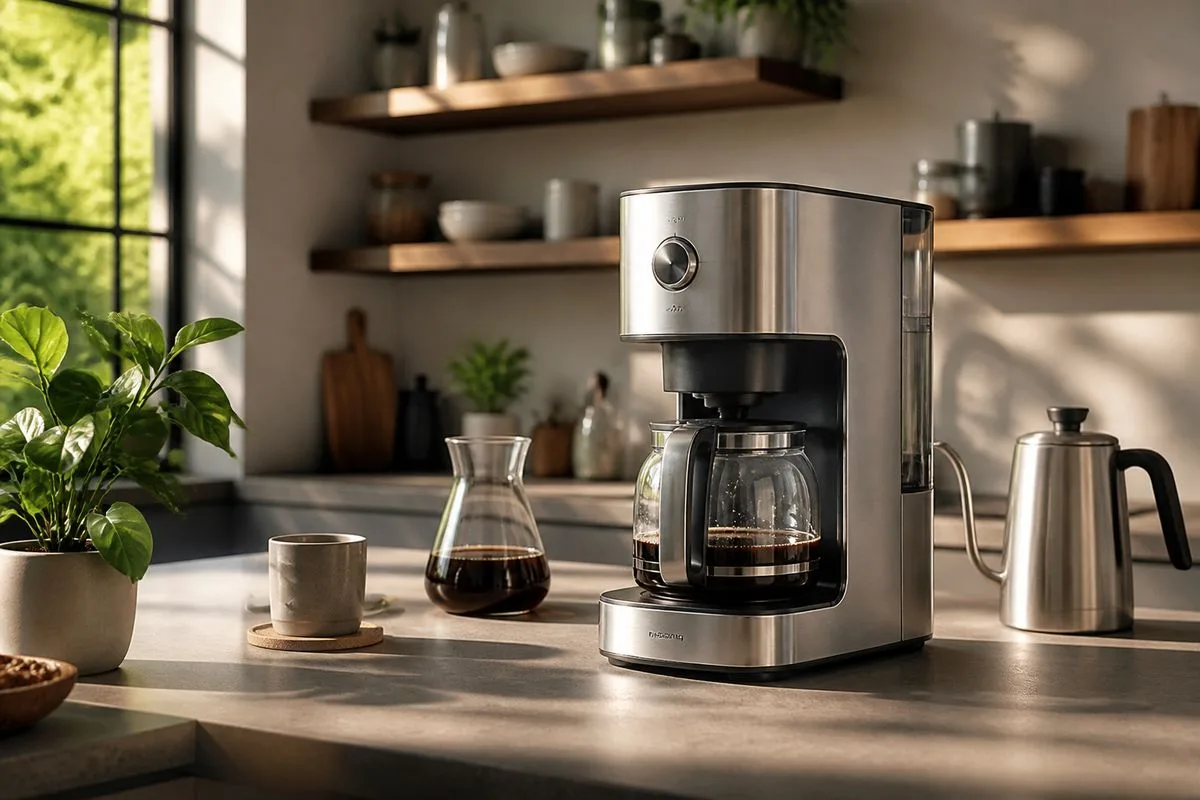
The Strategist piece also surfaces the practical benchmarks that shape the category in 2026. Most machines on its list brew eight or 10 cups, with two at 12 cups and one at four cups. It flags counter space as a real constraint, noting that coffee makers, while not quite as large as most espresso machines, still take up “a considerable amount of counter space”. And it leans hard into temperature management: most of its picks brew into a stainless steel thermal carafe, which keeps coffee warm for a few hours without reheating from below, a method “generally preferred by the pros” because it avoids burnt tasting coffee.
In parallel, Target’s category page reads like a map of mainstream demand. It breaks coffee makers into “single serve”, “automatic drip”, “espresso makers”, and “multi function”, and it speaks in the language of everyday life: auto start for easier mornings, thermal carafes to keep coffee hot “for hours”, and pod machines such as Nespresso for speed and convenience. It also explicitly pushes shoppers to explore by price, from under $25 to under $150, which is a quiet reminder that the market is bifurcating. There is still a race to the bottom on price, but the editorial conversation is drifting upmarket, towards build quality, materials, and repeatable results.
Background: the coffee makers ecosystem, from drip to pods to plastic free
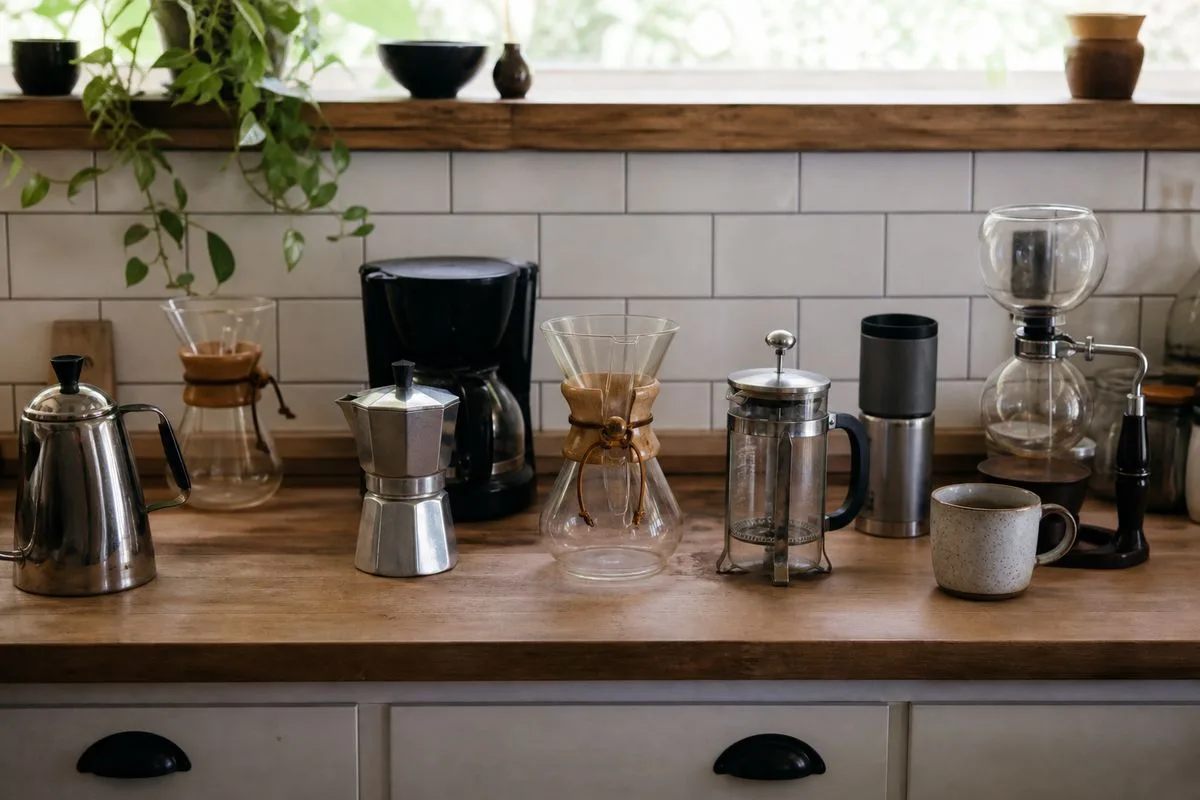
To understand why a plastic free coffee maker makes headlines in a product guide, it helps to look at how fragmented the coffee makers ecosystem has become. Target’s taxonomy alone covers espresso machines, drip coffee makers, single serve brewers, French presses, cold brew coffee makers, and combination coffee and espresso machines. Each of those categories implies a different user, a different rhythm in the morning, and a different tolerance for mess, noise, and learning curve.
Drip coffee makers remain the workhorse. They are built for multiple cups “in one go”, which is exactly how The Strategist writer describes their preferred method. But the old stereotype, that drip is for people who care more about convenience than taste, is directly challenged. The Strategist explicitly says that assumption “couldn’t be further from the truth”, and it frames the best machines as capable of nuance and balance comparable to other methods. That is an important cultural shift. It gives permission for quality minded drinkers to choose drip without feeling like they have settled.
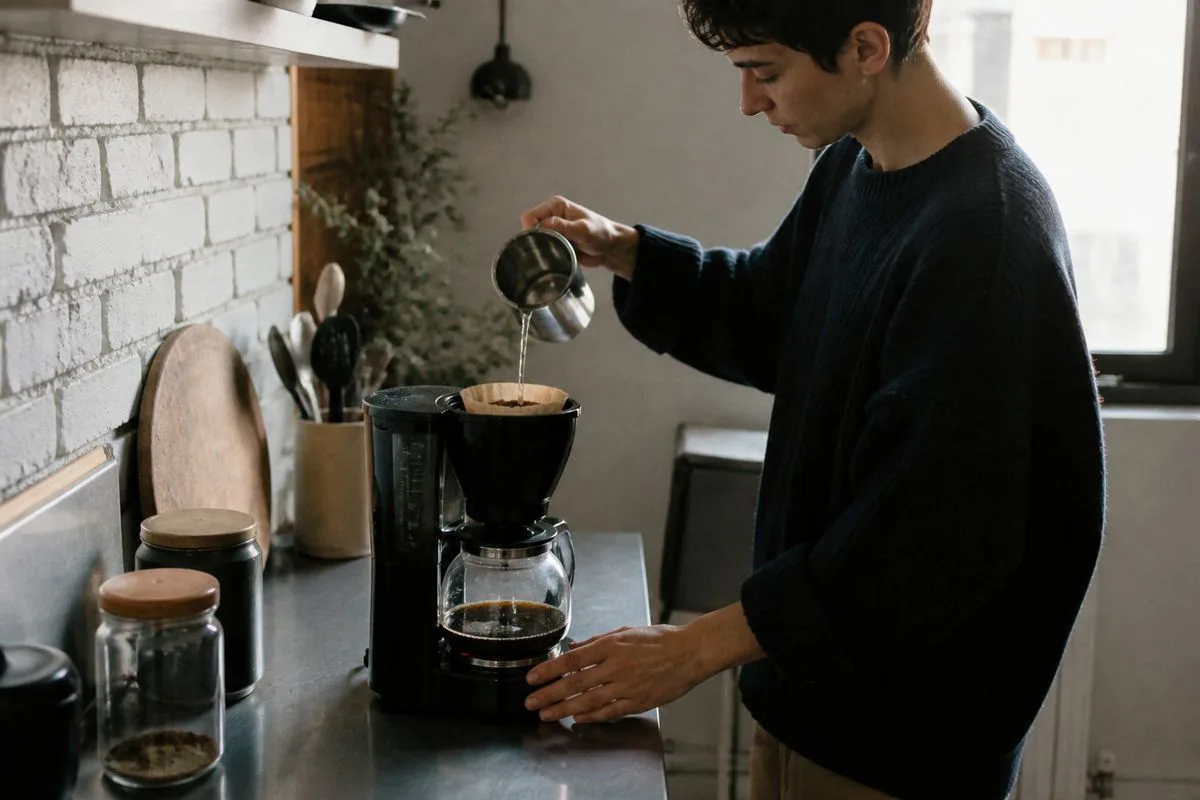
Pods and single serve systems sit in a different lane. Target’s page sells the speed and simplicity: “freshly brewed coffee in minutes” and “a variety of pods to choose from”. It also nods to the waste conversation by pointing out that many pod machines, including Nespresso style systems, have reusable pods or filters that allow the use of ground coffee. That is not a full sustainability solution, but it shows how the category is adapting to consumer pressure without abandoning convenience.
Then there is the “materials” angle, which is where the Caraway addition becomes meaningful. The Strategist calls out plastic free construction as the defining feature of its new pick. The source material does not list the Caraway’s full specifications, so it is not possible to claim exactly how it achieves plastic free design or what trade offs it makes. But the editorial choice itself signals demand for appliances that feel cleaner, longer lasting, and less chemically ambiguous. In 2026, that perception matters almost as much as brew performance.
Inside the product logic: what buyers actually compare in coffee makers
In 2026, coffee makers are bought on constraints first, then on taste. The Strategist lays out three criteria that dominate real world decision making: capacity, size, and temperature hold. Capacity is straightforward, but the nuance is in flexibility. A household might want an eight to 10 cup machine for weekends, but still need the ability to brew less on weekdays. The guide notes that some machines can brew a single cup at a time, which is increasingly relevant as hybrid work patterns keep more people at home some days and out of the house on others.
Size is the unglamorous deal breaker. The Strategist is blunt that coffee makers take up enough counter space that dimensions should be considered. It even lists the OXO 8 Cup Coffee Maker’s size as 9 inches by 14.8 inches by 16.1 inches. That level of specificity is not just nerdy detail, it is a recognition that kitchens are crowded with air fryers, blenders, and all the rest. A coffee maker is not a “tuck it away” purchase for most people, it is a permanent resident.
Temperature hold is where the quality conversation gets serious. The Strategist says most of its picks brew into a stainless steel thermal carafe, which keeps coffee warm for a few hours without reheating from below, and that this is generally preferred by professionals because it avoids burnt tasting coffee. Target’s page mirrors the same idea in more consumer friendly language, recommending a thermal carafe to maintain ideal temperature “without the risk of over brewing”. Different phrasing, same point: heat management is flavour management.
And then there is workflow. The Strategist’s description of the OXO 8 Cup Coffee Maker is a case study in why “simple” sells. It is “simple to use”, offers two settings, and shuts off automatically when finished. It also includes an insert filter that allows brewing two to four cups, including directly into a mug for a single cup. A quote from Noah McKeown, a general manager at Go Get Em Tiger in Los Angeles, highlights a small but telling design detail: the OXO carafe lid has a tiny valve hole, which “traps heat and aromatics better”. That is the kind of micro engineering that turns a commodity appliance into a repeatable daily tool.
Industry implications: why coffee makers are splitting into two markets
The most obvious implication is segmentation. Target’s “coffee makers by price” navigation, under $25 through under $150, caters to a mass market that still expects coffee appliances to be cheap and replaceable. At the same time, The Strategist’s top picks include prices like $198 for the OXO 8 Cup Coffee Maker, and it references a “reader favourite” at $359. Those numbers are not directly comparable to Target’s price filters because the sources are not describing the same product set, but the contrast is still instructive. The category now supports both impulse buys and considered purchases, and the editorial conversation is increasingly about the latter.
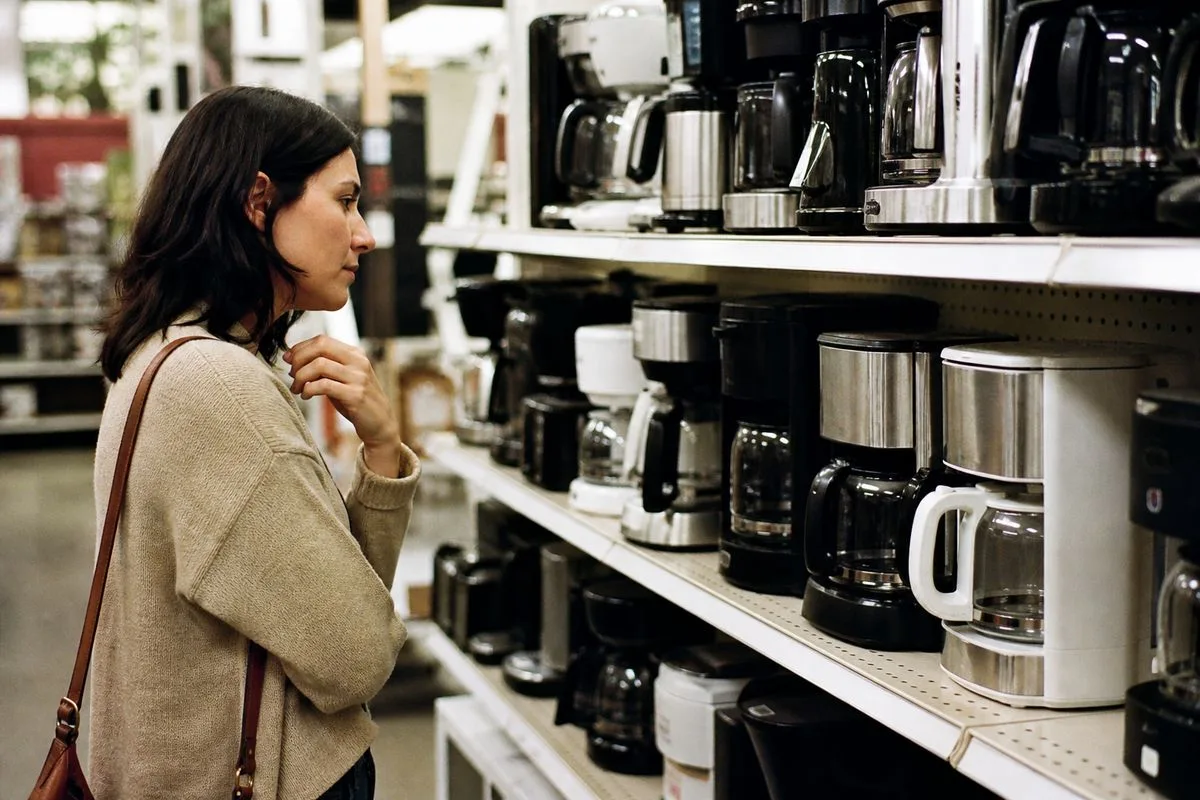
Another implication is that “drip” is being rebranded. The Strategist’s framing, that a classic coffee maker can produce nuance and balance, helps pull quality expectations into the mainstream. That matters for manufacturers because it shifts competition away from gimmicks and towards fundamentals: stable brew temperatures, even water distribution, better carafes, and smarter small batch options. It also matters for retailers because it changes how products are merchandised. Instead of “cheap coffee maker”, the pitch becomes “the right coffee maker for your ritual”, which is exactly the language Target uses when it calls coffee “a ritual” and talks about appliances for “every way you sip it”.
The plastic free angle hints at a third implication: materials as marketing. The Strategist adds the Caraway 10 Cup Coffee Maker specifically because it is entirely plastic free. That is a clear bet that a meaningful slice of buyers now sees plastic as a negative, whether for taste, longevity, or perceived health reasons. The source material does not provide data on how large that slice is, so it would be wrong to guess. But the editorial decision suggests it is large enough to influence what “best” means in 2026.
Finally, there is the ecosystem effect. Target’s brand list includes names that span different price tiers and approaches: Bodum, Breville, Cuisinart, DeLonghi, Hamilton Beach, Keurig, Mr. Coffee, Nespresso, Ninja. That breadth shows how crowded the field is. For consumers, it can be paralysing. For brands, it raises the cost of differentiation. Expect more emphasis on design, materials, and workflow features like programmability and auto start, because those are easy to communicate quickly online and in store.
The Bigger Picture
The bigger story is not that one guide added one machine, or that one retailer reorganised a category page. It is that coffee makers are becoming a proxy for how people want to live at home. Convenience still matters, fair enough, but it is no longer the only metric. Buyers want speed and simplicity, yes, but they also want fewer compromises: less burnt flavour, less plastic, less waste, less clutter on the counter. That is why thermal carafes and plastic free construction are rising in prominence. They speak to a desire for “set and forget” without the sense that quality is being sacrificed.
There is also a subtle democratisation happening. For years, the cultural prestige sat with espresso machines, grinders, and manual pour over rituals. Drip coffee makers were treated as the default, not the destination. The Strategist’s framing pushes back on that, arguing that the right machine can deliver nuance and balance. That matters because it widens the tent. People can pursue better coffee without turning their kitchen into a lab, and without learning a new technique before they have had their first sip of the day.
And then there is the local angle, which tends to get lost in appliance coverage. Better coffee at home is not just about the machine, it is about what goes into it. UK consumers who want to pair a capable coffee maker with freshly roasted beans increasingly look beyond supermarket shelves. One example in this space is Coffee Goblin, which positions itself around freshly roasted specialty coffee delivered to the door, ethically sourced 100 percent Arabica, and support for small UK businesses. Each order includes a Discovery Pack of goodies from local artisans, turning a routine delivery into something a bit more human. That combination, better equipment plus better beans plus community minded sourcing, is where the home coffee market is quietly heading.
Historical context: from the office pot to the curated home setup
It is easy to forget how recently the “good coffee maker” became a mainstream idea. For a long time, drip coffee was associated with volume: office kitchens, diners, and big family pots. The baseline expectation was hot, brown, and plentiful. Taste was secondary. The Strategist’s anecdote about the “random coffee maker at your Airbnb” captures the hangover from that era, machines that exist to tick a box rather than to brew well.
What changes the trajectory is the slow merging of speciality coffee culture with mass market appliance design. The Strategist consults baristas, roasters, and coffee shop owners, and it treats their preferences, such as thermal carafes to avoid burnt flavours, as relevant to ordinary buyers. That is a notable shift. Professional heuristics are becoming consumer heuristics. Even if a buyer never learns extraction theory, they learn that a thermal carafe is usually better than a hot plate, and that is enough to raise the floor.
Retailers respond by making the category legible. Target’s page does this by mapping machines to identities and routines: the single serve drinker who wants speed, the automatic drip buyer who wants programmability, the espresso lover who wants custom strength and froth, the “multi function” household with varied tastes. It also introduces basic education, like the difference between glass and thermal carafes, and the benefits of a built in grinder for fresh flavour extraction. None of that is revolutionary, but it is the point. When education becomes part of the shopping journey, the market moves from replacement buying to intentional buying.
What to watch next in coffee makers, and how buyers can act now
Expect three themes to intensify. First, materials will keep moving up the agenda. The Strategist’s plastic free addition is a signal that editorial “best of” lists are now rewarding construction choices, not just brew performance. Second, flexibility will become a baseline expectation, not a premium feature. Machines that can brew a full carafe and also handle smaller batches, like the OXO’s two to four cup insert option described in the source, fit the way households actually drink coffee in 2026. Third, heat management will remain the quiet differentiator. Thermal carafes are already framed as the professional preference, and that logic is hard to argue with.
For buyers, the actionable approach is surprisingly simple. Start with the constraints: counter space, typical number of cups, and whether coffee needs to stay hot for hours. Then choose the brewing style that matches the household’s reality, not its aspirations. If weekday mornings are chaotic, a programmable automatic drip machine with auto start, as Target suggests, may deliver more happiness than a finicky setup that never gets used. If taste drift is the problem, prioritise a thermal carafe and consistent workflow over extra buttons.
And do not ignore the coffee itself. A better machine can only do so much with stale beans. Pairing a solid coffee maker with freshly roasted coffee, whether from a local roaster or a delivery service such as Coffee Goblin, is often the fastest route to a noticeable improvement in the cup. It is not exactly groundbreaking, but it is true. The best upgrade is usually a combination of decent equipment and better inputs, not a single silver bullet gadget.
The coffee makers market in 2026 is, in short, growing up. It is more segmented, more values driven, and more demanding about quality. That can feel like noise. But it is also an opportunity. With the right criteria, buyers can cut through the clutter and land on a setup that fits their kitchen, their schedule, and their taste, day after day.