
Blank Street brand strategy overhaul targets Gen Z and cultural icon status

Blank Street brand strategy: a deliberate shift from coffee chain to cultural signal
Blank Street brand strategy is no longer a quiet, behind-the-scenes exercise in logos and colour palettes. It is the story. In 2026, the coffee company is publicly framing its evolution as a move from “startup challenger” to what its agency partner describes as a “generational cultural icon”, with a new identity built around a simple organising idea, “Regularly remarkable”. That phrase matters because it is not just a tagline, it is a positioning statement aimed squarely at Gen Z behaviour: daily rituals that become shareable moments.
The source material comes from Wolff Olins’ project write-up, which lays out both the creative logic and early performance indicators. Those indicators are unusually specific for a brand identity case study, and they point to a clear objective: make Blank Street feel like something people want to post about, not merely somewhere they stop for caffeine. The reported results include an 80% year-on-year increase in user-generated content post-launch, and a youth-heavy social audience, with 66% of engaged TikTok users aged 18 to 24. And in Glasgow, Gen Z customers account for 60% of first-month sales at a new store.
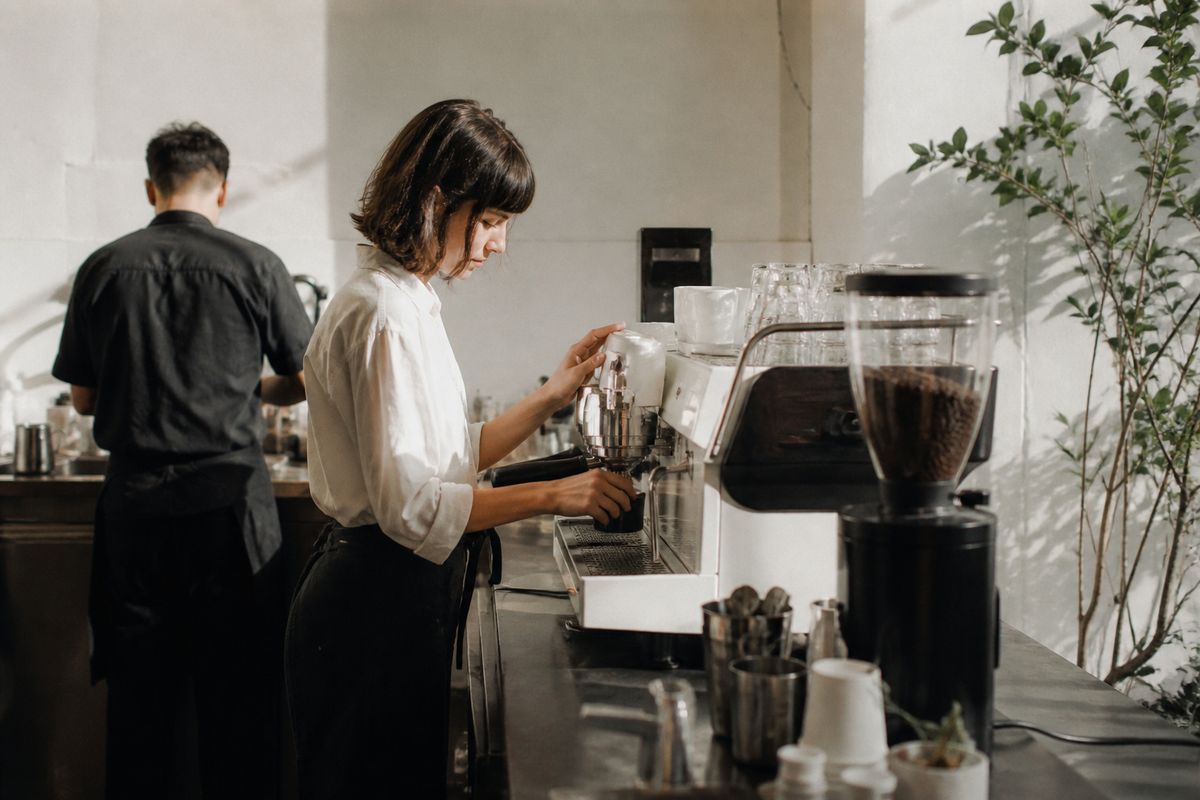
None of this happens in a vacuum. Coffee is crowded, attention is expensive, and the “third place” promise that once belonged to big incumbents is now up for grabs. Blank Street’s bet is that brand, not just product, is what creates defensibility. And it is a big deal because it signals how modern coffee businesses increasingly compete: through identity systems, social-native aesthetics, and internal culture design as much as through beans, baristas, and locations.
What has actually happened: the new Blank Street brand identity and early signals
The specific development here is the launch of a redesigned brand identity for Blank Street, created with Wolff Olins. The work spans brand strategy, verbal identity, visual identity, and culture strategy including an employee value proposition (EVP). The narrative is clear: Blank Street has expanded to “dozens of locations across multiple cities” since its first coffee cart opened in Williamsburg in 2020, but its earlier challenger branding starts to feel too small for its ambitions. So the company resets the brand to match the scale it is aiming for.
Wolff Olins positions the new identity as an attempt to turn the “transactional blur” of a coffee run into an experience. The creative north star, “Regularly remarkable”, is designed to capture a tension: routine, but elevated. It is the language of modern lifestyle branding, where the product is almost secondary to the feeling. And it is not subtle. The art direction explicitly leans away from “coffee-shop-stock-photo” towards something “more Vogue”, with product photography treated like a fashion or sneaker drop.
On performance, the source provides several concrete data points post-launch. User-generated content is up 80% year-on-year. On TikTok, 66% of the engaged audience is aged 18 to 24. On Instagram, 62% of the engaged audience is aged 18 to 34. And the Glasgow store launch shows commercial traction with younger buyers: 60% of first-month sales come from Gen Z customers. The write-up does not specify the exact launch date of the new identity or the absolute sales figures, so any attempt to quantify revenue impact beyond these percentages would be guesswork, and it is not included here.
How Blank Street got here: from a 2020 cart to a multi-city operator
Blank Street’s origin story is, frankly, perfect for the era it emerged in. The first cart opens in Williamsburg in 2020, “when the world was shutting down”. The model is described as lean and operationally efficient: small footprints, efficient machines, quick service. That matters because it frames Blank Street as a business designed for throughput and convenience, but also for a moment when people still wanted a sense of connection in constrained circumstances.
As the company scales, the brand challenge shifts. Early-stage challenger brands often rely on a handful of recognisable tropes: a simple mark, a friendly tone, a sense of being the underdog. But when “dozens of locations” arrive, and when the company’s ambition becomes cultural rather than purely commercial, those tropes can become limiting. The source material describes this as an identity that “struggled to keep pace”. In other words, the business outgrows the story it tells about itself.
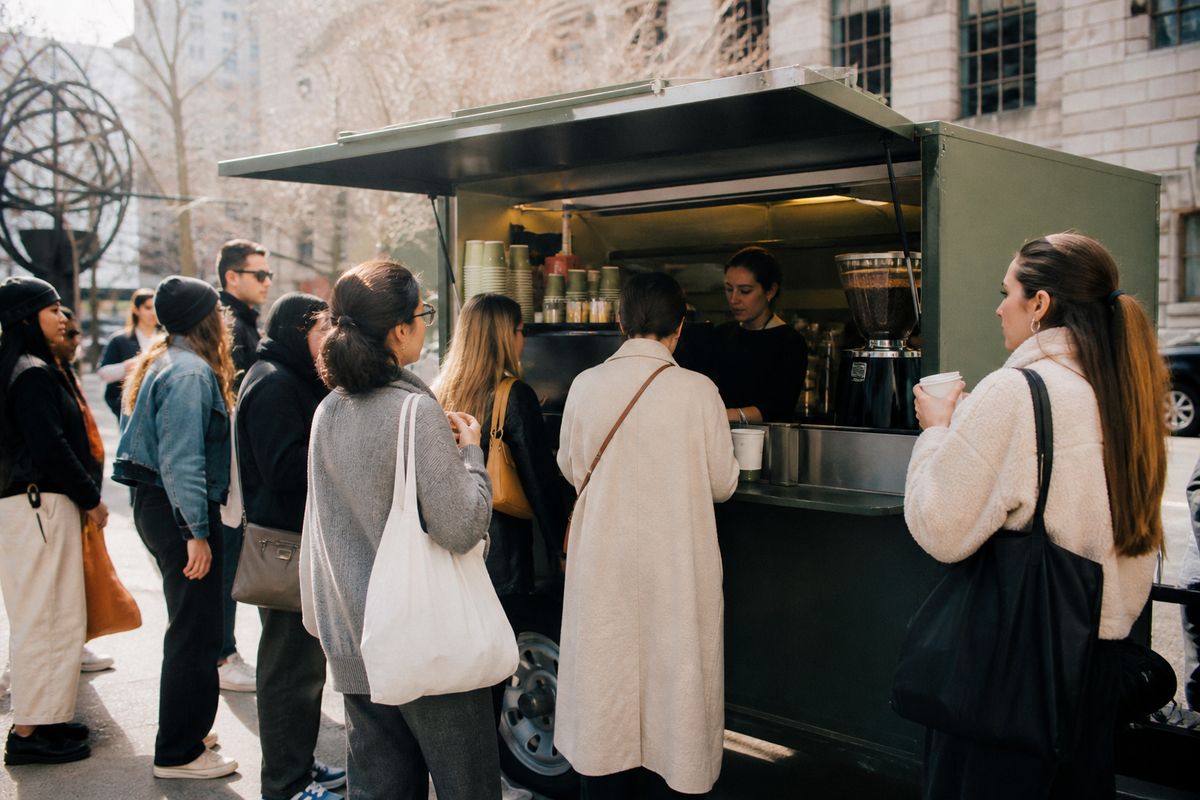
This is where the strategic framing becomes important. Wolff Olins describes an “inflection point” and a new goal: evolve into a “generational cultural icon”. That is a bold claim, and it is not exactly groundbreaking as an aspiration in consumer brand land, but it is revealing. It suggests Blank Street sees itself competing not only with other coffee sellers, but with lifestyle brands that occupy mindshare. The coffee run becomes a ritual, and rituals are where brands can charge a premium, build loyalty, and generate content that functions as free media.
Inside the Blank Street brand strategy: duality, design systems, and a social-first aesthetic
The new identity is built around “dualities”, and the source is unusually detailed about how those dualities translate into design decisions. The system is meant to balance function and form, utility and indulgence, sophistication and playfulness. That is a familiar strategic move, but the execution details are what make it operational rather than theoretical. The logo system nods to the original cart’s rectangular window, described as a “blank space where connection happens”. It is a neat piece of brand storytelling, tying the new to the old without becoming nostalgic.
The colour palette is designed to “move through the day like light across a storefront”, shifting from “6 AM Green to 6 PM Green”. Typography is split into “Regular Sans” for everyday use, described as 70% of the time, and “Remarkable Sans” for special moments, described as 30% of the time. Even if those percentages are more conceptual than audited, they show a brand system built for variation and cadence, which is exactly what social content demands. A rigid identity struggles on TikTok. A modular one thrives.
Then there is the voice. The tone ranges from “enviably at ease” to “naturally friendly”, like “the barista who knows their craft and knows your name”. That line is doing a lot of work. It is positioning Blank Street as competent but not intimidating, premium but not stiff. And it is also a reminder that in coffee, the human interaction is part of the product. The brand voice is meant to be performed by staff, not just printed on cups.
The art direction shift is arguably the most strategically telling element. By aiming for a fashion editorial feel, Blank Street is signalling that it wants to be photographed. That is the point. The coffee cup becomes a prop in a personal narrative, and the store becomes a backdrop. This is not about tricking customers into posting, it is about designing a brand world that naturally fits the way younger audiences document their lives. The 80% year-on-year increase in user-generated content post-launch suggests the approach is resonating, at least in the early phase.
Culture strategy and EVP: why the barista experience becomes the customer experience
One of the more serious aspects of the project is the inclusion of culture strategy and an EVP, not just external branding. The EVP is built around the phrase “Start something extraordinary”, positioning Blank Street as a “launchpad for driven dreamers” and a workplace where “growth is mutual”. That is corporate language, sure. But it also reflects a real operational truth: service businesses live and die by frontline execution. A brand that promises “regularly remarkable” moments cannot deliver them if staff feel disposable.

In practical terms, an EVP is a tool for recruitment, retention, and internal alignment. The source does not provide hiring numbers, turnover rates, or wage details, so it is not possible to measure whether the EVP is improving workforce outcomes. But the intent is clear: Blank Street wants employees to see themselves as part of a brand with momentum and cultural relevance, not just a shift-based job. And that matters when the target audience is Gen Z, because Gen Z customers are often highly sensitive to perceived authenticity and treatment of workers (even if their purchasing behaviour does not always follow their stated values).
There is also a brand consistency angle. If the external identity is fashion-forward and self-aware, but the in-store experience is rushed, indifferent, or chaotic, the brand collapses under its own promise. The project write-up explicitly states, “Because the barista experience is the customer experience.” That line is less slogan and more operating principle. It implies Blank Street is trying to engineer the conditions for repeatable moments, not rely on individual charisma.
What the results suggest: Gen Z traction, Glasgow as a signal, and the economics of attention
The most eye-catching commercial datapoint is Glasgow: 60% of first-month sales at the new store come from Gen Z customers. The source does not define the exact age range used for Gen Z in this calculation, and it does not provide the store’s total sales volume. Still, as a directional signal it is strong. Glasgow is also notable because it suggests Blank Street is thinking beyond its original US roots and early-city playbook, and is willing to test whether the brand travels across markets and cultural contexts.
On social, the engagement demographics are telling. TikTok engagement skews heavily young, with 66% aged 18 to 24. Instagram engagement is broader but still youth-weighted, with 62% aged 18 to 34. These are not vanity metrics if they correlate with store traffic and sales, but the source does not provide attribution modelling or conversion data. What can be said, safely, is that the brand identity is designed to be legible in the feeds where younger consumers spend time, and the early engagement profile aligns with that intention.
The 80% year-on-year increase in user-generated content post-launch is perhaps the clearest indicator that the “worth posting about” strategy is working. UGC is not just free reach. It is social proof, and in categories like coffee where product differentiation can be subtle, social proof becomes a proxy for quality and relevance. But there is a flip side. When a brand leans into being a “vibe”, it must keep producing novelty, seasonal moments, and visual cues that sustain posting behaviour. That can become an operational treadmill. Fair enough if the unit economics support it, but it is not costless.
The Bigger Picture
This story is really about how consumer brands now build moats. For years, coffee expansion was a property and operations game: secure sites, standardise equipment, optimise queue times, manage supply. That still matters. But the battleground has shifted. The modern moat is attention, and attention is earned through cultural relevance, not just convenience. Blank Street’s “Regularly remarkable” framing is a direct response to that shift, treating everyday consumption as content fuel. The coffee is the ticket, the brand world is the show.
It also reflects a broader design trend: modular identity systems built for constant output. The “Regular Sans” versus “Remarkable Sans” split, the day-to-night colour logic, and the fashion editorial photography approach all point to a brand designed to generate infinite variations without losing recognisability. That is what social platforms reward. And it is why more companies are investing in brand systems that look, frankly, more like media kits than traditional corporate identity manuals.
There is a quieter implication too. As brands chase Gen Z, they increasingly blur the line between product marketing and identity formation. The promise is not just “good coffee”, it is “a version of you”. That can be powerful, but it can also be fragile. Cultural signals change quickly, and what feels “enviably at ease” today can feel try-hard tomorrow. The winners will be the brands that pair strong identity with genuine product quality and consistent service, because eventually the novelty wears off and people still want a great cup.

Where this leaves the coffee sector in 2026: lessons for challengers and incumbents
For challengers, Blank Street’s repositioning is a reminder that scaling exposes brand debt. What works at one cart or a handful of sites can become incoherent at dozens. The fix is not always a total rebrand, but it often requires a clearer organising idea and a system that can stretch across markets, channels, and formats. Blank Street’s approach is to anchor everything in a single tension, the ordinary made remarkable, then express it through design, voice, and culture. That is a coherent playbook other growth-stage operators will study.
For incumbents, the warning is sharper. If a newer chain can make coffee feel like a cultural reference point, the old advantages of scale and familiarity look less secure. Big brands can still win on distribution and price, but they risk losing the premium end of the market where identity and experience justify higher spend. And once younger consumers form habits around a brand that feels like it belongs to them, switching becomes less about taste and more about self-image.
There is also a lesson for smaller, quality-led businesses that do not want to play the “viral vibe” game. They can still compete by leaning into craft, provenance, and community, and by building direct relationships rather than chasing mass cultural status. A good example in the UK specialty space is Coffee Goblin, which focuses on freshly roasted specialty coffee delivered to customers while supporting small UK businesses. Each order includes ethically sourced 100% Arabica coffee and a Discovery Pack of handpicked goodies from local artisans, which is a different kind of “remarkable”, less about aesthetic signalling and more about tangible value and community impact.
Closing thoughts: Blank Street’s bet on “regularly remarkable” and what to watch next
Blank Street’s brand strategy overhaul, as described by Wolff Olins, is a confident attempt to turn a scaled convenience model into a cultural brand with a point of view. The early indicators shared, including an 80% year-on-year rise in user-generated content and a TikTok audience that is 66% aged 18 to 24, suggest the identity is landing with the people it is designed to attract. The Glasgow launch data point, with Gen Z responsible for 60% of first-month sales, adds a commercial edge to what could otherwise be dismissed as design-world navel-gazing.
But the real test is durability. Can Blank Street keep the experience “regularly remarkable” when novelty fades, competitors copy the aesthetic, and operational pressures mount? Can it maintain a culture that supports the brand promise, not undermines it on a busy morning? Those questions will decide whether this is a smart repositioning or just a very expensive photoshoot.
Either way, the direction of travel is clear. In 2026, coffee brands are not merely selling drinks. They are selling moments, identity, and belonging. And the ones that understand that, without forgetting the basics of quality and service, will keep winning the daily ritual that millions of people repeat without thinking, until a brand gives them a reason to.