Coffee day in 2026: UN recognition, key dates, and what it means for the industry
Coffee day in 2026 just got bigger, and more official
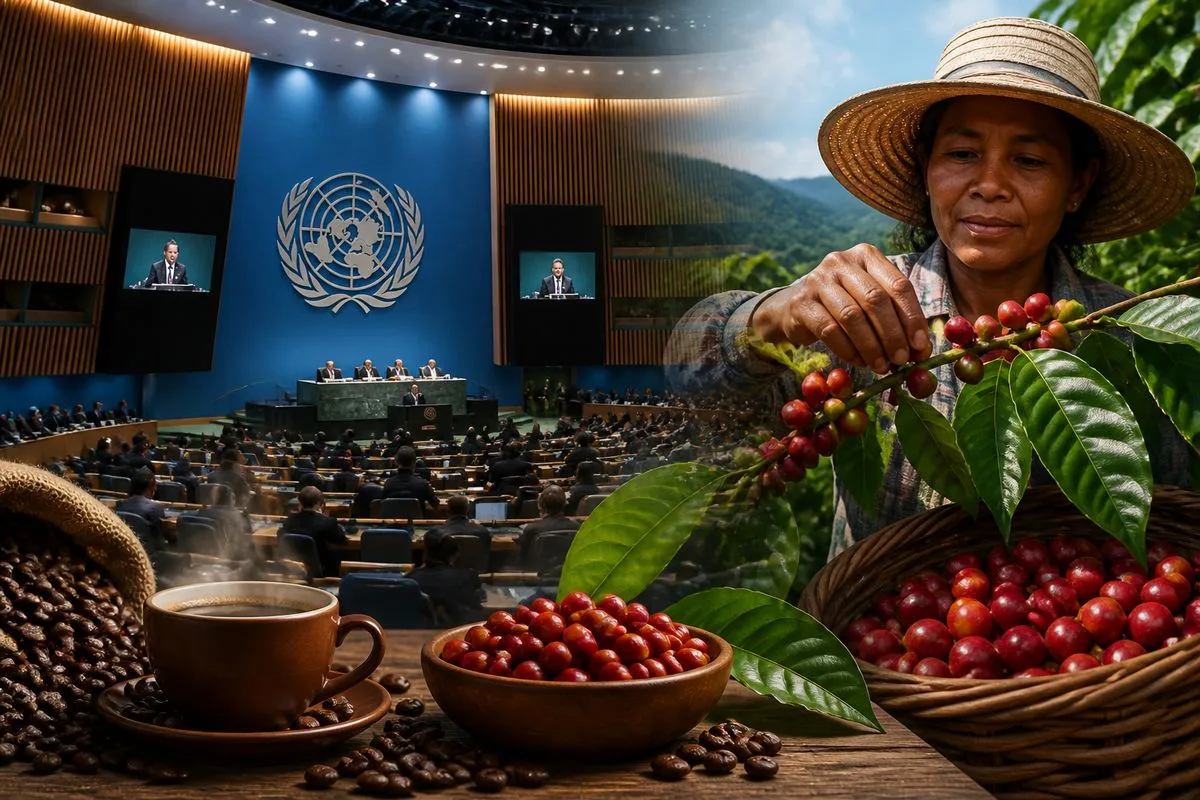
Coffee day has always been a slightly slippery concept. Ask five people what it is and you will often get five different answers, usually depending on where they live and which café chain is currently pushing a promotion. But in 2026, the picture sharpens in a meaningful way. On 10 March 2026, the United Nations General Assembly officially recognises 1 October as International Coffee Day. That is not just a ceremonial nod. It is a signal that coffee is being treated as a serious global development issue, not merely a lifestyle product.
The recognition matters because coffee is not a niche crop. Source material linked to International Coffee Day frames coffee as central to sustainable development and to the lives of over 125 million people worldwide. That figure is doing a lot of work here. It captures farmers and workers at origin, but also the sprawling network of traders, roasters, logistics firms, café operators, and service staff who make the industry run. And yes, it includes consumers too, because demand is what keeps the whole machine moving.
At the same time, the annual calendar remains crowded with other coffee themed dates, many of them unofficial and heavily commercial. In the United States, for example, National Coffee Day is widely observed around late September, and deal roundups for 2026 highlight offers from brands including Dunkin’, Circle K, and Starbucks. So the modern coffee day landscape in 2026 is a blend of two forces: formal international recognition on 1 October, and a promotional, brand driven ecosystem clustered around late September.
International Coffee Day on 1 October 2026: the specific development
The headline development is clear: the UN General Assembly’s decision on 10 March 2026 to recognise 1 October as International Coffee Day. The date itself is not new. International Coffee Day has been led by the International Coffee Organization (ICO), described in the source material as the world’s leading intergovernmental organisation for coffee, bringing together 77 Member States. What changes in 2026 is the level of political elevation. The day moves from being an industry anchored observance to one with explicit UN recognition.
That shift is more than optics. UN recognition tends to reshape how governments, development agencies, and large institutions talk about a topic. Coffee can now be framed more comfortably in the language of livelihoods, resilience, sustainability, and international cooperation. It also gives campaigners and industry bodies a stronger platform when they argue for investment in climate adaptation, better labour standards, and more transparent supply chains. In other words, it becomes easier to bring coffee into policy rooms where it might previously have been treated as a private sector concern.
International Coffee Day’s own messaging in 2026 leans hard into that broader narrative. It positions the day as “one day on the calendar, 365 in our cups”, and explicitly calls out the full chain: those who grow, brew, serve, or simply love coffee. It also presents itself as a year round hub for stories and initiatives, not a one day marketing splash. That is a subtle but important distinction, because it suggests the organisers want continuity and accountability, not just hashtags.
And then there is the practical layer. The International Coffee Day materials encourage participation through sharing stories and initiatives, and even offer tools to “personalise artwork” for social posts. That might sound lightweight, but it is actually how modern awareness days scale. The UN recognition provides legitimacy, and the digital toolkits provide distribution. Put together, it is a well organised attempt to turn coffee day into a global moment that reaches beyond the usual industry echo chamber.
National Coffee Day deals and the late September coffee day rush
While 1 October gains official weight, the commercial energy in 2026 still clusters around late September. Deal roundups for National Coffee Day describe it as taking place on 28 September, then list a wide range of offers dated 29 September. That mismatch is not unusual for unofficial observances, where brands stretch a “day” into a weekend, a week, or simply whatever fits the marketing calendar. For consumers, the takeaway is straightforward: the end of September is when many US chains choose to compete loudly for attention.
The list of promotions in the source material is long, and it is revealing. Convenience retailers such as Circle K push app based redemptions for free medium coffee across thousands of locations. Coffee chains and bakery brands lean on loyalty programmes, in app codes, and rewards points. And some offers are clearly designed to drive future visits rather than give away margin today, for example rewards that can be redeemed later, or passes that encourage daily repeat purchases. This is coffee day as customer acquisition strategy, plain and simple.
Starbucks, notably, is positioned in the source material as using the period for product news rather than a simple free coffee giveaway. From 29 September, Starbucks is described as offering a new iced espresso beverage called the Aerocano, alongside three new Mini Pies: Apple Crumble, Pecan, and Pumpkin. That is a different playbook. It treats coffee day season as a launch window, using the cultural attention around coffee to introduce new menu items and, ideally, lock in seasonal demand.
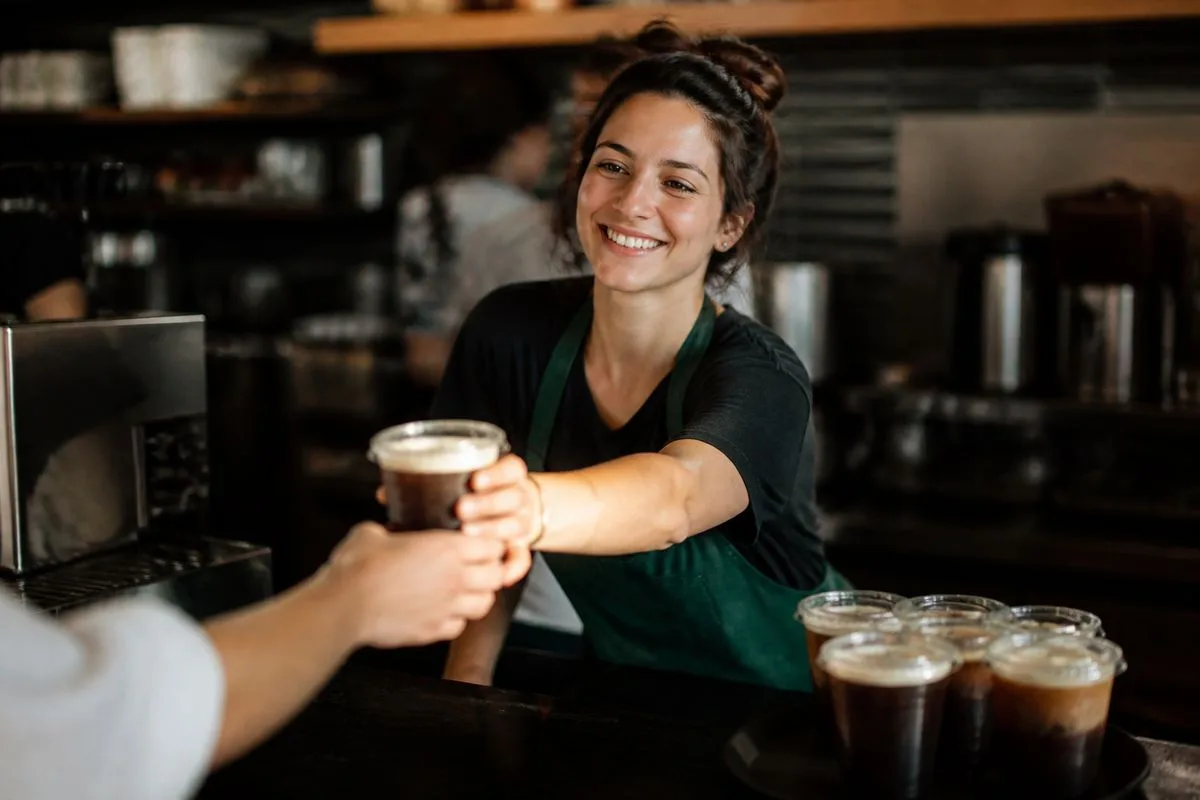
For anyone searching “coffee day”, this is where confusion often starts. There is International Coffee Day on 1 October, now UN recognised. There is also National Coffee Day in the US, widely observed around 29 September. And then there are dozens of other unofficial dates. The industry has effectively created a coffee day “season”. It is good fun, fair enough. But it also raises a serious question: does the noise drown out the substance, or can the new UN recognition help re centre the conversation on sustainability and livelihoods?
Who is behind coffee day: the ICO, the UN, and the wider coffee community
The International Coffee Organization sits at the heart of the official International Coffee Day ecosystem. According to the source material, it is an intergovernmental organisation with 77 Member States, working on data, policy, and cooperation to strengthen the global coffee sector for producers, traders, and consumers. That matters because it signals the day is not owned by a single brand or a single producing country. It is designed to represent the whole chain, at least in principle.
UN General Assembly recognition in March 2026 effectively endorses that multilateral framing. It also aligns coffee with the UN’s broader sustainable development agenda, without needing to invent new claims. The source material explicitly ties coffee to sustainable development and to the lives of over 125 million people. It does not provide a detailed breakdown of that number, and it does not attach it to a specific methodology. But the intent is clear: coffee is being presented as a global livelihood system, not just a commodity.
The “community” language around International Coffee Day is also telling. The materials describe a space for producers, roasters, researchers, baristas, café owners, and coffee lovers, all in one place. That is a deliberate attempt to reduce the distance between origin and consumption, at least in storytelling terms. And storytelling is not trivial here. In coffee, narratives shape purchasing decisions, and purchasing decisions shape what gets planted, processed, and shipped.
There is also a quieter subtext. When an awareness day is led by an intergovernmental body, it tends to attract a different kind of corporate participation. Brands can show up with ESG messaging, supply chain commitments, and origin programmes. Some of that will be meaningful, some of it will be performative, and consumers are right to be sceptical. But the structure creates a stage where claims can be compared, challenged, and, ideally, improved over time.
Which coffee day matters in the UK, and why the calendar is messy
For UK audiences searching “coffee day”, the most relevant anchor is simple: International Coffee Day on 1 October. A UK focused source explicitly states that this is “the coffee day that matters most in the UK”, set by the International Coffee Organization. It also notes that many other “national” coffee days began in the US as unofficial observances. That is the crux of the confusion. People see “National Coffee Day” trending online and assume it applies everywhere. Often, it does not.
The same source adds an important detail: there is no official UK National Coffee Day. It also notes that UK Coffee Week, which raised money for the clean water charity Project Waterfall, last ran in October 2025 and has been paused for 2026. That pause matters, because it leaves a gap in the UK’s coffee calendar where a domestic, charity linked campaign might otherwise have sat. In practical terms, it increases the likelihood that International Coffee Day becomes the default focal point for UK roasters, cafés, and community groups in 2026.
The broader calendar of coffee themed dates is, frankly, a lot. The list includes Irish Coffee Day (25 January), Latte Day (11 February), Café au Lait Day (17 February), Espresso Martini Day (15 March), Coffee Cake Day (7 April), Brazil’s national coffee day (24 May), Costa Rica’s national coffee day (second Friday in September), National Coffee Day in the US (29 September), and International Coffee Day (1 October). None of that is inherently bad. But it does mean that “coffee day” is not a single event. It is a category.
And that is where the UN recognition could have a stabilising effect. When a date is officially recognised at the UN level, it becomes easier for media, retailers, and the public to align around a single global moment. Not everyone will, of course. Promotions will still pop up whenever brands want them. But 1 October now has a stronger claim to being the coffee day, full stop.
What UN recognition means for sustainability, ESG, and the business of coffee day
UN recognition of International Coffee Day changes the tone of the conversation, or at least it should. Coffee is routinely discussed in terms of flavour notes, brewing methods, and café culture. That is the fun part. But the source material pushes a different emphasis: coffee as a “milestone” crop for sustainable development, tied to the lives of over 125 million people. That framing invites tougher questions about resilience, equity, and environmental impact, especially as climate pressures intensify across many producing regions (the source material does not quantify climate impacts, so this remains contextual rather than statistical).
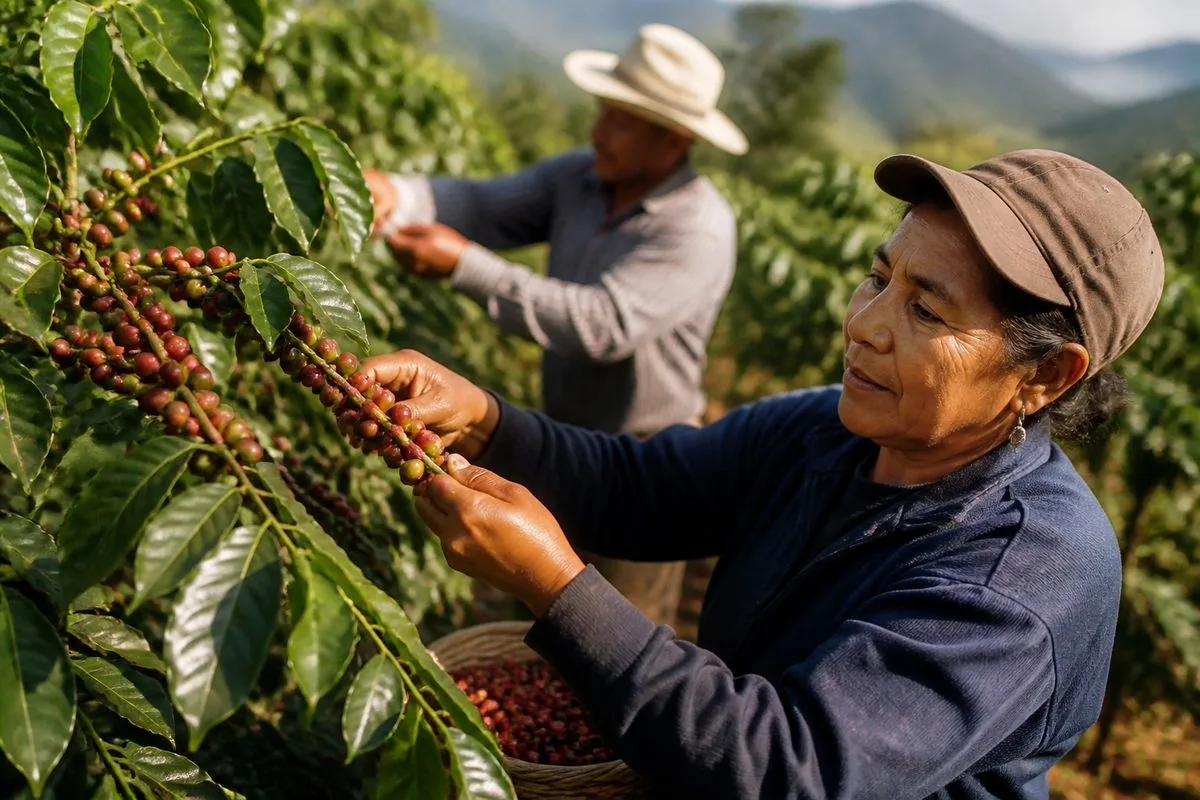
For the industry, this creates both risk and opportunity. The opportunity is obvious: companies can align coffee day campaigns with credible initiatives, tell origin stories responsibly, and demonstrate progress on sustainability goals. The risk is that coffee day becomes a magnet for vague ESG claims that cannot be substantiated. Consumers are increasingly alert to that. And because International Coffee Day is positioned as a shared global moment, weak claims from one high profile brand can sour the mood for everyone.
There is also a strategic shift in how coffee day marketing may evolve. The late September National Coffee Day promotions show a heavy reliance on loyalty programmes, app redemptions, and limited time offers. That is transactional. International Coffee Day, by contrast, is being built as a year round platform for stories and initiatives, with tools to help participants create shareable content. In other words, it is trying to be relational. It wants people to feel part of a community that spans from farm to barista to home brewer.
Historically, coffee has had moments where it becomes a proxy for bigger debates. Think of the rise of speciality coffee and traceability narratives, or the way “ethical sourcing” became a mainstream expectation rather than a niche preference. UN recognition could accelerate that pattern. It gives campaigners and responsible businesses a clearer hook: coffee day is not just about celebrating consumption, it is about recognising the people and systems behind the cup. That is a bigger deal than a free latte, even if the free latte is nice.
Coffee day through history: from “penny universities” to global diplomacy
Coffee day in 2026 sits at the intersection of culture and policy, which might sound odd until one remembers that coffee has always been social infrastructure. A UK source points to England’s coffee houses in the 1600s and 1700s being nicknamed “penny universities”, because for the price of a coffee a person could buy a seat and a good conversation. That is not a statistic, but it is a useful historical comparison. Coffee has long been about connection, debate, and community, not just caffeine.
Fast forward to the modern era and coffee becomes a globalised supply chain, with complex trade flows and price dynamics. The existence of an intergovernmental body like the ICO, with 77 Member States, reflects that reality. Coffee is not simply grown and sold. It is negotiated, regulated, and increasingly scrutinised. International Coffee Day, especially with UN recognition, is a public facing expression of that deeper machinery.
Meanwhile, the proliferation of unofficial coffee days, many originating in the US, reflects a different historical force: the rise of consumer marketing calendars. These days are often created, amplified, and monetised through promotions. They can be harmless, even enjoyable. But they also show how easily cultural observances can be shaped by commercial incentives. In that context, UN recognition functions as a counterweight. It does not eliminate the marketing calendar, but it does provide a more serious anchor point.
There is also a subtle cultural convergence happening. International Coffee Day is global. Japan’s Coffee Day is also listed as 1 October. Brazil and Costa Rica have their own national coffee days. The point is not to pick a winner. It is to recognise that coffee is both local and global at the same time. Coffee day, in its best form, should be able to hold both truths without turning into a muddle.

How to approach coffee day in 2026, without losing the plot
For consumers, coffee day can be approached on two levels. The first is simple enjoyment. Try a new origin. Brew with a different method. Share a cup with someone. These are practical suggestions already embedded in the coffee day conversation, and they work because they are accessible. Not everyone wants to read policy statements before their morning brew (and who can blame them).
The second level is awareness. International Coffee Day’s messaging is explicit that coffee is a livelihood and a force for sustainable development. That does not require guilt, but it does invite curiosity. Where does the coffee come from? Who grew it? What does “sustainable” mean in practice for a farm, a cooperative, a roaster, or a café? Coffee day is a prompt to ask those questions, even if the answers are imperfect.
For businesses, the challenge is to avoid treating coffee day as a one day spike. The promotional playbook is well worn: discounts, freebies, limited editions. But the UN recognition raises expectations. If a company wants to talk about impact on 1 October, it should be ready to talk about it on 2 October as well. That means being specific about programmes, partnerships, and progress, and being honest about what is still hard. Consumers can handle nuance. They just do not like being sold a fairy tale.
And for the wider industry, coffee day is an opportunity to align messaging across the chain. Producers, traders, roasters, and retailers rarely speak with one voice. Sometimes that is healthy. But on issues like sustainability and resilience, fragmentation can become an excuse for inaction. A globally recognised International Coffee Day creates a shared deadline each year, a moment when the sector can take stock, publish updates, and, ideally, commit to the next set of improvements.
What’s Next
The most immediate implication of UN recognition is that 1 October is likely to become the default answer to the question, “when is coffee day?” That sounds minor, but it is not. A single, globally recognised date makes it easier for governments, NGOs, and industry bodies to coordinate campaigns, events, and announcements. It also makes it easier for media outlets to cover coffee in a way that goes beyond consumer deals. Expect more attention on origin stories, supply chain initiatives, and policy discussions as 1 October approaches each year.
At the same time, the late September promotional cycle in the US is not going anywhere. If anything, it may intensify. Brands have already trained consumers to expect deals around National Coffee Day, and the 2026 deal landscape shows how competitive that space has become, with app based redemptions, loyalty mechanics, and product launches. The likely outcome is a two peak calendar: a commercial peak in late September, and a more institutional, globally framed peak on 1 October. The smart operators will bridge the two, using promotions to bring people in, then using International Coffee Day to talk credibly about the bigger picture.
Longer term, the real test will be whether coffee day becomes a driver of measurable change, or just a louder annual conversation. The International Coffee Day platform positions itself as a year round space for stories and initiatives, which hints at a more continuous model. If that approach sticks, coffee day could evolve into a kind of annual reporting moment for parts of the sector, with clearer expectations around transparency and progress. Not every company will play along, of course. But the direction of travel is set. Coffee is being pulled further into the orbit of global development and sustainability debates, and 2026 is the year that shift becomes official.
Closing thoughts: coffee day is now a global moment, not just a marketing hook
Coffee day in 2026 is no longer just a feel good celebration or an excuse for a discounted cappuccino. It is that, sure. But it is also a formally recognised global observance, backed by a UN General Assembly decision on 10 March 2026 and led by an intergovernmental body representing 77 Member States. That combination gives International Coffee Day on 1 October a new kind of authority.
The industry should treat that authority with respect. The temptation will be to plaster the date across campaigns without changing much underneath. But the source material’s emphasis on sustainable development and the lives of over 125 million people sets a higher bar. Consumers, meanwhile, can enjoy the deals and the seasonal launches, while also using the moment to look a little deeper into the story behind the cup.
In the end, the best version of coffee day is not complicated. Celebrate the drink. Recognise the people. And keep the conversation going after the calendar flips to 2 October. That is where the real impact tends to happen.