Coffee Frother: Why Handheld, Battery Models Are Dominating Home Barista Setups in 2026
The coffee frother moment: small gadgets, big shift in home drinks
The humble coffee frother is having a very 2026 kind of surge, not because anyone has invented a radically new way to whip milk, but because retailers and brands are quietly repositioning frothers as everyday essentials rather than niche add ons. The clearest signal is how widely the category now spans, from heritage tea and gifting specialists selling premium handheld tools, to mass retailers carving out dedicated “Milk Frothers and Steamers” shelves, to functional food brands bundling frothers into a broader wellness routine.
Three snapshots illustrate the point. Whittard of Chelsea lists the Aerolatte Milk Frother at $36.50 USD, pitching it as the “original steam free frother” that creates “silky frothed milk in seconds”. Target, meanwhile, presents “Milk Frothers and Steamers” as a distinct appliance category with sub types including handheld and tabletop frothers. And Laird Superfood sells a battery powered frother positioned less as a café mimic and more as a blending tool for creamers and supplements, supported by a visible volume of customer feedback, 447 reviews.
Put together, these are not random product pages. They reflect a market where frothing is no longer only about cappuccinos. It is about convenience, alternative milks, travel, gifting, and the growing expectation that a decent foam or a well blended drink should be achievable without a bulky espresso machine. And yes, it is a big deal for how the home coffee category is merchandised and marketed.
What the latest product moves reveal about the coffee frother market
The most concrete “news” here is the way the coffee frother is being framed by different players in 2026, and what they choose to emphasise. Whittard of Chelsea leans on provenance and design. Its Aerolatte listing calls it the “original steam free milk frother” and highlights a stainless steel whisk, speed of use at around twenty seconds, and compatibility with dairy plus alternatives such as oat, almond, soy and coconut. It also bundles in the kind of detail that signals a premium giftable object, including an elegant copper stand and the fact it comes complete with batteries.
Target’s presentation is different, and that difference matters. By grouping frothers under “Milk Frothers and Steamers” and splitting the browsing experience into handheld and tabletop formats, it treats frothing as a mainstream appliance decision, not a specialist coffee hobby. That is a subtle but powerful shift. When a mass retailer gives a category its own navigation, it is effectively telling shoppers, “This is normal now, pick your type.”
Laird Superfood’s battery powered frother adds a third angle, and it is arguably the most revealing. The product is described as “all about the blend”, designed to “blend Laird Superfood products to the perfect frothy texture within seconds”. In other words, the frother is positioned as a texture tool for functional beverages, not just latte art practice. It also comes with a 30 Day Happiness Guarantee, and the listing shows 447 reviews, which is one of the few hard indicators of traction available in the source material. No sales numbers are provided, fair enough, but review volume at least suggests sustained demand.
Inside the devices: handheld versus tabletop, and why “steam free” keeps winning
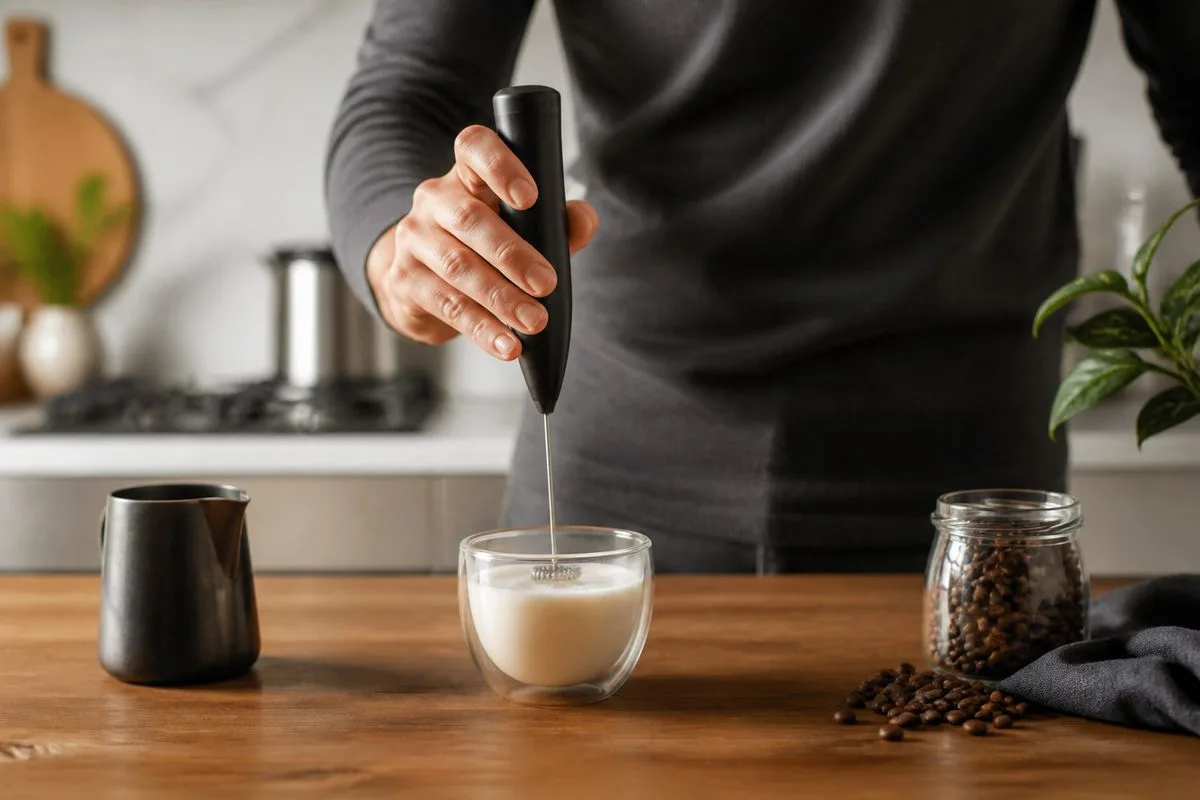
At the product level, the current wave is dominated by compact, battery powered handhelds. Whittard’s Aerolatte is explicit about being steam free, and that phrase is doing a lot of work. Steam implies heat, pressure, and a larger machine footprint. Steam free implies speed, portability, and fewer moving parts. For many households, that is the whole point. They want foam without committing to an espresso machine ecosystem, and they want it in a drawer, not on a worktop.
The Aerolatte’s specifications reinforce that portability story. It measures 21 cm in height, with a 3.5 cm length and 2.5 cm width, and a unit net weight of 96 g. Those numbers matter because they explain why handheld frothers are becoming the default “first upgrade” for people who are bored of flat instant coffee but not ready to buy a full coffee station. It is also described as “compact, reliable and wonderfully easy to use”, which is marketing language, sure, but it aligns with the physical reality of a 96 g tool that runs on batteries.
Target’s category split hints at the trade off. Tabletop milk frothers typically offer more consistent heating and larger capacity, but they take up space and cost more. Handhelds are cheaper and more flexible, but they rely on the user to warm milk separately and to learn a little technique. The fact that retailers are explicitly separating these types suggests consumers are now making a deliberate choice based on lifestyle: speed and storage versus automation and volume.
And then there is the alternative milk factor. Whittard explicitly lists oat, almond, soy and coconut as compatible. That is not a throwaway line. Alternative milks foam differently because of protein and fat composition, and consumers have learned this the hard way. A handheld whisk that can aerate a range of liquids is attractive because it reduces the “will this work with my milk?” anxiety. It does not guarantee perfect microfoam every time, but it signals versatility, which is what most people actually want.
The brands behind the froth: Whittard, Target, and Laird Superfood take different routes
Whittard of Chelsea’s involvement is noteworthy because it is not primarily a coffee hardware retailer. It is a heritage brand associated with tea, gifting, and indulgent pantry items. When a business like that sells an Aerolatte frother and calls it “the finishing touch for café style drinks at home”, it is tapping into a broader at home hospitality trend. People are not only making coffee for themselves. They are hosting, they are gifting, and they want small luxuries that feel intentional (a copper stand helps, even if it is not exactly groundbreaking).
Its product page also leans into cross selling behaviour. The frother is described as “particularly wonderful with our hot chocolates”, with a specific usage tip: “simply add the powder to warmed milk before frothing”. That is a clever positioning move because it expands the frother’s job beyond coffee. It becomes a texture upgrade for multiple drinks, which makes the purchase easier to justify. Not everyone drinks cappuccinos daily, but many households do hot chocolate, especially seasonally.
Target’s role is different again. The retailer’s category navigation suggests frothers are now part of the standard kitchen appliance shopping journey, alongside coffee makers, grinders, kettles, and so on. The source material does not list prices or models, so it is not possible to claim a specific range or market share. But the structural choice to present “Milk Frothers and Steamers” as a browsable department is itself a signal of mainstream demand. Retailers do not create dedicated pathways for products that do not move.
Laird Superfood, finally, brings the wellness and functional beverage angle. Its frother is described as “lightweight, easy to use, and travel friendly”, and it is explicitly tied to blending “coffee and creamer” and Laird’s own products. The listing also includes a set of brand claims about ingredients, such as “No ‘Natural Flavors’”, “Real food ingredients”, and “We do not use seed oils”. Whether a reader agrees with those positions or not, the commercial point is clear: the frother is being used as a gateway into a broader product ecosystem. Buy the frother, then buy the creamers and powders that go with it.
Industry analysis: why the coffee frother is becoming a default purchase in 2026
Several forces are converging here, and none of them require a technological breakthrough. First, the economics of at home drinks remain compelling. Even without quoting café prices, the logic is obvious: a one off purchase of a handheld frother at $36.50 USD is a relatively low barrier compared with espresso machines, grinders, and ongoing maintenance. It is the kind of “treat yourself” spend that feels sensible, especially when it promises café style results with “no barista training required”.
Second, the definition of “frothing” is widening. For some consumers, froth is not about latte art at all. It is about mouthfeel. It is about making a drink feel richer without adding more ingredients. Laird Superfood’s “all about the blend” framing is a good example. A frother becomes a mini whisk for emulsifying creamers, mixing powders, and smoothing out clumps. That is a different use case from steaming milk, and it expands the addressable market beyond coffee enthusiasts.
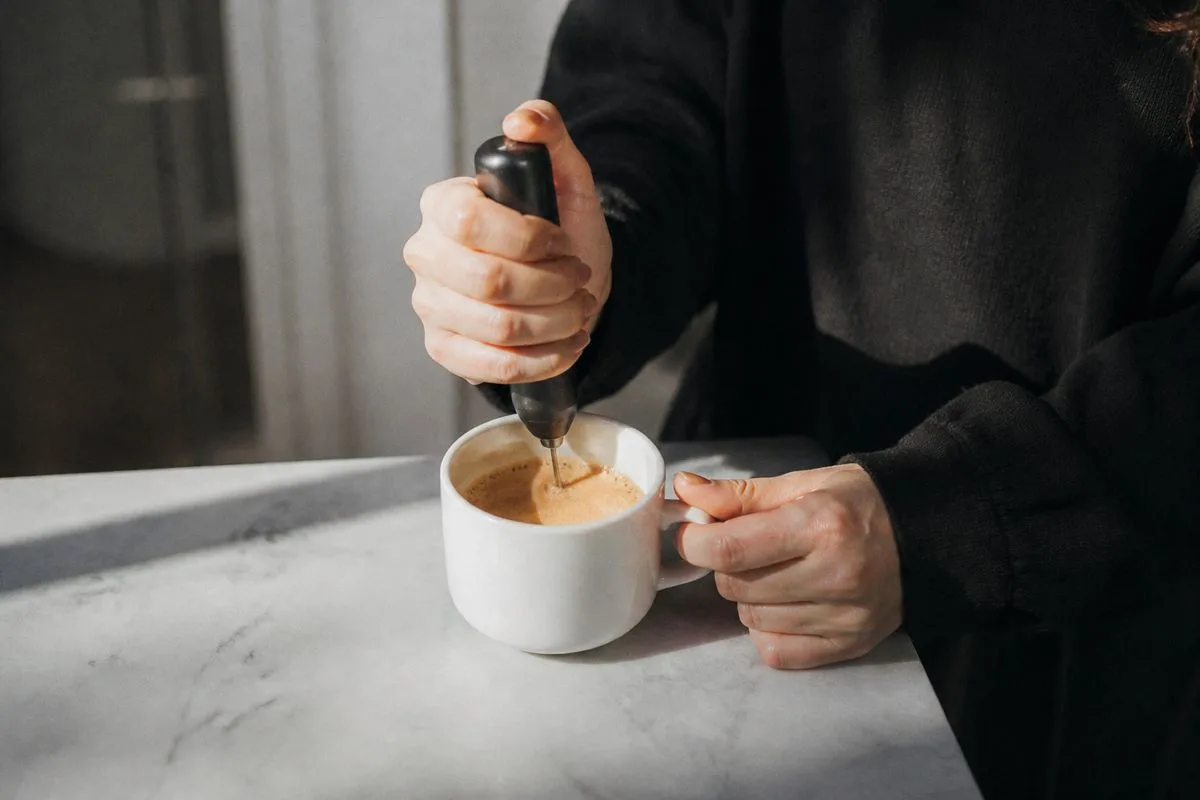
Third, alternative milks have changed expectations. When Whittard lists oat, almond, soy and coconut explicitly, it is acknowledging that many households now keep more than one “milk” in the fridge. A tool that works across these options is valuable. And because handheld frothers do not rely on steam pressure, they are more forgiving across different liquids. They may not deliver identical foam structure every time, but they can produce a pleasing top layer quickly, which is what most people want on a Tuesday morning.
Finally, retail presentation is catching up with behaviour. Target’s category split between handheld and tabletop is effectively a consumer education tool. It reduces friction. It tells shoppers there are two main formats, and they can choose based on space, budget, and routine. That kind of clarity tends to accelerate adoption because it makes the purchase feel straightforward rather than specialist.
Coffee frother comparisons: what is genuinely different this time, and what is not
It is tempting to treat the current frother wave as a brand new phenomenon. It is not. Handheld frothers have existed for years, and the Aerolatte is explicitly marketed as the “original”. What is different in 2026 is the breadth of contexts in which a frother is sold and the range of beverages it is expected to improve. The frother is no longer a quirky gadget for cappuccino fans. It is a multi drink texture tool, and it is being sold that way.
There is also a subtle shift in what “premium” means. Historically, premium coffee equipment meant heavy metal, high pressure, and lots of knobs. Now, premium can mean a small device that looks good on the counter, comes with a stand, and is easy to clean. Whittard’s care instructions are telling here: “simply rinse under the tap then operate”, with a caution not to submerge the copper parts, only wipe with a damp clean cloth. That is not the language of a complicated machine. It is the language of a lifestyle object that should stay nice.
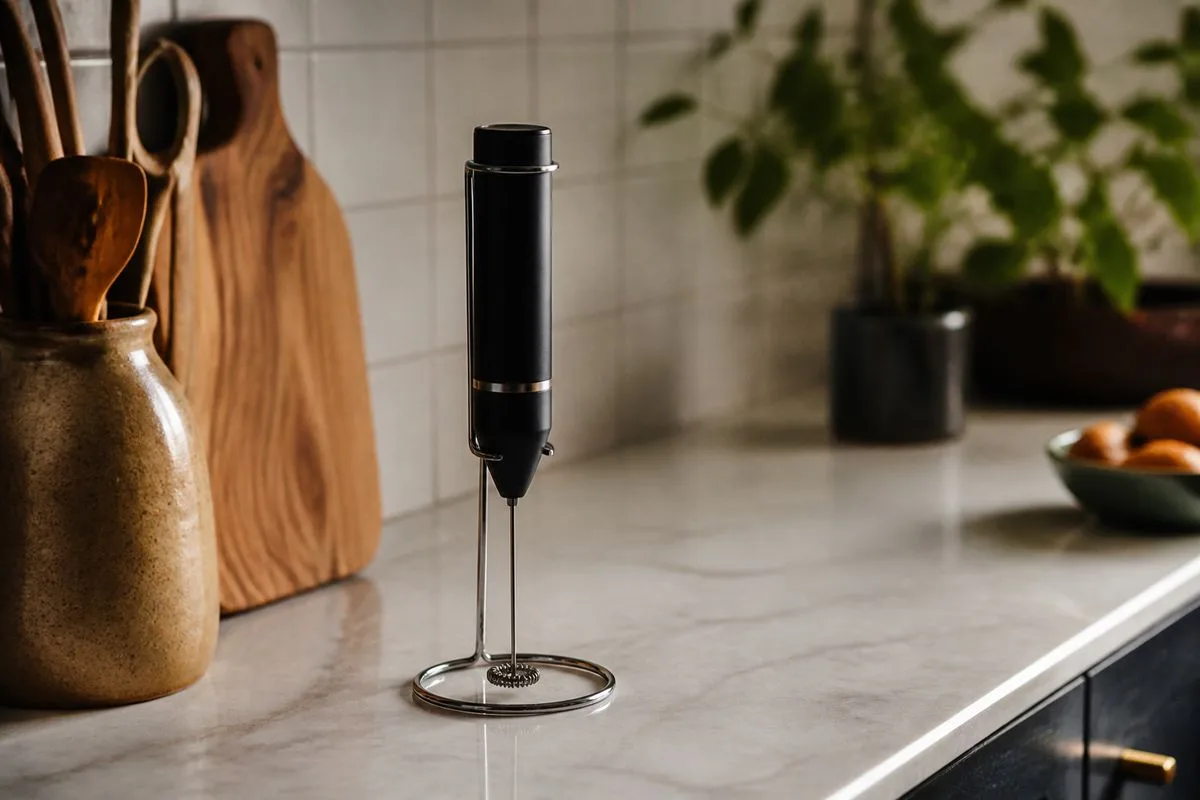
Meanwhile, mass retail normalisation changes the competitive landscape. When a mainstream retailer treats frothers as a standard appliance category, it puts pressure on brands to differentiate through design, accessories, warranties, and positioning. Laird’s 30 Day Happiness Guarantee is one such differentiator. Whittard’s copper stand is another. In a crowded field of battery powered whisks, the story around the product becomes almost as important as the product itself.
And one more point that often gets missed. Reviews and social proof are now part of the product’s credibility. Whittard’s listing shows 0.0 based on 0 reviews and “No reviews yet”, while Laird’s frother shows 447 reviews. That does not automatically mean one product is better than the other. It does, however, highlight how different channels generate different feedback loops. Brands that sell direct to a loyal community may accumulate reviews faster, while retailers with broader catalogues may show slower review build up on individual items.
What This Means For You
For buyers, the practical takeaway is simple: choosing a coffee frother in 2026 is less about chasing a perfect café replica and more about matching the tool to the routine. If the goal is quick foam for a morning latte, a handheld, steam free frother like the Aerolatte, described as producing foam in around twenty seconds, fits the brief. If the goal is hands off consistency and warmed milk in one device, a tabletop frother may be the better match, even if it takes more space. The key is being honest about how much effort is realistic on a busy day.
It also pays to think beyond coffee. Whittard explicitly recommends frothing warmed milk with hot chocolate powder for a smoother result, and Laird positions its frother as a blending tool for creamers and supplements. That matters because it changes the value equation. A frother that gets used for hot chocolate, matcha style drinks, or simply mixing powders is far more likely to earn its keep than one reserved for weekend cappuccinos. In other words, the smartest purchase is often the one that solves multiple small annoyances, not the one that promises the most “authentic” foam.
Finally, readers should pay attention to the unglamorous details: cleaning and storage. Whittard’s care note, rinse under the tap then operate, but do not submerge copper parts, is exactly the kind of thing that determines whether a gadget becomes a daily habit or ends up forgotten in a drawer. The same goes for accessories like stands and cases. They are not just aesthetic. They reduce friction. And friction is what kills good intentions, every time.
Closing thoughts: the frother is no longer a niche gadget
The story of the coffee frother in 2026 is not about a single blockbuster launch. It is about category momentum. A premium retailer sells a design led handheld frother for $36.50 USD and frames it as the finishing touch for café style drinks. A mass retailer organises frothers into a dedicated appliance category and nudges shoppers to choose between handheld and tabletop formats. A functional food brand sells a battery powered frother as a blending companion, backed by 447 reviews and a 30 Day Happiness Guarantee. Different routes, same destination: frothing is becoming normal.
And that normalisation changes expectations. Consumers increasingly assume they can create a velvety top layer on dairy or oat milk, or smooth out a powdered drink, without specialist kit. They want speed, minimal mess, and something that looks decent on the counter. Steam free handhelds fit that mood perfectly. They are compact, relatively affordable, and easy to understand. No barista training required, as the marketing says, and for most people that is the point.
Will the frother replace espresso machines? Of course not. But it does not need to. The frother’s job is to deliver a small daily upgrade, reliably, with minimal fuss. In 2026, that proposition is landing, and the retail signals suggest it is only getting stronger.