Coffee Industry 2026: Dutch Bros' $105M Expansion and the Forces Reshaping the Market
The coffee industry enters a new acquisition era with Dutch Bros and Salad and Go
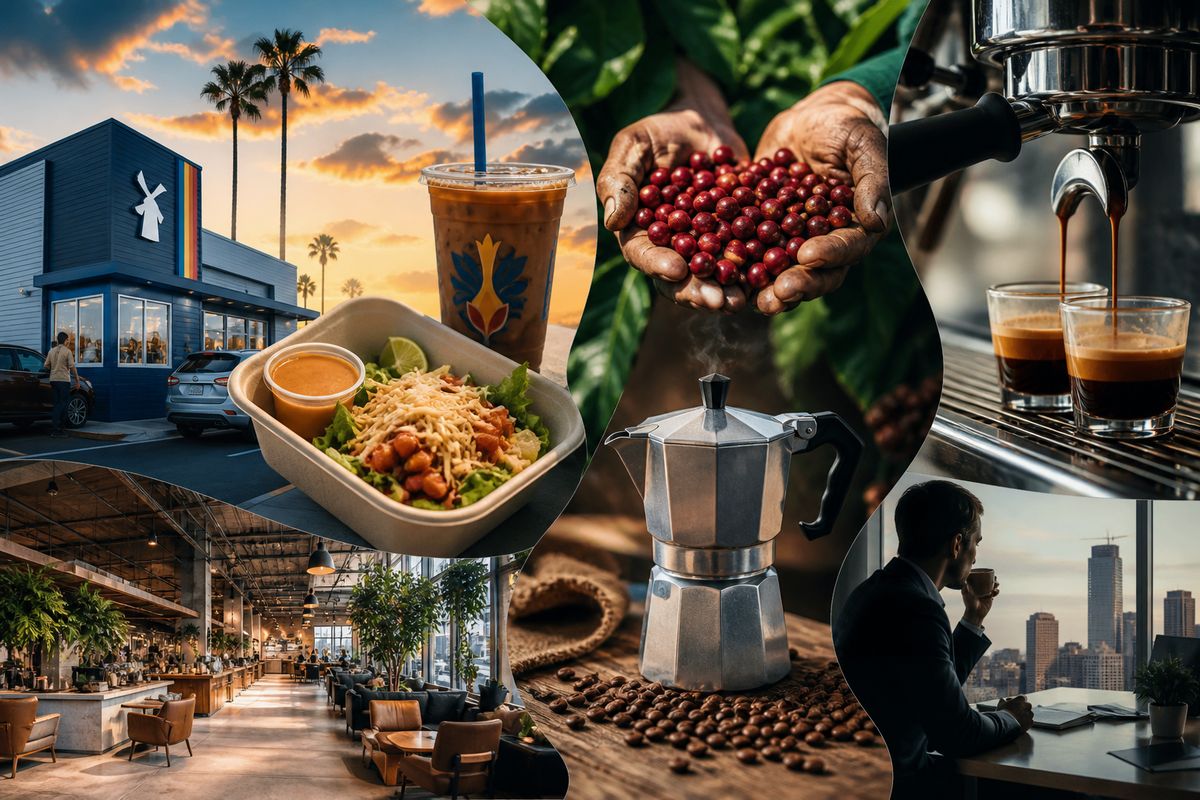
On August 6, 2026, Daily Coffee News reported that Dutch Bros, the rapidly expanding US coffee chain, is pursuing a $105 million acquisition of dozens of recently closed Salad and Go sites. The move comes as Salad and Go, the Arizona-born fast-casual salad chain, navigates Chapter 11 bankruptcy proceedings. While the deal has not yet closed, it marks one of the boldest real estate plays in recent coffee retail history.
For Dutch Bros, the acquisition represents a shortcut to prime retail locations at a time when building from scratch is both expensive and slow. The company has built its brand on drive-thru convenience, and the former Salad and Go sites, many of which feature drive-thru lanes and high-visibility roadside positions, are natural candidates for conversion into coffee outposts. The $105 million figure covers dozens of units, which would expand Dutch Bros' footprint significantly, particularly in the Sun Belt states where the salad chain was most active.
This is not entirely new. Large coffee chains have a history of absorbing distressed restaurant real estate. Starbucks acquired closed fast-food sites in earlier expansion cycles, and Dunkin' has converted former gas station convenience stores. However, the scale of this deal and the speed with which Dutch Bros has grown from a regional drive-thru operator to a national player make this a defining moment for the coffee industry in 2026. The bargain is clear: acquire buildings at a discount rather than participate in competitive bidding for premium plots.
Coffee industry price pressures: Fairtrade International raises minimums again
Four days after the Dutch Bros announcement, Fairtrade International raised its price minimums once again, a story covered by Daily Coffee News on August 4, 2026. The move reflects rising production costs across the coffee supply chain, from labour to fertiliser to climate adaptation. It also signals that certification bodies believe the market floor for sustainably produced coffee must rise to keep pace with the realities faced by growers.
Fairtrade's decision to raise minimums again is significant for the coffee industry because it acknowledges that current support levels are insufficient for farmers to achieve a living income. The announcement follows a similar increase in 2024, and the word 'again' in the headline suggests a pattern rather than an isolated response. For buyers and roasters, the increase puts immediate pressure on margins, especially those who have committed to sourcing 100% Fairtrade-certified beans.
Compare this with the recent attention on regenerative coffee farming and the challenges of living income discussed elsewhere in Daily Coffee News. The price increase is an attempt to embed more sustainability into the market, but it also threatens to widen the gap between mass-market coffee and premium products. If Fairtrade minimums rise faster than consumer willingness to pay, some roasters may shift their sourcing away from certification and toward direct relationships that bypass the label altogether. Others, particularly large packaged goods companies, may absorb the cost quietly to protect their ethical credentials.
Coffee industry health research: espresso and moka pot may lower liver disease risk
On August 5, 2026, Daily Coffee News reported on a new Italian study that found daily consumption of espresso or moka pot coffee was associated with a lower risk of developing a particular liver condition. The study focused on coffee drinkers in southern Italy, where espresso and moka pot are the brewing methods of choice. Researchers observed that participants who drank these short, strong brews every day showed reduced incidence of the disease compared with those who drank less or no coffee.
This research adds to a well-established body of evidence linking coffee consumption with improved liver health. The liver benefits of coffee have been documented in numerous epidemiological studies over the past decade, with lower rates of fibrosis, cirrhosis, and hepatocellular carcinoma among regular drinkers. What makes this study interesting is the focus on specific brewing methods, suggesting that the concentration of bioactive compounds in short, intense brews such as espresso may be particularly beneficial.
For the coffee industry, health studies like this are marketing gold. They help counter longstanding concerns about caffeine and provide a scientific basis for the growing speciality coffee movement. Espresso-based drinks already command higher prices in cafés, and this research could encourage consumers to trade up from filter coffee to a double shot. However, experts caution that coffee is not a medicine, and individuals should not change their drinking habits based on a single study. Moderation remains the key, and excessive consumption can lead to anxiety, digestive issues, and sleep disruption.
Retail innovation: Two Fold opens in Tampa and other notable moves
While the biggest headlines centred on Dutch Bros, the coffee industry also saw a wave of smaller openings and launches. On August 6, 2026, Two Fold Coffee & Kitchen opened in Tampa, Florida, splitting its focus between a multiroaster specialty coffee programme by day and a curated evening offering. This hybrid model reflects a broader shift toward all-day venues that generate revenue beyond traditional coffee hours, a trend accelerated by the work-from-home economy and the increasing popularity of cafés as social destinations.
Elsewhere, Pinup Coffee opened a standalone café in Virginia Beach, and Cleveland's Lekko Coffee expanded into a new roastery. These examples show that independent operators are still finding room to grow, even as large chains like Dutch Bros pursue aggressive consolidation. The diversity of approaches, from multiroaster cafés to in-house roasting operations, demonstrates that there is no single formula for success in the current market.
Khipu Coffee, a UK-based Peruvian coffee importer, also released its Peruvian Coffee Harvest Guide, providing buyers with timely information as the country's harvest season begins. The guide is part of a wider movement toward traceability and direct sourcing, connecting roasters to origin in ways that were uncommon a decade ago. For the coffee industry, such resources are essential as roasters face EU deforestation regulations (EUDR) and growing consumer demand for transparency.
Why It Matters: the coffee industry is consolidating and premiumising at the same time
At first glance, the stories of the week seem unrelated: a fast-food coffee chain buying salad shop real estate, a certification body raising prices, and a health study about espresso. But together they point to a coffee industry in transition. The Dutch Bros deal shows that scale is winning. Instead of opening hundreds of greenfield stores, well-capitalised chains are absorbing the fixed assets of failed competitors. This lowers the cost of expansion and raises the barrier to entry for smaller players, who cannot compete on real estate terms.
Fairtrade's price increase, meanwhile, signals that the cost of ethical coffee is rising. That creates a tension. If big chains expand using low-margin business models, they will struggle to absorb higher green coffee costs. One solution is to charge consumers more, but that risks alienating value-focused customers. Another is to cut sustainability budgets, which would contradict the industry's commitments. The Dutch Bros move into locations that are likely cheaper than existing sites may be one small way to control real estate costs while maintaining margins, but it does little to address the long-term volatility of the coffee commodity market.
The liver health research adds a consumer demand angle. If espresso is increasingly seen as a healthful daily ritual, that bodes well for high-street coffee shops and home espresso makers. It also gives both large chains and independent cafés a new way to talk about their products. However, the same research underscores the importance of quality and brewing method, which favours speciality players who can deliver a precise, well-extracted shot. A fast-food drive-thru espresso, by contrast, may not deliver the same concentration of bioactive compounds, a nuance that specialty roasters will be keen to highlight.
What the coffee industry should watch next is whether Fairtrade's higher minimums translate into better farmer livelihoods or simply into a two-tier market where ethical coffee becomes a premium good. And whether Dutch Bros, which has historically built its brand on speed and convenience, can now manage a portfolio of former salad sites without compromising its core identity. The answer will determine whether this aggressive acquisition strategy becomes the template for other chains seeking growth in a mature market.
What to watch next
In the coming weeks, the Dutch Bros acquisition could face regulatory review, and Salad and Go's bankruptcy proceedings will continue. If the deal closes, analysts will be watching to see how quickly Dutch Bros converts the former salad sites into coffee drive-thrus, and whether the cost savings materialise. The company has not commented on how many of the dozens of locations will actually become operational within the first year, but given the speed of past expansions, the conversion timeline is likely to be short.
On the sustainability front, Fairtrade's revised minimums will not take effect overnight. Roasters and retailers will need to communicate the increase to consumers who are themselves facing higher costs of living. The success of the price hike will depend on the industry's ability to tell a compelling story about what a few extra cents per cup actually pays for at origin, from school construction to climate resilience. That narrative is more critical than the number itself.
Finally, the espresso and moka pot research adds to a growing scientific consensus that coffee can be part of a healthy lifestyle. For the coffee industry, the challenge is to use this evidence responsibly, without overstating the medical benefits. The opportunity is to position quality coffee as both a pleasure and a positive everyday choice. In a year marked by bold acquisitions and rising ethical expectations, that balance may be the defining test for brands across the sector.