Coffee Industry Braces for a Shifting Landscape in August 2026
The coffee industry is never short of surprises, and the second full week of August 2026 delivered a flurry of developments that underline how interconnected pricing, policy, and sustainability have become, as reported by
Daily Coffee News. From a landmark decision by Fairtrade International to raise minimum price guarantees again, to the EU's latest research into how pesticide regulations could reshape the cost of your morning brew, the signals are clear: the global coffee market is entering a period of profound transformation.
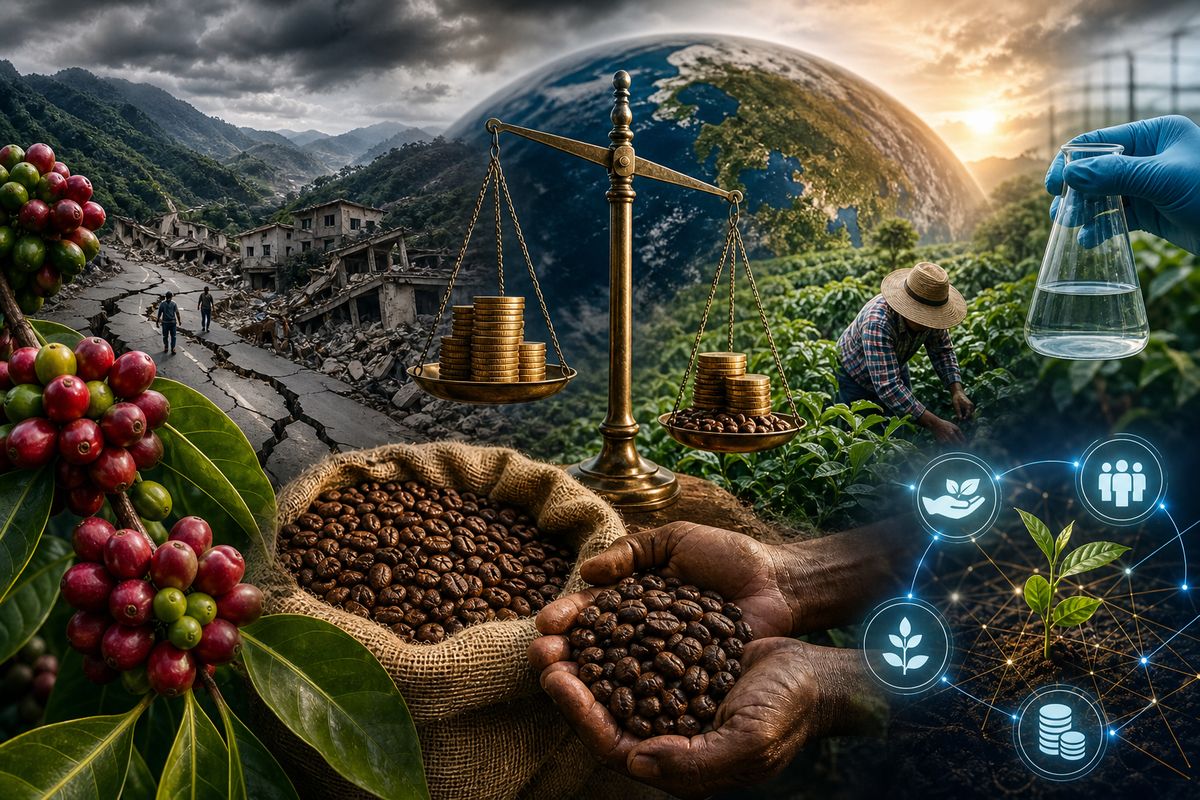
Adding to the mix, the Netherlands-based Sustainable Trade Initiative IDH announced a major new investment platform for regenerative coffee, while disaster teams in Colombia continued damage assessments following a deadly earthquake. Meanwhile, the lighter side of the speciality sector is also making headlines, with the World AeroPress Championship heading to Mexico City for the first time in its 18 seasons. Together, these stories paint a picture of an industry that is simultaneously confronting climate risk, regulatory pressure, and the enduring challenge of farmer livelihoods.
In this article, we examine the week's most significant coffee industry news, unpack the broader context behind each development, and consider what it all means for producers, roasters, and consumers.
Fairtrade International Raises Price Minimums Again
On 4 August 2026, Fairtrade International confirmed it had raised its price minimums once more, a move that will have a direct impact on the income of thousands of smallholder coffee farmers across the developing world. The announcement marks the latest adjustment in what has been a particularly volatile period for coffee prices, and it signals that the certification body is continuing to respond to the escalating costs of production.
Fairtrade minimums are designed to act as a safety net, ensuring farmers receive a price that covers the cost of sustainable production even when market prices crash. The decision to raise them again, so soon after previous increases, reflects the reality of inflation, rising input costs, and the increasing frequency of climate-related shocks that have made coffee farming more expensive and more unpredictable than ever.
While the full specifics of the new minimums were not disclosed in the announcement, the symbolic weight of the decision is considerable. In an era when many producers still struggle to earn a living wage, the move reinforces the central argument that the coffee industry must place greater value on the people who grow the beans. It also puts pressure on non-certified buyers to match these price floors, particularly in the speciality segment where differentiation and quality premiums are already hotly contested.
EU Study Models Price Effects of Pesticide Policy
On the regulatory front, the European Union has released a study that models the price effects of potential new pesticide policies on coffee imports. The study, which was flagged in the Weekly Coffee News column on 14 August 2026, is part of a broader policy brief examining how stricter pesticide restrictions might influence the cost and availability of coffee across the single market.
The EU has been moving toward more stringent pesticide regulations for years, driven by concerns over environmental sustainability and public health. The new study is significant because it attempts to quantify the economic knock-on effects. If coffee producers in origin countries are forced to adopt more expensive, lower-yield farming practices to comply with EU import standards, the costs are likely to be passed along the supply chain. For consumers, that could mean higher retail prices. For producing countries, it could mean a shift in competitive advantage toward nations that are already further along in their sustainability transitions.
One of the key tensions the study likely highlights is the balance between the EU's green ambitions and the reality of smallholder agriculture in many coffee regions. Many farmers are not fully equipped to implement integrated pest management or organic alternatives without significant investment. The study's models could therefore become a key input into future EU trade negotiations, as both producer nations and importing companies lobby for realistic transition periods and financial support.
IDH Launches Regenerative Coffee Investment Platform
In a major development for sustainability finance, IDH, the Sustainable Trade Initiative based in the Netherlands, announced on 13 August 2026 the launch of a four-year programme aimed at building a regenerative and verifiable coffee supply chain across four major producing countries. The initiative, which has been in the works for some time, is designed to channel investment into farming practices that restore soil health, enhance biodiversity, and sequester carbon, all while supporting better yields and longer-term resilience.
What sets this platform apart is its focus on verifiability. IDH is not just promoting regenerative agriculture as a concept; it is building the infrastructure to measure and certify the outcomes. This is crucial in a market where "sustainability" claims are often vague and difficult to substantiate. By creating a verifiable framework, the platform could help premium buyers distinguish between genuine regenerative practice and greenwashing.
The four-year timeline suggests a serious, staged approach. Early years will likely focus on pilot projects and baseline data collection, while later years will focus on scaling up successful models. For coffee companies looking to source from these regions, the platform offers a way to de-risk their investments in sustainability, while giving farmers a clearer path to higher premiums. It is exactly the kind of multi-stakeholder initiative that the industry has been calling for, though the proof will be in the execution.
Colombia Earthquake Threatens Coffee Supply Chains
As the week unfolded, one story carried a particular urgency: the aftermath of a deadly earthquake in Colombia. Damage assessments are still underway, according to reporting by Nick Brown for Daily Coffee News on 12 August 2026, and the full impact on the country's coffee sector remains unknown. Colombia is one of the world's leading producers of washed Arabica coffee, and any significant damage to its growing regions could ripple through global supply chains.
Earthquakes and other natural disasters are a recurring challenge for coffee-producing countries. The rugged, mountainous terrain that is ideal for growing high-quality Arabica is also geologically active, and many coffee farms are located in rural areas where infrastructure is fragile. In the short term, earthquakes can disrupt harvesting, processing, and transportation; in the longer term, they can displace farming families who are already economically vulnerable.
The situation in Colombia also underscores the broader issue of climate risk in the coffee industry. As extreme weather events become more frequent and more intense, the need for robust disaster preparedness and supply chain resilience has never been more acute. The damage assessments will help the Colombian government and its international partners understand the scale of the problem, but the incident is a stark reminder that the coffee industry's future depends on its ability to adapt to an increasingly unstable environment.
Why It Matters: Coffee Industry at a Crossroads
The events of mid-August 2026, taken together, point to a fundamental shift in the coffee industry's operating logic. For decades, the commodity market was the primary determinant of value, and sustainability was a niche concern for a handful of certified buyers. That is no longer the case. Today, pricing decisions, regulatory frameworks, and investment platforms are converging around a single question: how can the coffee industry secure a viable future for both its producers and its consumers?
Fairtrade's decision to raise minimums, the EU's study on pesticide policy, and the IDH regenerative platform are all part of a new architecture of value. They represent an attempt to internalise the true costs of coffee production, including environmental stewardship and social equity. This is a positive development in many respects, but it also carries risks. If the burden of these new costs falls disproportionately on smallholders who lack the capacity to comply or negotiate, the very farmers these mechanisms are meant to protect could be squeezed out.
The Colombia earthquake adds another layer of complexity. It is a reminder that even the best-intentioned policy cannot insulate the industry from a dinner plate. The long-term answer lies in diversification, both of income streams and of farming systems, and in a deeper commitment to resilience that goes beyond certification. The coffee industry's next chapter will be written not just in boardrooms and legislative chambers, but in the fields and communities that have been the industry's foundation for generations. The week's news suggests that, for the first time, those fundaments are receiving serious attention.