Dutch Bros acquisition push targets former Salad and Go sites
Dutch Bros acquisition talks put shuttered Salad and Go sites back in play
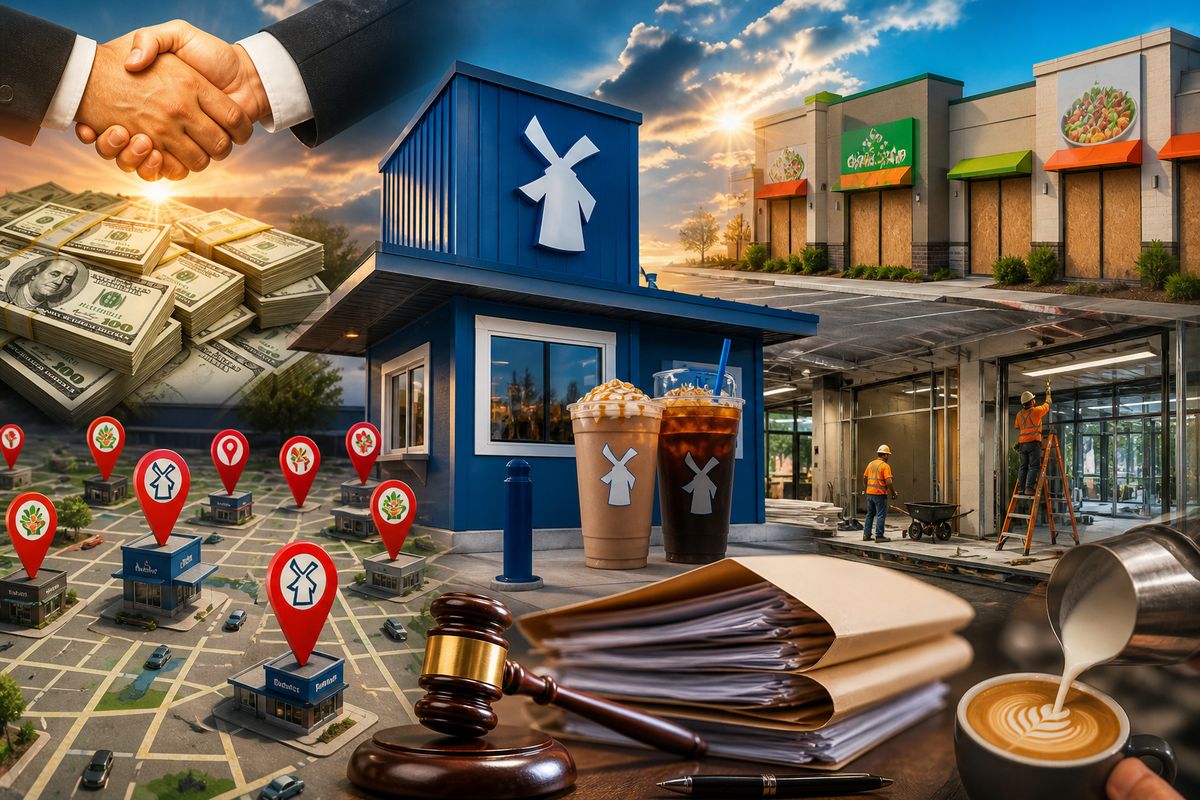
The Dutch Bros acquisition push for dozens of recently closed Salad and Go locations is one of those moves that looks simple on the surface, but carries a lot of strategic weight. According to Daily Coffee News by Roast Magazine, the US coffee chain is pursuing a $105 million acquisition of former sites belonging to Salad and Go, a fast salad chain born in Arizona that is currently engaged in Chapter proceedings. The report, published on 6 August 2026 and written by Nick Brown, frames the effort as a bid for “dozens” of locations, meaning this is not a one off real estate punt but a deliberate attempt to reshape Dutch Bros’ store footprint at pace.
And it lands at a moment when coffee retail is being tugged in two directions at once. On one side, big chains are still expanding, chasing convenience, drive thru throughput, and prime corners. On the other, specialty operators are doubling down on quality and differentiation, as seen in the same week’s reporting on new openings and multi roaster programmes in places like Tampa, Florida. The Dutch Bros acquisition story sits right in the middle of that tension: scale versus craft, speed versus experience, and the increasingly hard maths of opening new stores from scratch.
What makes this development especially notable is that it is not just about coffee. It is about sites, permitting, and the time value of getting a unit open. In a market where build costs, labour availability, and local planning timelines can all bite, buying ready to convert locations can be a faster route to growth than ground up construction. Fair enough, it is not glamorous. But it can be decisive.
What is actually happening, the $105 million bid and the “dozens” question
The core event is straightforward: Dutch Bros is pursuing a $105 million acquisition of dozens of former Salad and Go locations, as reported by Daily Coffee News on 6 August 2026. The seller side is complicated by Salad and Go’s status as a chain “born in Arizona” and “currently engaged in Chapter” proceedings, which signals a distressed context and, typically, a court supervised process for asset sales. The source material does not specify which Chapter, nor does it list the exact number of sites, the states involved, or the timeline for closing. That absence matters, because the operational complexity of converting a handful of sites is very different from converting, say, 40 or 80.
Still, the intent is clear: Dutch Bros is hunting for a batch of locations that have recently closed, meaning they are likely to be vacant or near vacant, with existing utilities, access points, and in many cases a layout designed for quick service. That last point is key. Salad and Go’s model is built around fast fulfilment, and Dutch Bros is known for high velocity service. The overlap is not perfect, but it is close enough to make conversion plausible without ripping everything out and starting again.
There is also a signalling effect. A $105 million headline figure tells landlords, competitors, and investors that Dutch Bros is willing to deploy capital to accelerate expansion. It is a big deal because it suggests confidence in demand and unit economics, even as parts of food retail are clearly under pressure. It also hints at a broader playbook: when a category adjacent chain stumbles, a well capitalised operator can step in and buy time, in the form of ready made locations.
Who Dutch Bros is, and why real estate is the battleground for coffee chains
The source material identifies Dutch Bros as a US coffee chain. It does not provide corporate history, store counts, or financial performance figures, so this article does not speculate beyond what is reported. But the strategic logic of a chain like Dutch Bros pursuing closed fast casual sites is familiar across modern coffee retail. Real estate is not just a cost line, it is a competitive moat. The best corners, the easiest ingress and egress, and the most convenient commuter routes are finite. Once they are taken, they are taken.
That scarcity is why acquisitions of existing sites can be so attractive. A new build requires site selection, negotiation, design, permitting, construction, and commissioning. Each step introduces delays and risk. By contrast, acquiring a set of recently operating units can compress the timeline, even if refurbishment is still required. And in coffee, speed to open matters because consumer habits are sticky. If a competitor opens first on a route, they can capture the morning routine, and that routine is hard to dislodge.
But there is a catch. Sites designed for salads are not automatically ideal for coffee. Coffee has different peak periods, different equipment needs, and different queue dynamics. If Dutch Bros is pursuing “dozens” of locations, it is implicitly betting it can standardise conversion, train teams quickly, and integrate the sites into its supply chain without quality slipping. That is the operational test. The cheque is only the beginning.
Salad and Go’s closure wave, and what Chapter proceedings mean for buyers
Daily Coffee News describes Salad and Go as a fast salad chain born in Arizona and currently engaged in Chapter proceedings. The source material does not detail the reasons for the closures, the scale of the shutdowns, or the chain’s prior expansion strategy. Even so, the situation fits a broader pattern in food retail: rapid growth models can become fragile when costs rise, footfall shifts, or capital markets tighten. When that happens, leases and locations become the most liquid assets left to monetise.
Chapter proceedings, in practical terms, often create a structured environment for selling assets, sometimes quickly, sometimes with competing bids. For a buyer like Dutch Bros, that can be an opportunity and a headache. The opportunity is price discovery and a clear legal process. The headache is uncertainty, because court supervised sales can involve timelines, conditions, and competing interests that are not always predictable. And if multiple bidders want the same sites, the economics can change fast.
What is striking here is that Dutch Bros is not merely picking off a site or two. It is pursuing a package. That implies the chain sees a network advantage, not just a bargain. A cluster of sites in a region can support marketing, logistics, and staffing. It can also create a defensive perimeter against rivals. If the locations are scattered, the benefits are weaker. The source material does not confirm clustering, but the “dozens” language makes the network logic hard to ignore.
How this fits into 2026 coffee retail, expansion, quality, and the fight for differentiation
The Dutch Bros acquisition story appears alongside a flurry of other coffee industry developments in early August 2026 on Daily Coffee News. One of them is a new all day cafe in Tampa, Florida, called Two Fold Coffee & Kitchen, which splits its focus between a multiroaster specialty coffee programme by day and a curated offering later on, as reported by Howard Bryman on 6 August 2026. That contrast is telling. While Dutch Bros is chasing scale through site acquisition, specialty operators are chasing loyalty through product curation and experience.
These are not mutually exclusive strategies, but they do compete for the same consumer attention. Chains win on convenience and consistency. Specialty cafes win on discovery, hospitality, and a sense of place. When a chain expands rapidly, it can pull casual coffee drinkers away from independents, especially in suburban corridors where convenience dominates. But it can also expand the overall coffee market by making coffee more accessible, which sometimes benefits specialty by raising baseline expectations.
And there is another layer: consumer trust and ethics. Daily Coffee News’ broader coverage in 2026 includes sustainability and origin issues, such as Fairtrade International raising price minimums again, and analysis on regenerative coffee farming and living incomes. Those stories matter because large chains increasingly face scrutiny over sourcing claims and supply chain impacts. If Dutch Bros adds dozens of units, it increases volume needs. That can amplify both opportunity and risk, opportunity to invest in better sourcing, risk if sourcing does not keep pace with growth.
Operational realities, converting salad units into coffee units is not plug and play
Buying a closed restaurant site is one thing. Turning it into a high performing coffee shop is another. The source material does not provide Dutch Bros’ conversion plan, but the operational considerations are well understood in the industry. Coffee requires specialised equipment, espresso machines, grinders, water filtration, refrigeration, and often a different back of house workflow than a salad line. Electrical loads and plumbing may need upgrades. And if the brand relies on drive thru throughput, lane design and stacking capacity become critical.
Then there is the human side. Dozens of sites imply dozens of teams, managers, and training cycles. In coffee, consistency is the product. If drinks vary wildly by location, customers notice immediately. That is why rapid expansion can be dangerous if training and quality control do not scale. The Tampa example in Daily Coffee News, with its explicit “doubles down on quality” framing, is a reminder that quality is now a competitive weapon, not just a nice to have.
Finally, there is the question of local market fit. Salad and Go sites are chosen for a certain demographic and traffic pattern. Coffee overlaps, but not perfectly. Morning commuter routes are gold for coffee. Lunchtime corridors can work, but they behave differently. If Dutch Bros is buying a package, it is likely accepting some sites that are merely good enough, not perfect. The success of the acquisition will depend on whether the average site performs strongly, not whether the best sites do.
Industry implications, consolidation by stealth and a new playbook for growth
If this acquisition proceeds, it reinforces a trend that does not always get labelled as consolidation, but effectively is. It is not one coffee chain buying another coffee chain. It is a coffee chain absorbing the physical footprint of a different category operator that has retrenched. That is consolidation by stealth, and it can reshape local competitive landscapes quickly. Independent operators rarely have the balance sheet to compete for dozens of sites in one go, which means the chain’s footprint can expand faster than the market’s ability to respond.
It also nudges competitors to consider similar tactics. When one major operator demonstrates that buying closed sites can accelerate growth, others take note. The next time a fast casual chain contracts, coffee brands, and even convenience led beverage brands, may see an opportunity. The result can be a more dynamic, and arguably more ruthless, real estate market where closures are immediately recycled into new concepts.
But there is a broader industry question here: does faster expansion improve the consumer experience, or does it flatten it? Chains can bring reliable service and sometimes lower prices through scale. Yet the specialty movement, highlighted by outlets like Daily Coffee News, thrives on diversity, origin stories, and experimentation. The industry’s healthiest future probably includes both. The risk is that real estate concentration makes it harder for new entrants to find viable sites, particularly in suburban markets where drive thru locations are limited.
Historical echoes, coffee’s long arc from local cafes to high velocity networks
Coffee has always been shaped by networks. NewsNow’s coffee overview notes that coffee is one of the world’s most traded commodities, with a global market value exceeding £400 billion annually, and worldwide production of over 170 million 60kg bags each year. Those figures, while broad, underline a simple truth: coffee is not a niche product. It is a global system, and retail is the most visible end of that system.
Historically, coffee culture evolves through waves. NewsNow points to coffee’s origins in Ethiopia’s ancient coffee forests, its spread through the Arabian Peninsula in the 15th century, and the development of distinctive cafe cultures, including Italy’s espresso tradition. In the modern era, the specialty coffee revolution that began in the 1970s changes expectations around flavour, origin, and craft. Now, in the 2020s, the next wave is arguably about format and convenience, with drive thru and rapid service models expanding aggressively.
The Dutch Bros acquisition push fits that arc. It is not exactly groundbreaking in concept, retailers have long bought distressed assets, but it is significant in scale and timing. It shows how coffee chains increasingly behave like logistics businesses: optimising locations, throughput, and repeatable processes. The romance of coffee is still there, in the cup and in the stories producers tell. But the battleground, more often than not, is a corner plot with the right traffic flow.
What to watch next, deal structure, site conversion pace, and knock on effects
The immediate unknown is whether Dutch Bros secures the locations on the terms implied by the $105 million figure. The source material does not specify whether this is a signed agreement, a bid, or an indicative offer, nor does it outline conditions. In Chapter related sales, outcomes can shift quickly. Competing bids, landlord negotiations, and court approvals can all alter the final shape of a deal.
Assuming the acquisition proceeds, the next test is conversion speed. How quickly can Dutch Bros open the first tranche of sites, and how consistent is the customer experience across them? Rapid rollouts can create early wins, but they can also expose training gaps and supply chain strain. And if the sites are spread across multiple states, complexity rises again. None of that is fatal, but it is where the story moves from financial headline to operational reality.
Lastly, the competitive response will be telling. If Dutch Bros plants flags in markets where rivals expected less pressure, pricing and promotional intensity can rise. That can squeeze margins, particularly for smaller operators. At the same time, it can push everyone to sharpen their offer, whether that is faster service, better coffee, or more distinctive food. Consumers usually benefit from that kind of arms race. The industry, though, has to absorb the cost.
Closing thoughts, a real estate deal that signals confidence in coffee demand
On paper, this is a story about a coffee chain buying closed salad shops. In practice, it is a statement about confidence in coffee demand and the value of speed in modern retail. Dutch Bros is pursuing a $105 million acquisition because it believes the fastest route to growth is not always building new boxes, but repurposing existing ones. That is a pragmatic approach, and in 2026’s cost environment, pragmatism wins.
But the move also raises the stakes. More locations mean more volume, more hiring, more training, and more scrutiny. And it lands in an industry that is simultaneously grappling with sustainability expectations, origin economics, and the ongoing rise of specialty quality led cafes. If Dutch Bros can scale without losing what customers like about it, the acquisition could look like a masterstroke. If not, it becomes an expensive lesson in the difference between buying sites and building a brand.
Either way, the message to the market is clear: coffee retail is still expanding, still competitive, and still willing to spend real money to win the best ground.