Dutch Bros Acquisition: $105M Salad and Go Deal Reshapes Drive-Thru Coffee
Dutch Bros Acquisition: A Bold Move in the Drive-Thru Coffee Race
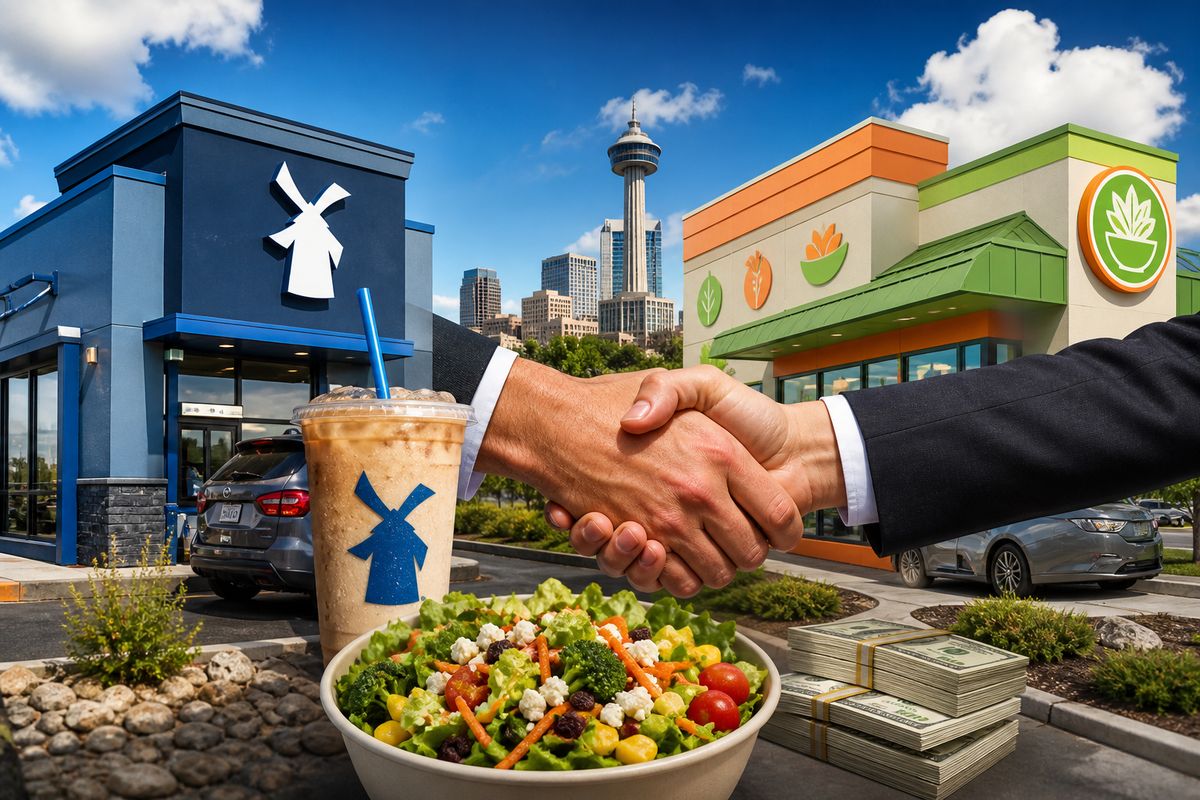
The Dutch Bros acquisition of dozens of former Salad and Go sites marks one of the most significant retail real estate moves in recent US coffee history. According to a report from Daily Coffee News on 6 August 2026, the Oregon-based drive-thru coffee chain is pursuing a $105 million acquisition of former locations of Salad and Go, the fast-salad chain born in Arizona that is currently engaged in Chapter 11 bankruptcy proceedings. The deal would hand Dutch Bros a portfolio of properties that were purpose-built for fast, convenience-driven food service.
It is a classic case of one retailer's misfortune becoming another's strategic opportunity. Salad and Go, once a high-flying challenger to fast-casual dining, expanded aggressively across the Sun Belt before hitting financial turbulence. Dutch Bros, on the other hand, has been on a relentless growth trajectory, and the acquisition of these drive-thru oriented sites could accelerate its expansion into new and existing markets without the usual delays of ground-up construction.
The proposed transaction also signals a broader shift in how successful restaurant chains think about growth. Building a new store from scratch takes time, money, and patience. Buying a portfolio of existing sites, by contrast, is a shortcut to market dominance. For Dutch Bros, which has built its reputation on speed, consistency, and a loyal following, this deal fits neatly with its identity.
The Details of the $105 Million Salad and Go Deal
Dutch Bros is not buying the Salad and Go brand itself. Instead, the company is pursuing the real estate. The $105 million price tag covers "dozens" of former locations, according to the Daily Coffee News report. This is a portfolio play, not a brand play. The emphasis on sites rather than operations suggests Dutch Bros has no interest in reviving the salad chain's menu or identity. It wants the buildings, the drive-thru lanes, the car parking, and the locations.
Salad and Go began in Arizona and grew quickly by offering made-to-order salads and wraps at fast-food speed and prices. Its business model depended on high volume and efficient operations, but the chain struggled with profitability and ultimately entered bankruptcy proceedings. The specific terms of the bankruptcy and the number of locations involved have not been confirmed in the report, but the scale of the proposed acquisition indicates that a substantial portion of Salad and Go's former footprint could soon be pouring Dutch Bros coffee.
From a financial perspective, the deal is notable for its size. For a company like Dutch Bros, which has historically preferred a mix of company-owned and franchised stores, spending $105 million on real estate is a serious commitment. It signals confidence in the long-term durability of the drive-thru coffee model, and it may also signal a shift in how the company thinks about growth. Rather than building new stores one by one, Dutch Bros could be looking at a larger, more aggressive expansion play.
Why Salad and Go Locations Appeal to Dutch Bros
Location is everything in the quick-service restaurant business, and Salad and Go's real estate portfolio is especially attractive to a drive-thru focused operator. The chain deliberately sought out sites with strong visibility, easy access, and dedicated drive-thru lanes. Those are precisely the attributes Dutch Bros looks for when selecting new store locations. By acquiring existing properties, Dutch Bros can bypass the lengthy process of permitting, design, and construction, potentially opening new stores in a fraction of the usual time.
The geographic fit is another factor. Salad and Go concentrated its expansion in Arizona and other Sun Belt states, regions where Dutch Bros already has a meaningful presence but still sees room for growth. Acquiring clusters of locations in those markets could allow Dutch Bros to densify its network quickly, which in turn improves brand visibility and customer convenience. In the fast-food and coffee industries, density is a competitive advantage. More locations mean shorter travel times for customers, more opportunities for impulse purchases, and stronger loyalty programme penetration.
There is also the question of conversion costs. Salad and Go kitchens are designed for cold food preparation, so converting them to hot coffee and espresso production will require some investment. However, Dutch Bros is already experienced at retrofitting and opening stores in varied real estate. The company's store format relies heavily on drive-thru sales, and its equipment needs are relatively compact. The conversion burden, while real, is unlikely to deter a company that has grown as quickly as Dutch Bros.
What This Means for the Coffee Industry and Beyond
The proposed acquisition is best understood in the context of a broader industry shift. Drive-thru coffee is booming, and the pandemic accelerated a trend that was already well underway. Consumers now expect coffee to be fast, affordable, and convenient, and drive-thru models deliver on all three counts. Starbucks has invested heavily in its drive-thru and pickup formats, and smaller chains such as Scooter's Coffee and 7 Brew have expanded rapidly. Dutch Bros, which has built its entire identity around the drive-thru experience, is now making a major financial bet that this format will continue to thrive.
The deal also says something about the state of the broader quick-service restaurant sector. Salad and Go's difficulties are a reminder that strong consumer demand does not guarantee profitability. The fast-salad segment boomed in the 2010s, but competitive pressure, rising labour costs, and the challenge of delivering fresh food at speed proved overwhelming for several players. Dutch Bros, by contrast, has demonstrated that a limited menu, a strong brand culture, and efficient operations can create a durable and highly profitable business model.
From a competitive standpoint, the acquisition could put Dutch Bros in a stronger position against both giant chains and regional upstarts. In markets where Salad and Go sites are located, Dutch Bros will suddenly have prime corners and high-traffic thoroughfares. Rivals looking to enter those markets may find the best sites already taken. This is the sort of defensive, strategic real estate acquisition that can quietly shape the competitive landscape for a decade or more.
There is also a cultural dimension. Dutch Bros has cultivated a distinctive brand identity built around friendly service, vibrant branding, and a sense of community. The company's "broista" culture is a core differentiator, and it travels well. Moving into former Salad and Go locations will not dilute that identity, provided the company maintains its focus on the customer experience. If anything, it will give Dutch Bros more opportunities to spread that culture across the Sun Belt and beyond.
Other Headlines Shaping Coffee News This Week
While the Dutch Bros acquisition is the week's biggest story, other developments in the coffee world are also worth noting. On the health front, an Italian study reported by Daily Coffee News on 5 August 2026 found that people in southern Italy who drink espresso or moka pot brews daily are less likely to develop a certain liver disease. The study adds to a growing body of research suggesting that coffee consumption, in its many forms, may offer protective health benefits. For the specialty coffee industry, that is useful marketing ammunition.
On the retail side, a new all-day cafe called Two Fold Coffee & Kitchen opened in Tampa, Florida, on 6 August 2026. The cafe splits its focus between a multiroaster specialty coffee programme during the day and a curated evening offering. The opening reflects a wider trend toward all-day hospitality, where coffee shops evolve into versatile spaces that serve different customer needs at different times of day. Also in retail news, Pinup Coffee has opened a standalone cafe in Virginia Beach, and Camellia Coffee Roasters has opened a second cafe in Northern California.
Several other industry stories from the first week of August 2026 deserve mention. Fairtrade International has raised its price minimums again, according to a report from 4 August 2026. That decision will have significant implications for producers and roasters alike, particularly as the cost of production continues to rise. Meanwhile, a study on bird-friendly coffee landscapes published on the same day found that shade alone is not enough; coffee farms need adjacent forest to support bird populations. And a Korean research team has developed a method to turn wet coffee grounds into biochar in just 90 seconds, a potentially valuable innovation for waste reduction.
Climate pressures are also bringing new attention to Excelsa coffee, a lesser-known species that may be more resilient to heat and drought than Arabica. As reported in a column published on 3 August 2026, that resilience could be crucial as climate change disrupts traditional coffee growing regions. Each of these stories points to a coffee industry that is simultaneously expanding, innovating, and grappling with serious environmental and economic challenges.
What's Next
Assuming the Dutch Bros acquisition receives the necessary approvals, the next few quarters will be busy for the company's real estate and operations teams. Converting dozens of Salad and Go sites will require careful planning, from kitchen redesigns to brand installation and staff training. The first converted locations could open within a year, especially if Dutch Bros prioritises sites that require minimal renovation. Watch for announcements about specific markets and opening timelines, as those will reveal exactly which former Salad and Go locations made the cut.
The broader implications of the deal will also become clearer over time. If the conversion proves smooth and the new locations perform well, Dutch Bros may look for similar opportunities elsewhere. Distressed restaurant real estate is available across the United States, and other chains may follow Dutch Bros's lead. Conversely, if the integration proves difficult, the deal could serve as a cautionary tale about the risks of rapid expansion through acquisition. The coffee industry, which has seen its fair share of aggressive growth strategies, will be watching closely.
There is also the question of finance. At $105 million, this is not a trivial sum, and Dutch Bros's investors will expect a clear return on investment. The company's track record suggests it can deliver. But rising interest rates, labour costs, and fluctuating coffee prices could all challenge the economics of the deal. The fact that this news emerged in the same week as another Fairtrade price increase is a reminder that cost pressures are mounting across the supply chain. How Dutch Bros manages those pressures at its newly acquired sites will be one of the key business stories to follow in the coming months.
Closing Thoughts
The Dutch Bros acquisition of Salad and Go sites is more than just a real estate transaction. It is a statement of intent from one of America's most dynamic coffee chains. Dutch Bros has long been a disruptor in the coffee industry, and this deal allows it to continue that disruption at scale. By repurposing the remnants of a failed fast-casual brand, Dutch Bros is turning market turbulence into competitive advantage.
For the coffee sector as a whole, the deal is a reminder that growth often comes from unexpected places. Salad and Go was not a coffee company, but its real estate will now serve coffee. That kind of cross-industry recycling is becoming increasingly common as retail spaces are repurposed to meet changing consumer habits. Drive-thru coffee, it seems, is one of the most durable retail formats around.
The story is still developing, and there are many details to be confirmed. But one thing is clear: the Dutch Bros acquisition is a bold, well-timed move that could reshape the competitive landscape of American coffee. Whether it delivers the intended returns remains to be seen, but the ambition behind it is undeniable. Coffee lovers in the Sun Belt, and across the country, may soon find a Dutch Bros location in places where they once bought salad. That is a remarkable shift, and it reflects the ever-evolving nature of the fast-food and coffee industries.