The Espresso Puck Screen Goes Mainstream: FLUR, LUCCA and Dioomod Lead the Charge
The Espresso Puck Screen Has Officially Gone Mainstream
For years, the puck screen was the quiet secret of commercial espresso machines and the most obsessive home baristas. Not anymore. In 2026, a wave of new products has brought this tiny piece of stainless steel mesh firmly into the mainstream, and the consumer response has been remarkable. The FLUR Happy Pucks set, for instance, currently sits with a 4.9 out of 5 rating across over 2,000 reviews, while rivals like Dioomod and LUCCA are reporting strong uptake and enthusiastic feedback from the home espresso community.
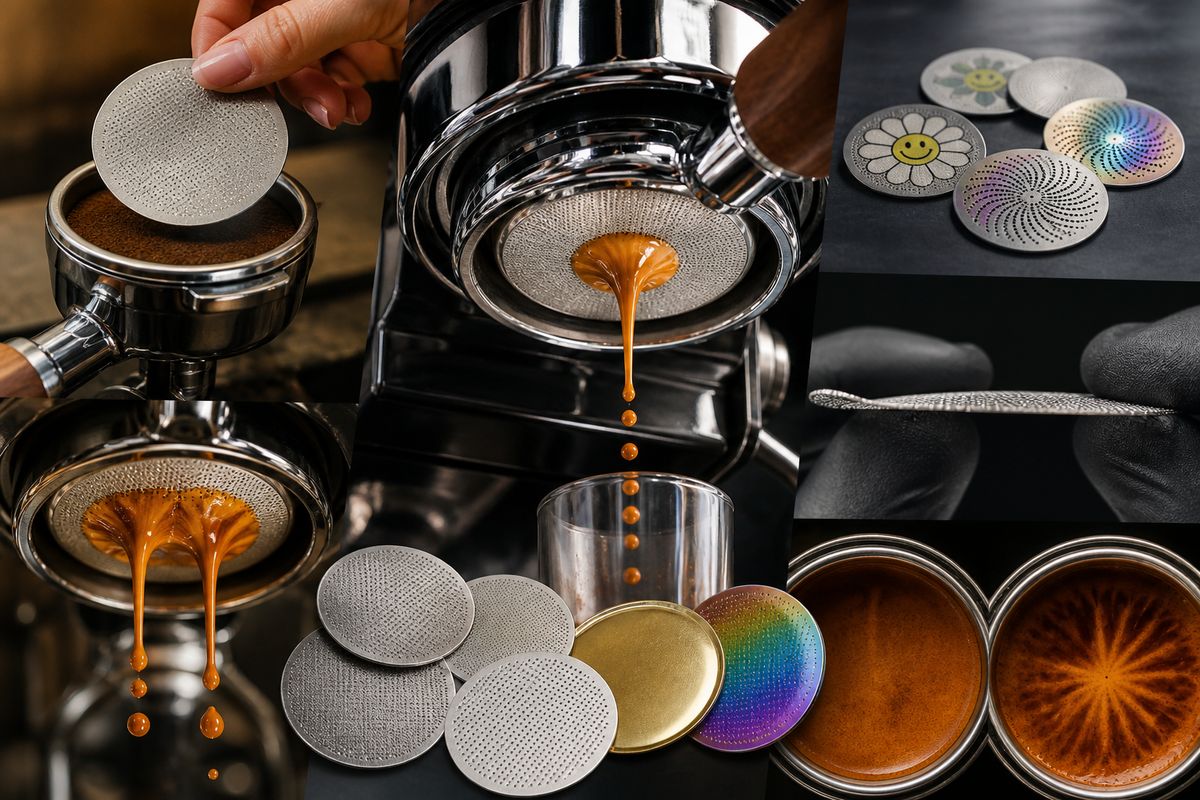
The real story here is not just that puck screens work, but that a genuinely competitive market has formed around them. Consumers now face a meaningful choice between an ultra-thin 0.9mm screen, a durable 1.7mm option, or a finely woven mesh design. This is a level of product differentiation that simply did not exist a few years ago. The puck screen has evolved from a specialist workshop tool into a must-have accessory for anyone serious about their morning shot.
The New Contenders in the Puck Screen Market
Three distinct products have captured the attention of the speciality coffee world in 2026, each taking a slightly different approach to solving the same core problem: uneven extraction and messy group heads.
FLUR Happy Pucks: Designed for the Aesthetic-Driven Barista
FLUR, a brand best known for its geometrically striking espresso glasses and carafes, entered the puck screen market with a product that reflects its design-first ethos. The Happy Pucks set includes three screens in 51mm, 53.5mm and 58.5mm sizes, covering virtually every home portafilter on the market. Priced at $19, the set is made from 316 food-grade stainless steel, which is known for its corrosion resistance and safety at high temperatures.
The FLUR screens are 1.7mm thick, positioning them as a robust, long-lasting option. The response has been overwhelmingly positive, with a 4.9 star average rating. Creators with massive followings, such as @tannercolsoncoffee with over 5 million followers, have endorsed the brand, praising its intentional design. FLUR also offers a 1-year warranty that covers manufacturing defects and one instance of accidental damage per set, a policy the company notes is unique among glassware and accessory brands. This attention to after-sales service suggests a company confident in its product's durability.
Dioomod's Ultra-Thin Contender: A Focus on Fit and Safety
Taking a radically different approach is Dioomod, whose 2-pack of 51mm screens is engineered for a specific type of user. The Dioomod screen is just 0.9mm thick, a fraction of the thickness of the FLUR or LUCCA options. It features a 150-micron mesh, which is among the finest we have seen. One of the standout features highlighted by reviewers is the chamfered edges, which prevent the common problem of sharp metal edges cutting fingers during handling and cleaning.
Reviews for the Dioomod screen praise its performance in Breville machines, noting that the 53.3mm version fits the 54mm portafilter basket perfectly. One reviewer noted that the ultra-thin design is flexible yet durable, and has held up well through hundreds of pulls on machines like the Ninja Cafe Luxe and the Gaggia Classic. The focus here is on simplicity and cleanliness. As one user put it, the screen "just works," keeping the shower head free of grounds and simplifying the clean-up routine. This product is positioned firmly as a practical, no-nonsense upgrade.
LUCCA's 58mm Mesh: The Prosumer Staple
Clive Coffee, a highly respected retailer in the speciality coffee industry, offers its in-house LUCCA brand 58mm puck screen for $25. This option sits at a slightly higher price point, reflecting its target audience of prosumer machine owners with standard 58mm portafilters. The LUCCA screen is a finely woven stainless steel mesh, measuring 1.85mm thick, and is designed to sit precisely between the coffee puck and the shower screen.
The LUCCA screen has generated significant buzz, particularly among owners of E61 group head machines and VST baskets. Reviews on the Clive Coffee site are remarkably positive, with several customers admitting to initial scepticism. One reviewer, Larry N., states that the difference the puck screen made was "nothing short of fantastic." Another, Rick S., argues that it "should be standard issue with all machines," noting that shots taste better and the machine stays cleaner. Clive Coffee backs this product with its 30-day love it guarantee and free shipping on orders over $75, adding a layer of trust to the purchase.
Channeling and Extraction: The Science Behind the Espresso Puck Screen
To understand why the espresso puck screen has become so popular, you first have to understand the problem it solves. When hot water is forced through a bed of finely ground coffee at nine bars of pressure, it naturally takes the path of least resistance. If your tamping is slightly uneven, or your grind distribution is less than perfect, channels will form. These microscopic rivers of water rip through a narrow section of the puck, over-extracting that specific area while leaving the surrounding coffee under-extracted.
The result is a shot that tastes sour and bitter simultaneously, a frustrating experience for any home barista. A puck screen sits on top of the tamped coffee bed and acts as a diffuser. It spreads the pressurised water evenly across the entire surface of the puck, effectively eliminating the violent jetting that causes channeling. As the Dioomod description notes, it makes water distribution "more even," while the LUCCA marketing explains that it reduces those "unwelcome fast paths where water rushes through."
However, it is important to be realistic about what a puck screen can and cannot do. As FLUR's own FAQ candidly admits, "It helps, but it's not magic." Channeling can stem from several factors, including uneven tamping, poor grind size distribution, and inconsistent dosing. A puck screen solves the water distribution issue, but it cannot fix a fundamentally flawed grinder or a careless preparation routine. Reviewers have echoed this balanced view. Dale F., a LUCCA customer, admits, "I can't prove whether the Puck Screen works or not, but I think it does." The value lies in removing one significant variable from the extraction equation.
Historical Context: From Commercial Necessity to Home Barista Essential
The puck screen is not a new invention. In commercial settings, cafes have used variations of these screens for years, not primarily to improve flavour, but to protect expensive machinery. A stray coffee ground stuck to the group head shower screen is an annoyance at home, but in a busy cafe, it can cause uneven flow and require costly maintenance shutdowns. The screen acted as a barrier, keeping the machinery pristine.
The transition to the home market has been driven by two factors: the rise of affordable prosumer espresso machines and the explosion of specialty coffee content on social media. Machines from Breville (which uses a 53.5mm basket), Gaggia, Rancilio and Flair have made it possible for people to pull cafe-quality shots at home. As those users have become more sophisticated, they have started tackling advanced issues like puck preparation and water distribution. The puck screen is a natural progression in that journey, allowing home baristas to adopt commercial techniques with a cheap, accessible piece of kit.
The fact that FLUR sells its screens in a multi-size pack is telling. It acknowledges that home espresso is a fragmented ecosystem. The 51mm size covers older 53mm machines, the 53.5mm size handles the massive install base of Breville, and the 58.5mm size fits the industry standard used by E61 machines and Gaggias. This versatility is a smart move, ensuring that one set of three screens can serve multiple machines or be shared between households.
What This Means For You: Actionable Takeaways for Home Baristas
If you are considering joining the puck screen revolution, there are several practical considerations to keep in mind before you click to purchase.
First, measure your basket. Portafilter sizes are not universal. You need to know whether you are brewing with a 54mm Breville basket, a 58mm E61 standard, or something else entirely. The brands have made this easier than ever; FLUR explicitly lists its 53.5mm as the Breville fit, while Dioomod's 53.3mm version is praised for its perfect fit in 54mm baskets. Buying the wrong size will likely cause pressure issues and a frustrating mess rather than better extraction.
Second, consider the material and thickness. Your screen will be subjected to boiling water and nine bars of pressure daily. We recommend insisting on 316 food-grade stainless steel, which FLUR uses, as it is rust-resistant and safe for hot extractions. Thinner screens, like the 0.9mm Dioomod, are more flexible and less likely to affect your basket's capacity, while thicker screens, such as FLUR's 1.7mm and LUCCA's 1.85mm, offer greater rigidity and long-term durability. Think about your workflow. If you are clumsy with accessories, a thicker screen might be more forgiving.
Third, commit to the cleaning routine. A puck screen is only beneficial if it is clean. The mesh holes are fine, and coffee oils will build up over time, potentially introducing rancid flavours into your next shot. The general consensus is to rinse the screen under warm water immediately after each use. Every few weeks, a deeper clean in warm water with coffee detergent is advised. FLUR notes that dishwashers are optional, but they will not damage the screen if you prefer that method. Neglecting this will turn your shiny new tool into a source of stale, bitter flavours.
Finally, manage your expectations. View the puck screen as a standardising agent, not a miracle cure. It will help reduce channeling and keep your machine's group head much cleaner, saving you from brushing the shower screen after every session. But it should be paired with a consistent grind, a proper distribution technique and a firm, level tamp. As the reviews from LUCCA customers suggest, when combined with a solid workflow, the puck screen produces notably smoother tasting shots and completely dry, solid pucks.
Weighing the Value: Is a Puck Screen Worth It in 2026?
At price points ranging from $19 for a set of three to $25 for a single premium screen, the puck screen is far from the most expensive accessory in the home barista arsenal. It sits alongside the dosing funnel and the WDT tool as a low-cost, high-impact upgrade. The evidence this year suggests that the puck screen is one of the most effective ways to improve shot consistency and reduce machine maintenance without spending hundreds of pounds on new hardware.
The rise of the puck screen also reflects a broader trend in specialty coffee: informed consumers seeking measurable improvements in their daily ritual. The market has responded with choice, from FLUR's design-led, warranty-backed set to Dioomod's ultra-thin practicality and Clive Coffee's data-driven prosumer approach. Whatever your machine, there is now a screen for you.
The espresso puck screen has proven it is more than a passing trend. It is a simple, durable and genuinely effective tool that has elevated the standard of home espresso. Whether you are a seasoned enthusiast or someone fresh to the world of dialing in shots, this is one accessory that deserves a place in your workflow.