
Dan Goldman Addresses Brooklyn Coffee Shop Ban Over Israel Views
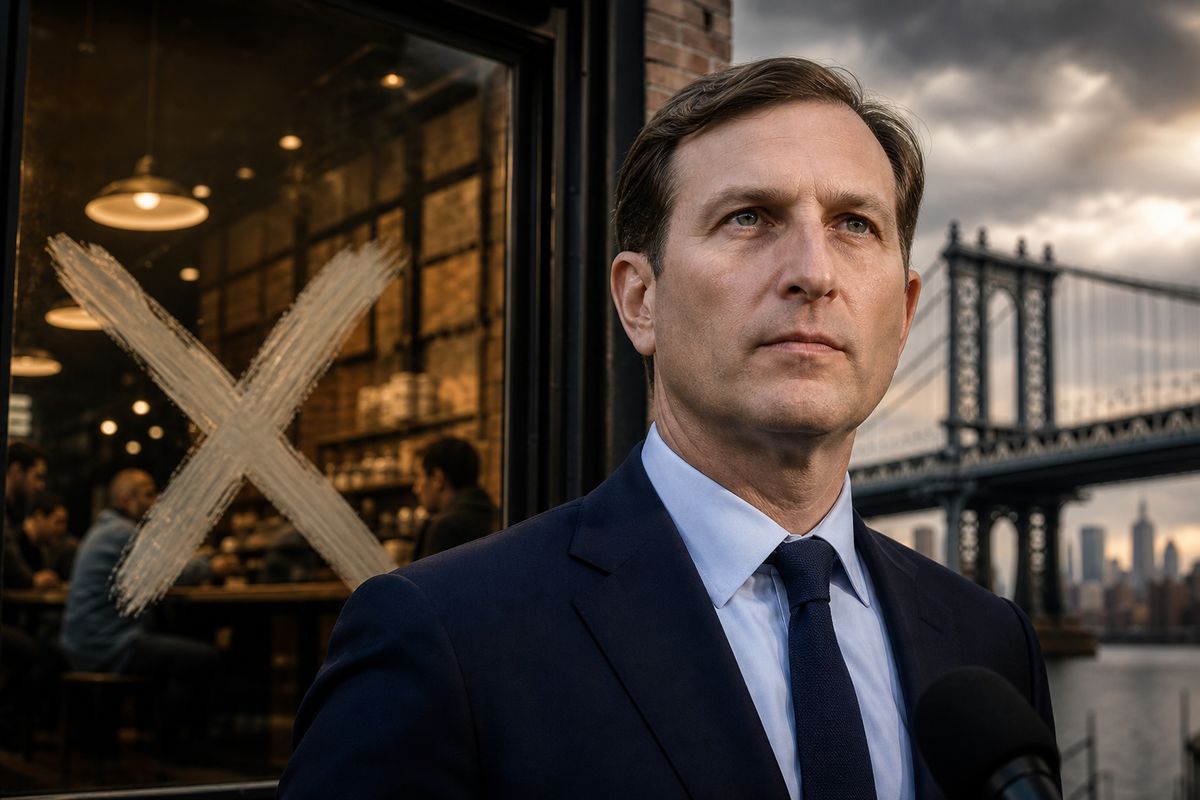
Congressman Responds to Brooklyn Coffee Shop's Ban Over Israel Stance
Representative Dan Goldman, a Democrat representing New York's 10th congressional district, has publicly addressed a Brooklyn coffee shop's decision to ban him from its premises due to his views on Israel. The incident has drawn attention to the intersection of business, politics, and the increasingly polarised debate over the Israeli-Palestinian conflict in the United States. Goldman, who has been a vocal supporter of Israel's right to self-defence, responded to the ban in a statement that underscores the growing tension between public officials and private establishments taking political stances.
The coffee shop, located in the Park Slope neighbourhood of Brooklyn, has not been named in all reports, but CNN confirmed the ban. The establishment's owners cited Goldman's positions on Israel as incompatible with their values, leading to the exclusion. Goldman, a former federal prosecutor who gained national prominence during the first impeachment trial of Donald Trump, has been a consistent advocate for a two-state solution but also strongly defends Israel's security measures. The ban highlights how grassroots activism and consumer boycotts are increasingly targeting politicians, not just corporations or products.
The Ban: What Happened at the Brooklyn Coffee Shop
According to reports, the coffee shop in question informed Goldman's office that he was no longer welcome on their premises because of his public stance on Israel. While the exact details of the communication remain unclear, Goldman acknowledged the ban in a series of social media posts and comments to press. The congressman framed the ban as an attempt to silence diverse viewpoints, arguing that broad-based support for Israel should not be a disqualifying opinion in a pluralistic society.
The establishment's decision appears to align with the Boycott, Divestment and Sanctions (BDS) movement, which targets Israel over its treatment of Palestinians. While BDS typically focuses on businesses and academic institutions, applying its tactics to individual politicians is a more recent phenomenon. The coffee shop's owners may have been acting on personal conviction, but the move has sparked debate about the limits of private businesses to exclude public officials based on their politics. Notably, the shop did not ban all politicians—only those whose views on Israel they opposed.
Goldman's response was measured but firm. He stated that while he respects the right of businesses to make their own choices, he believes in engaging with people of all viewpoints rather than ostracising them. He also noted that many Jewish and pro-Israel constituents in the neighbourhood feel increasingly marginalised by such actions. The incident has become a flashpoint for broader discussions about anti-Semitism, political correctness, and the erosion of civil discourse.
Background on Representative Dan Goldman
Dan Goldman (born 1976) is a first-term Democratic congressman who represents a district covering parts of Manhattan and Brooklyn, including the area where the coffee shop is located. Before entering politics, Goldman served as an assistant United States attorney in the Southern District of New York, where he prosecuted organised crime and corruption cases. He later became the lead Democratic counsel during the House impeachment proceedings against President Donald Trump, earning bipartisan recognition for his meticulous presentation of evidence.
On Israel, Goldman has taken a moderate pro-Israel stance. He supports the two-state solution, opposes the BDS movement, and has consistently voted for military aid to Israel. He has also been critical of the Israeli government's far-right policies, including settlement expansion, but maintains that Israel has a right to defend itself against Hamas and other militant groups. His views place him within the mainstream of the Democratic Party, though the party has shifted leftward on Israel in recent years, with figures like Representatives Alexandria Ocasio-Cortez and Rashida Tlaib voicing more critical positions.
Goldman is Jewish and has family ties to Israel. He has spoken about how his Jewish identity informs his commitment to Israel's security, but also his empathy for Palestinian suffering. This nuanced stance has made him a target from both sides: some pro-Palestinian activists see him as insufficiently critical of Israel, while some pro-Israel hawks view him as too dovish. The coffee shop ban represents the former criticism, albeit in an extreme form.
Political Boycotts of Elected Officials: A Growing Trend?
The incident in Brooklyn is not isolated. Across the United States, businesses have increasingly used their platforms to take political stands, sometimes excluding individuals they disagree with. In 2018, a Virginia bakery refused to serve then-White House press secretary Sarah Huckabee Sanders, and in 2023, a New York City restaurant asked former President Donald Trump to leave. However, targeting an incumbent member of Congress over a specific foreign policy issue is less common.
The BDS movement, which calls for academic, cultural, and economic boycotts of Israel, has historically focused on institutions rather than individuals. However, there have been cases where activists have pressured events or venues to cancel speaking engagements by Israeli officials or pro-Israel advocates. The coffee shop's ban of Congressman Goldman fits into this pattern, though it represents a escalation: instead of boycotting a product or a speaker series, the shop targeted a sitting lawmaker for his entire presence.
Legal experts note that private businesses have broad discretion to refuse service as long as they do not discriminate based on protected classes such as race, religion, or gender. Political affiliation is not a protected category under most anti-discrimination laws, meaning the coffee shop's decision is likely legal. However, some argue that such bans undermine democratic engagement by making public officials feel unwelcome in their own constituencies. Goldman himself acknowledged this tension, calling for greater openness to dialogue.
Free Speech and the Public Square
The debate raises questions about the role of private space in a functioning democracy. When a coffee shop becomes a gatekeeper for political discourse, it can create echo chambers where only those who agree on certain issues feel comfortable. Conversely, business owners argue that they have a right to control their environment and avoid hosting individuals whose views they find objectionable. This clash of rights is playing out in real time in Brooklyn.
Goldman's response emphasised that he does not want to force the coffee shop to serve him, but he does want to highlight the dangers of shutting down conversation. In a time of heightened political polarisation, the incident serves as a microcosm of the broader challenge: how to maintain a public square where diverse opinions can coexist without resorting to exclusion. The coffee shop's patrons and the local community will likely have their own views, but the national attention suggests the story resonates far beyond Park Slope.
Historical Context: When Businesses Shun Politicians
The practice of refusing service to politicians is as old as the republic, but it accelerated in the era of social media activism. During the civil rights movement, lunch counters that refused to serve black activists were boycotted; now, the boycotts themselves are often aimed at conservatives or those perceived as out of step with progressive values. The Mitt Romney cake incident—where a baker refused to make a cake for the 2012 Republican candidate—was a early internet-era example. More recently, the rise of BDS has given political consumerism a sharper foreign policy focus.
In the context of the Israeli-Palestinian conflict, the line between protesting policies and targeting individuals is blurry. Pro-Palestinian activists argue that Goldman's vote for military aid to Israel makes him complicit in what they call human rights abuses. The coffee shop's ban can be seen as a form of political consumerism, where a business uses its economic power to make a statement. However, critics argue that such actions disproportionately affect Jewish politicians and contribute to an atmosphere where Jewish identity and pro-Israel views are stigmatised.
The Anti-Defamation League and other Jewish advocacy groups have condemned the ban, calling it anti-Semitic in effect if not intent. They point out that other politicians with controversial views on Israel—such as those who advocate for a single state—have not faced similar bans. The nuanced position taken by Goldman, who is both Jewish and critical of some Israeli policies, may make him a particularly visible target. The incident underscores the challenges facing Jewish Democrats who try to hold a middle ground.
Implications for the Democratic Party and Israel Policy
The coffee shop ban also reflects the internal tensions within the Democratic Party over Israel. While the party's platform still supports a two-state solution and aid to Israel, an increasing number of progressives are calling for conditioning aid and holding Israel accountable for settlement expansion and military actions. Goldman's centre-left position is under pressure from both the left and the right, and such public shaming events may push more moderate Democrats to either align with the progressive wing or risk being ostracised.
For Goldman personally, the ban may bolster his standing among pro-Israel voters, but it also increases his visibility as a target for anti-Israel activists. As a freshman representative from a safe Democratic seat, he can weather the controversy, but the episode may influence how other lawmakers approach the issue. Some may choose to avoid public engagement with pro-Palestinian groups; others may double down on their pro-Israel credentials. The incident serves as a cautionary tale: even measured positions can draw fire from extremists on either side.
Beyond the Democratic Party, the incident raises questions about the effectiveness of boycotts as a political tool. Do they change minds? Or do they entrench divisions? The coffee shop itself may see a backlash from customers who support Goldman, or a surge in business from those who applaud the ban. In an era where political identity often determines consumer choices, social media allows such decisions to go viral quickly. The long-term impact on the political discourse is uncertain, but the story adds another chapter to the ongoing debate about free expression and accountability in the marketplace of ideas.
Closing Thoughts: The Thin Line Between Protest and Exclusion
Representative Dan Goldman's ban from a Brooklyn coffee shop over his views on Israel is a small but telling incident in America's culture wars. It illustrates how deeply the Israeli-Palestinian conflict has penetrated local politics, and how private businesses are becoming actors in that fray. While the coffee shop owners have every right to decide who enters their establishment, the symbolism of excluding an elected official from a communal space raises concerns about the health of democratic discourse.
Goldman's measured response—acknowledging the business's rights while urging more dialogue—offers a template for how politicians might navigate such situations. Whether the ban will lead to broader reflection on the part of activists or simply further polarisation remains to be seen. What is clear is that the Israel debate in America is no longer confined to Capitol Hill or campus protests; it now touches the daily life of neighbourhood coffee shops in Brooklyn. As the lines between public and private space blur, citizens will have to decide what kind of society they want to build—one of openness or one of ideological purity.
For now, the coffee shop remains a local institution, and the congressman remains a vocal participant in the national debate. The story serves as a reminder that in a democracy, even the best-intentioned boycotts can have unintended consequences for pluralism and civility. Only time will tell whether these tactics bring about change or simply deepen the divides they seek to address.